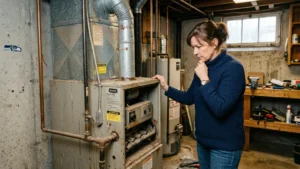


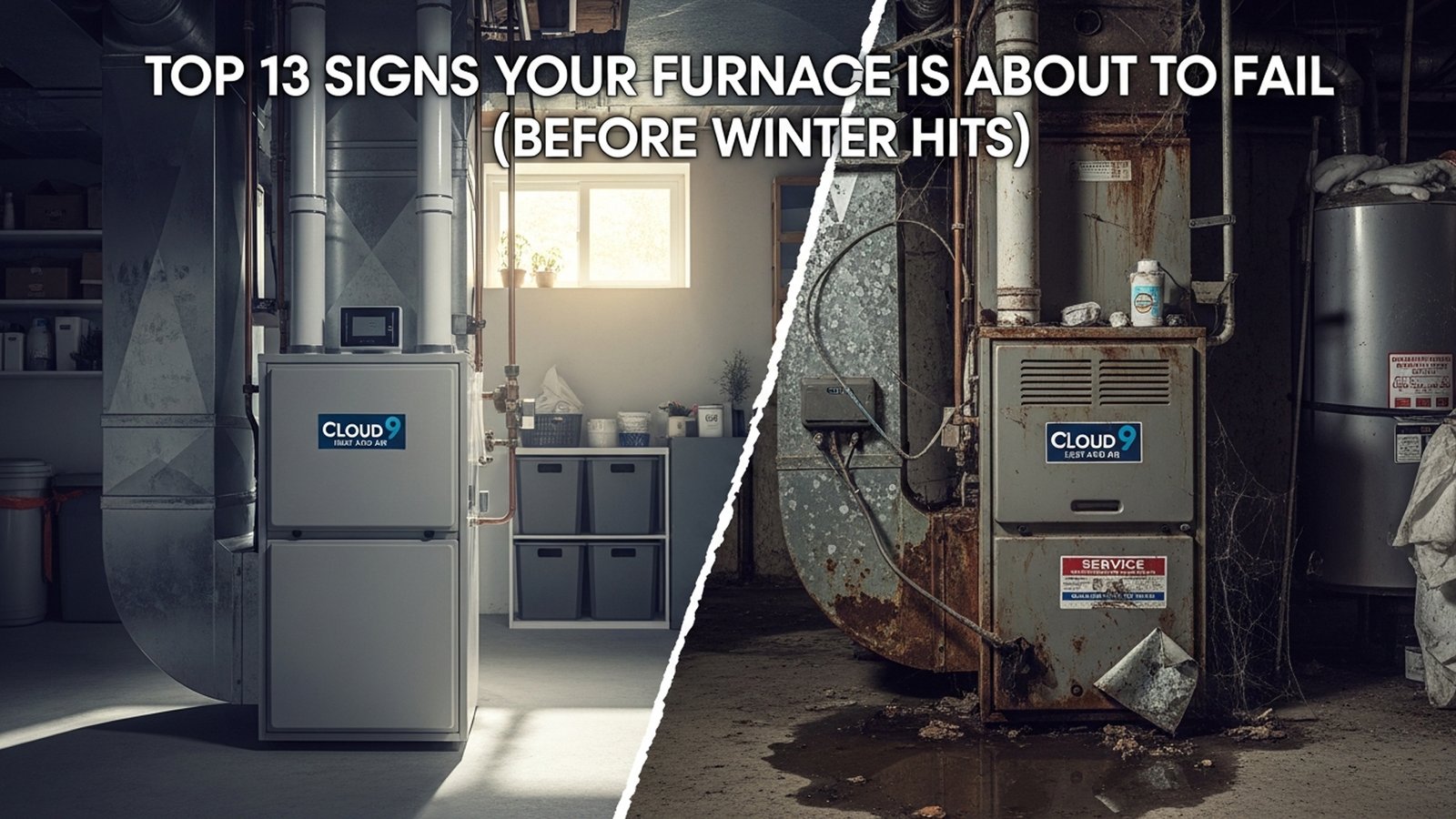
You wake up in the middle of a Seattle fall morning, and the house feels colder than it should… Not freezing… just off. Your furnace might be sending you warning signs that it’s failing.
Furnaces almost always give warning signs before they fail. And catching those signs now can save you from the nightmare of a mid-winter breakdown, emergency repair bills, and a week of shivering in a damp home.
So in this guide, we’re going to walk through the real signs your furnace is about to fail, what you can do to extend its life, and why Cloud 9 Heat & Air is the go-to choice for Seattle homeowners.
The Real Signs Your Furnace Is About to Fail (And What Seattle Homeowners Usually Miss)
Here are the signs to pay attention to, especially before winter hits.
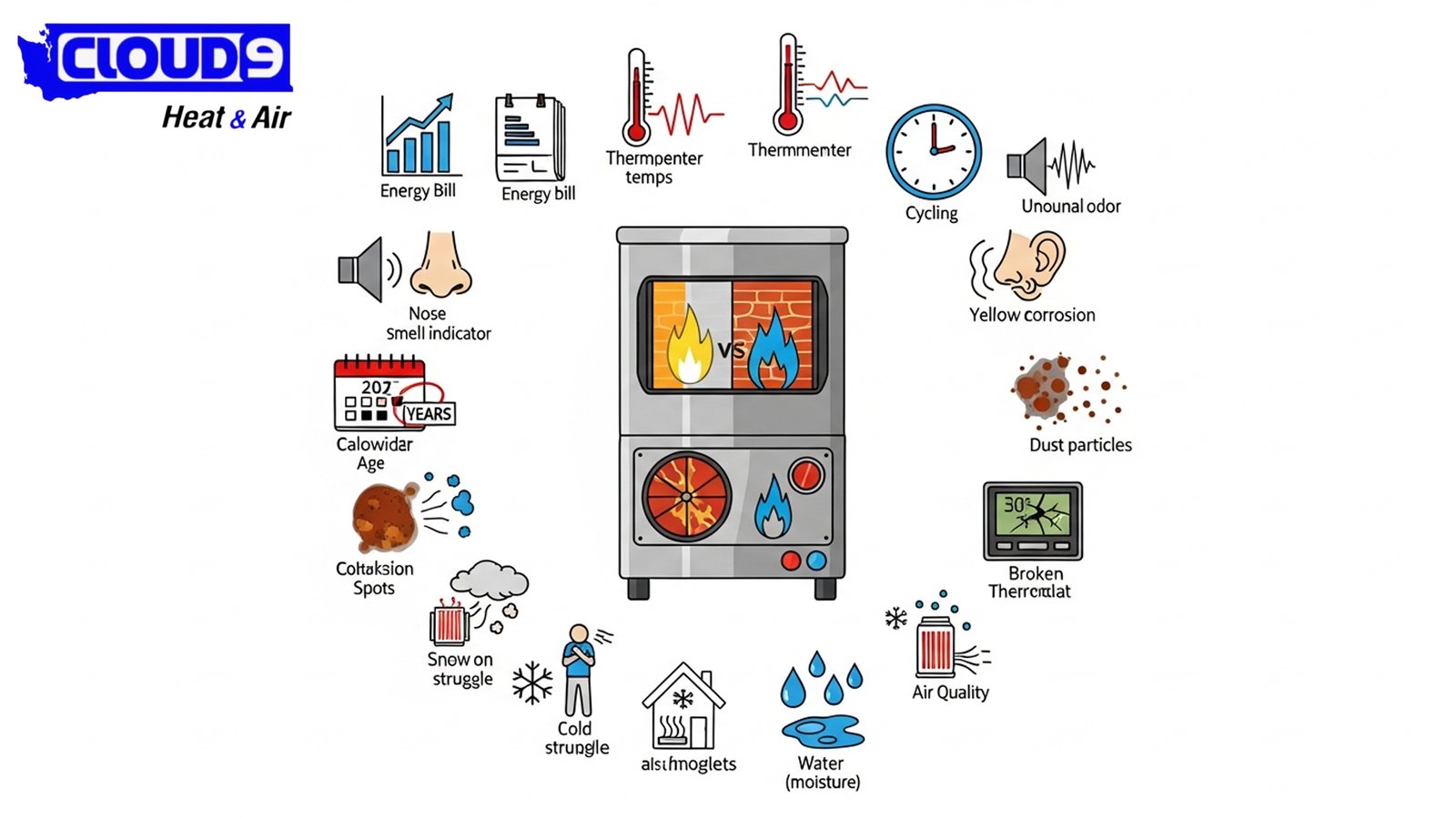
1. Your energy bill suddenly jumps for no clear reason
Not a small bump, but $70 higher compared to the same month last year. When a furnace is struggling, it pulls more energy just to maintain a basic level of heat. Seattle homes already fight moisture and drafts, so spikes hit harder here.
This is one of the earliest signs homeowners ignore.
2. Hot in one room, chilly in another (uneven heating)
In uneven heating, the furnace cannot keep up anymore.
It means the system is losing efficiency…often due to age, failing components, or blocked airflow.
3. The furnace keeps turning on… and off… and on… (frequent cycling)
Short cycling is one of the biggest red flags of an upcoming furnace failure.
It can be:
- A failing blower
- A cracked heat exchanger
- A malfunctioning thermostat
- Or a furnace that’s simply at the end of its life
Either way, this is not a “wait and see” situation. It gets worse, quickly.
4. Strange noises you’ve never heard before
A healthy furnace hums. A failing furnace talks back.
Listen for:
- Clicking
- Whining
- Grinding
- Rattling
- Banging
Seattle homeowners often chalk this up to “old house noises,” especially in older neighborhoods. But noises almost always mean internal parts are wearing out.
5. Odd smells, especially burning, musty, or gas-like
This one is serious. Different smells point to different issues:
– Musty smell → moisture building up inside the system (very common in Seattle’s humidity) – Burning smell → dust buildup or overheating parts
– Sharp, gas-like odor → stop reading and get outside
Your furnace should never smell unusual after the first run of the season.
6. Your furnace is 12–15+ years old
Most Seattle homes still run furnaces from the early 2000s. At 12–15 years old, you’re officially past “normal wear” and entering the stage where systems fail without much warning.
Age doesn’t guarantee a breakdown… but it makes every other sign on this list louder.
7. The pilot light is yellow or flickering
This is a safety flag. A healthy pilot light burns blue. Yellow means something’s interfering with the flame, often a ventilation problem, which can increase carbon monoxide risk.
This is not a DIY fix. Get it checked immediately.
8. Visible rust or corrosion on the furnace body
Moisture is part of the Seattle lifestyle… and it’s also the fastest way to kill a furnace. Rust means the internal parts are degrading, and corrosion often spreads before you even notice it.
If the outside looks bad, the inside usually looks worse.
9. Excessive dust around vents or the furnace
When a furnace can’t filter properly, dust escapes into the home. Sometimes it’s just a dirty filter. But often it’s a sign of declining performance, weak airflow, or a failing blower motor.
If you’ve cleaned and it comes right back? That’s your sign.
10. Thermostat feels like it’s lying to you
You set it to 70°F… and the house hits 63°F. Or the furnace ignores temperature changes altogether.
This isn’t always a furnace issue, but when paired with any other sign above, it’s almost always connected.
11. The furnace struggles on the coldest days
Seattle doesn’t stay below freezing all winter, but when it dips… a failing furnace shows its true colors.
If your system can’t keep up only on colder days (especially windy or damp ones), it’s a sign the core components are losing power.
12. Air feels dry, dusty, or “dirty”, especially during wildfire season
Furnaces play a huge role in indoor air quality. If your air feels harsher, drier, or dustier, your furnace likely isn’t circulating or filtering well. This gets amplified during late-summer/early-fall wildfire smoke events.
13. Moisture around windows or vents
Due to humidity, indoor moisture buildup, especially around vents, often means your furnace isn’t maintaining air balance properly.
Moisture today = mold tomorrow.
These are the signs most homeowners overlook until it’s too late. Next, let’s talk about what you can actually do to extend your furnace’s lifespan, without getting overly technical or doing anything unsafe.
What You Can Actually Do to Increase the Age of Your Furnace (Without Becoming a DIY Technician)
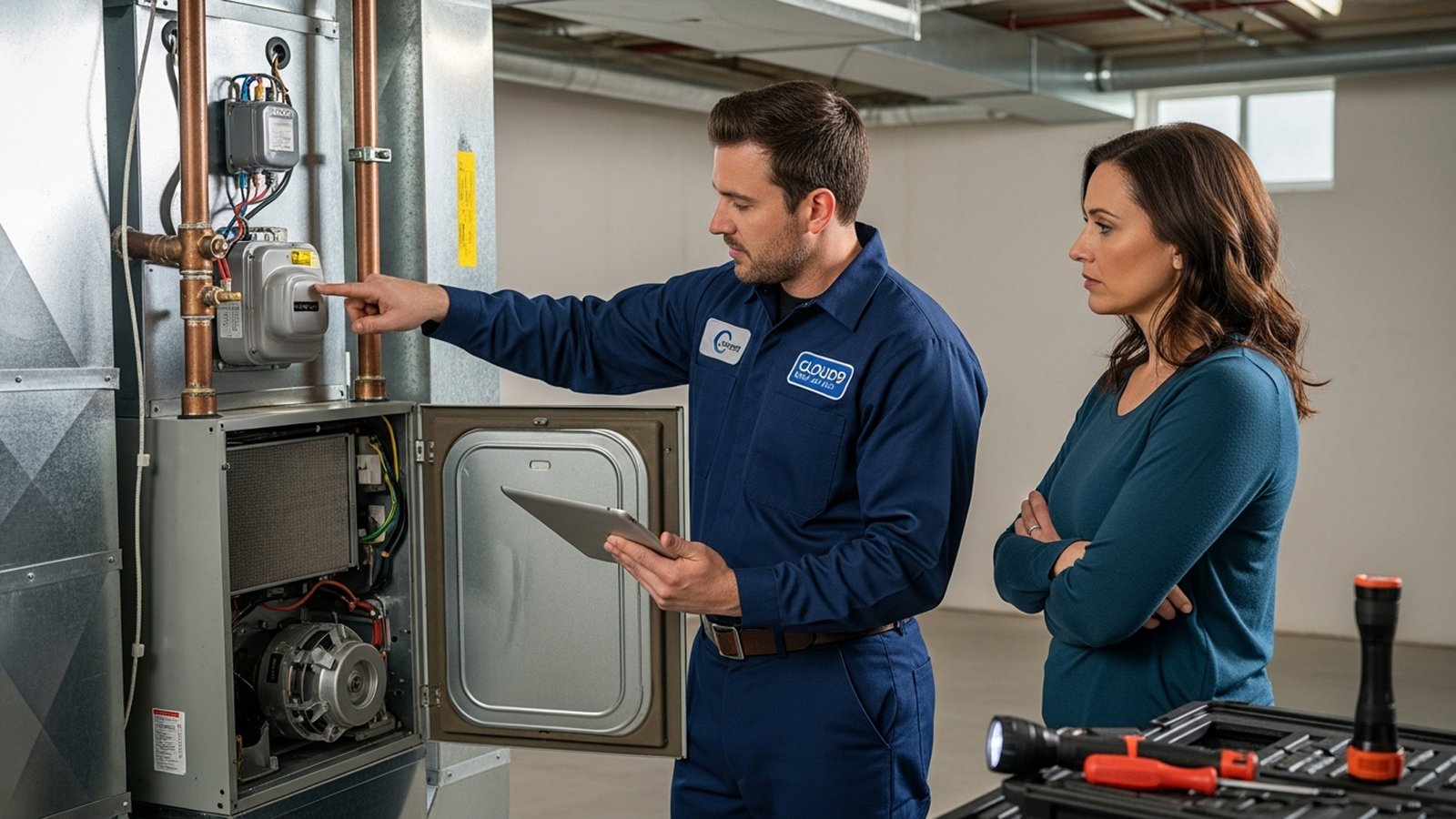
Your furnace doesn’t die from one big dramatic failure. It dies from a bunch of small, ignored problems that stack over time, especially in Seattle’s wet climate.
And while you can’t stop aging, you can slow it down in a way that saves you money and stress.
Here’s what actually makes a difference.
1. Change your air filter more often than the internet tells you
Seattle homes need it more often. Moisture, coastal air, wildfire smoke, and older home dust all clog filters faster.
A dirty filter chokes the system → makes it run hotter → shortens its lifespan.
If you haven’t changed yours in the last 30–60 days? That’s the easiest win you’ll ever get.
2. Keep the airflow clear (your furnace hates clutter)
If you block the vents, close too many registers, or store boxes around the unit, you’re basically making it run with a weighted vest.
Clear space = easier breathing = longer life.
It’s simple, but people forget.
3. Stay ahead of moisture, Seattle’s silent furnace killer
In furnaces, moisture accelerates rust, kills electrical components, and slowly eats away at the heat exchanger.
You don’t need fancy tools, just look for:
- Condensation around vents
- Dampness near the furnace
- Musty smells when it starts up
Catching moisture early can add years to a system.
4. Don’t ignore the “small” symptoms
A weird noise, a cold room, a burning smell, these feel tiny in the moment. But furnaces don’t magically fix themselves.
Every ignored symptom is a strain the system has to push through. And that strain always shortens its lifespan.
If something feels “off,” it matters more than you think.
5. Schedule annual maintenance before winter (not during)
Most people wait until something breaks. But the cheapest repairs and longest furnace lifespans happen when the system is inspected before the cold hits.
In Seattle, that window is late summer to early fall. By December, the entire city is calling HVAC techs at once.
An annual tune-up catches:
- Failing igniters
- Weak blowers
- Carbon monoxide risks
- Leaks
- Rust
- Airflow issues
- Overheating patterns
- Electrical weakening
A 60-minute inspection can prevent a $1,500 mid-season repair.
6. Know when repair becomes replacement
There’s a point where another repair is just pouring money into a system that’s already halfway out the door.
A few rules of thumb:
- If the furnace is 15+ years old and needs a major repair → it’s usually smarter to replace.
- If the repair cost is over 40% of the replacement cost → same story.
- If you’re seeing multiple signs → the system’s telling you it’s tired.
Knowing this helps avoid that endless cycle of band-aid fixes.
7. Consider airflow improvements (especially in older Seattle homes)
Improving airflow can instantly reduce furnace strain:
- Sealing air leaks
- Cleaning ducts
- Updating old registers
- Fixing pressure imbalances
Better airflow = lower workload = more years of life.
8. If your furnace is aging, pair it with a heat pump
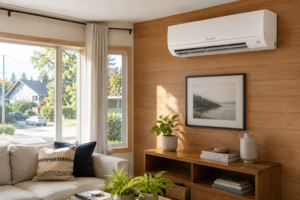
Seattle’s mild climate is perfect for heat pumps. They take over 60–80% of the heating load, letting your older furnace play backup instead of running full-time. That alone can add several years to its lifespan.
9. Get ahead of safety issues early
Pilot light changes, gas odors, short cycling, and burned smells aren’t just “furnace problems.” There are safety problems.
Addressing them quickly doesn’t just extend lifespan, it protects your home.
Choosing the Right HVAC Company in Seattle for Furnace Emergency Signs
Once you’ve identified warning signs, choosing the right HVAC company makes the difference between a proper fix and a temporary band-aid.
Cloud 9 Heat & Air solves problems the way homeowners actually need them solved.
What to look for in a Seattle HVAC contractor:
- Local experience with Seattle’s climate challenges
Moisture management, older home ductwork, and energy efficiency regulations specific to Washington State require specialized knowledge.
- Transparent diagnostic process
A good technician shows you the problem, explains what’s urgent versus what can wait, and provides written estimates before starting work.
- Same-day emergency availability
When your heat fails during a cold snap, you need a company that actually shows up, not one that puts you on a 3-day waitlist.
- Long-term system planning
The best HVAC companies think beyond a single repair, helping you understand when maintenance makes sense versus when replacement saves money.
- Upfront, fixed pricing
Avoid companies that give estimates “after we open it up.” Professional contractors can diagnose and price accurately before starting work.
Cloud 9 Heat & Air specializes in Seattle’s unique HVAC challenges and offers same-day service for urgent issues.
Give Your Furnaces a Little Attention and the Right People
Furnaces don’t fail out of nowhere. They fail quietly, slowly, and always at the worst possible moment, usually when Seattle finally decides to drop into that damp, bone-deep cold we all know too well.
But if you catch the early warning signs, your winter becomes a whole lot less stressful.
That’s why so many homeowners trust Cloud 9 Heat & Air. We don’t just fix furnaces; they give you peace of mind before the temperature drops.
If you just want a professional pair of eyes before winter hits, get in touch for a quick inspection now.