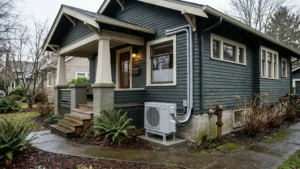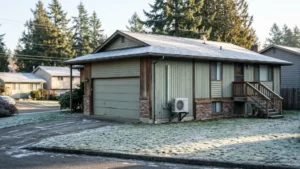


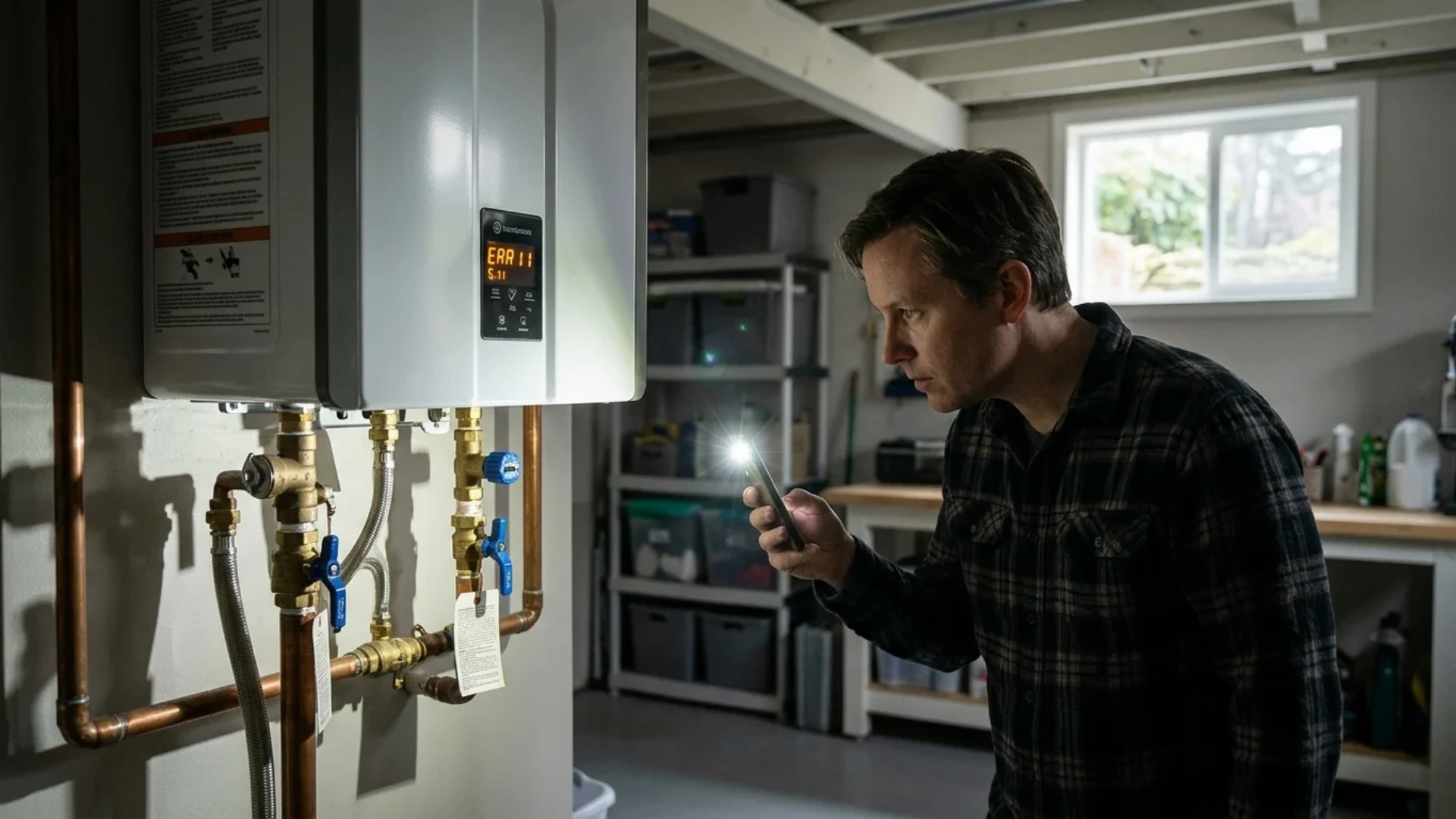
If you put in a tankless water heater around 2008 or 2010, you were ahead of the curve. Now it’s flashing error codes, the shower runs lukewarm on cold mornings, or it just won’t fire on the first try. January makes all of it worse, because the water coming into your house is at its coldest of the year.
Before you order the same model again, it’s worth asking a different question: is this the right unit for how your house uses hot water now?
Is Your Old Tankless Failing, or Just Overdue for Maintenance?
Not every grumpy tankless needs replacing. Some of the most common complaints are fixable, and it’d be a shame to replace a unit that has years left in it.
Problems a Repair Usually Fixes
A clogged inlet filter screen can cut flow and cause the unit to shut off mid-shower. That’s a quick clean.
Mineral buildup in the heat exchanger is another one. Here’s a local upside: West Seattle gets its water from Seattle Public Utilities, and Seattle’s water is soft. So scale builds up far more slowly here than in hard-water regions. But slow isn’t never. A unit that hasn’t been flushed in 15 years can still have deposits that hurt performance, and a descaling flush often brings it back.
Flame sensors, igniters and some sensors can be replaced on many models too. If your unit is otherwise healthy and the part is still available, repair is often the smart call.
Problems That Mean the Unit Is Done
Some things don’t come back. A leaking heat exchanger is the big one. Once the heat exchanger leaks, it’s usually time.
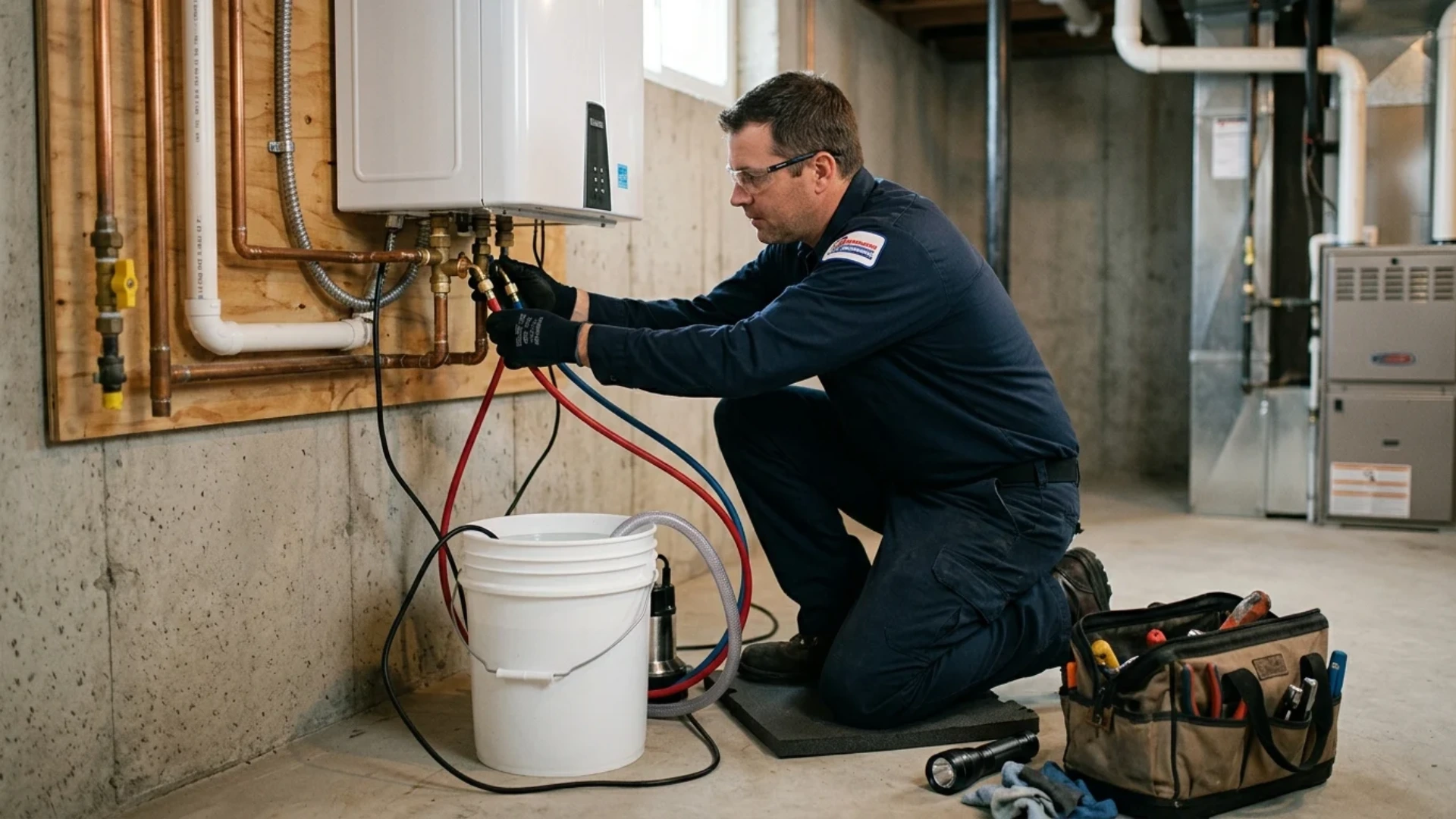
Repeated ignition failures after parts have already been replaced point to a unit near the end of its life. Same goes for a circuit board that fails a second time.
And then there’s parts availability. Manufacturers stop making components for older models eventually. If your unit needs a part that’s discontinued or backordered for weeks in the middle of winter, replacement becomes the practical choice even if the rest of the unit seems okay.
The Maintenance That Keeps a Tankless Running Longer
If your unit turns out to be repairable, a little upkeep goes a long way. Most manufacturers recommend a descaling flush on a regular schedule, and in Seattle’s soft water that interval can usually stretch longer than it would in harder-water areas. The inlet filter screen should be checked and cleaned. The air intake and vent terminations outside should be clear of leaves, spider webs and moss, which builds up fast on a north-facing West Seattle wall.
Honestly, a lot of the “my tankless is dying” calls we get are units that were installed and then never touched again. A yearly look-over catches small problems before they become a cold shower on a January morning.
Why a Like-for-Like Swap Isn’t Always the Right Call After 15 Years
Here’s where I’d slow down. Ordering the same model is easy. It’s not always right.
Your Household Has Probably Changed
Think back to when the original unit went in. Maybe it was two adults. Now there are teenagers taking long showers at the same time someone’s running the dishwasher. Or you remodeled and added a bathroom with a rain showerhead.
A tankless unit is rated by how many gallons per minute it can heat at a given temperature rise. In January, West Seattle’s incoming water is cold, so the unit has to raise the temperature further. That means less hot water flow than it can manage in summer. If your household now needs two showers running at once on a cold morning, the old size may simply not keep up. That isn’t a broken unit. It’s an undersized one.
Gas Line, Venting and Condensate: What We Check Before Choosing a Model
This is the part that separates a good replacement from one that causes new problems.
Tankless gas water heaters need a lot of gas when they fire. If your gas line was sized tightly the first time, or if you’ve since added a gas range or fireplace on the same line, a bigger or newer unit might not get enough fuel. You’d see temperature swings and error codes on a brand-new heater.
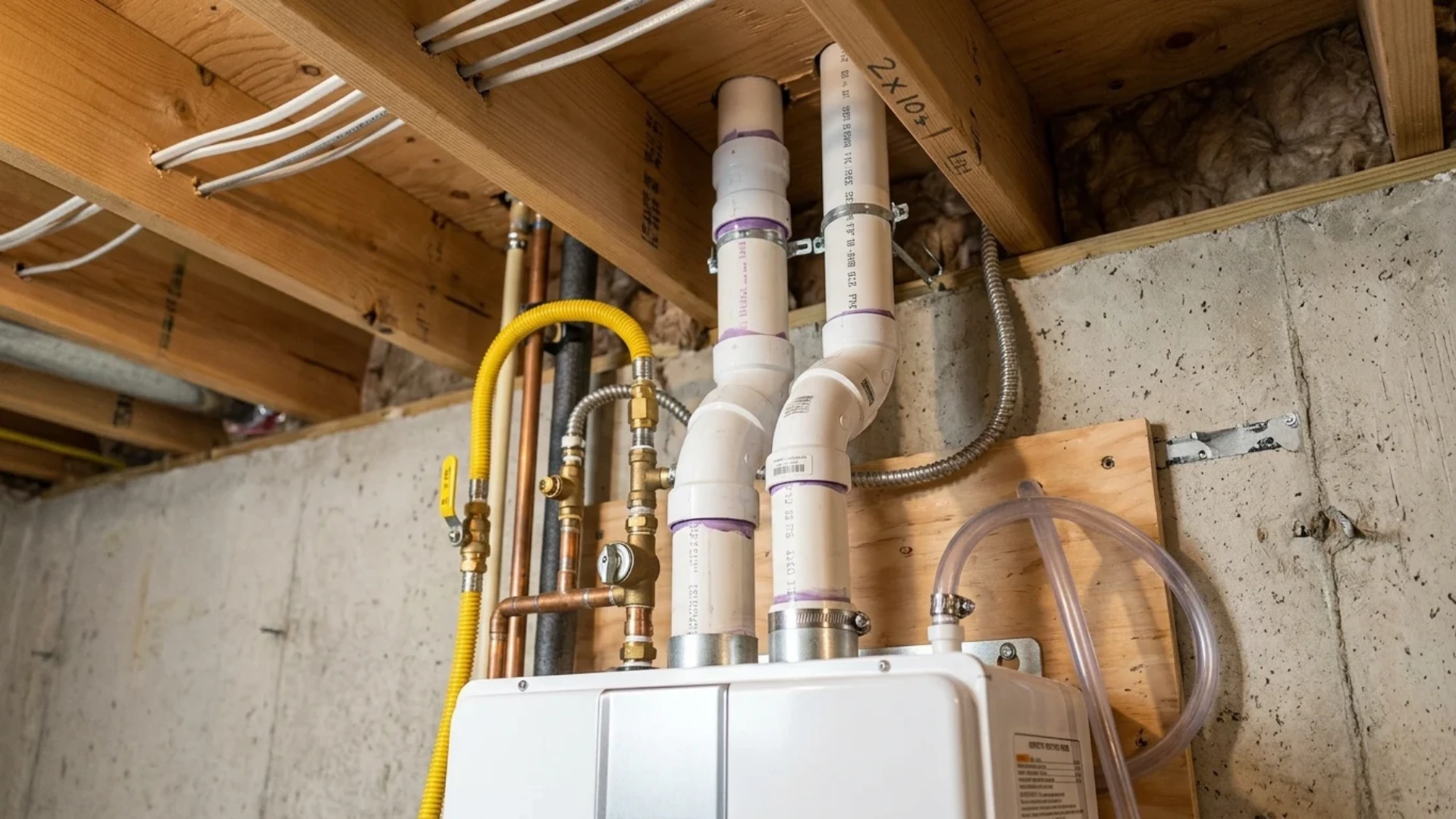
Venting matters too. Newer high-efficiency condensing units often vent differently than older non-condensing ones, and they produce condensate that needs a proper drain. Some swaps go right back into the existing vent path. Others need a new route. In older West Seattle homes, especially hillside houses where the water heater sits in a tight basement corner, the vent route is often the deciding factor in which unit makes sense.
Condensing or Non-Condensing: Which Should Replace Yours?
Many tankless units installed 15 years ago were non-condensing. They send hot exhaust out through a stainless steel vent. Newer condensing units pull more heat out of the exhaust before it leaves, so they’re more efficient, and the cooler exhaust can usually run through plastic vent pipe.
That sounds like an easy upgrade. Usually it is. But a condensing unit makes acidic condensate that has to go somewhere, either to a nearby drain or through a small neutralizer and pump. In a finished basement with no floor drain close by, that adds work. And the old stainless vent usually can’t just be reused for the new unit.
So the efficiency gain is real, but so is the install difference. We look at where your unit sits, where a drain is and what the vent path would be, then tell you whether condensing makes sense in your space or whether a different approach is cleaner.
We check all of this before recommending a model. If you’re still deciding whether tankless is right at all, our earlier post on whether tankless water heaters are worth it for Seattle homes covers the bigger picture.
What a West Seattle Tankless Replacement Looks Like
Once you’ve decided to replace, the process is pretty straightforward.
Permit, Install Day and Getting Hot Water Back
Seattle requires a permit for water heater replacement, and we handle that. It protects you if there’s ever a question during a home sale or an insurance claim.
Install day starts with shutting off gas and water and removing the old unit. Then the new unit is mounted, the gas, water and venting are connected, the condensate drain is set up if needed, and the system is fired and tested at multiple fixtures at once. That last step is the one people skip. We open a shower and a sink together to make sure flow and temperature hold.
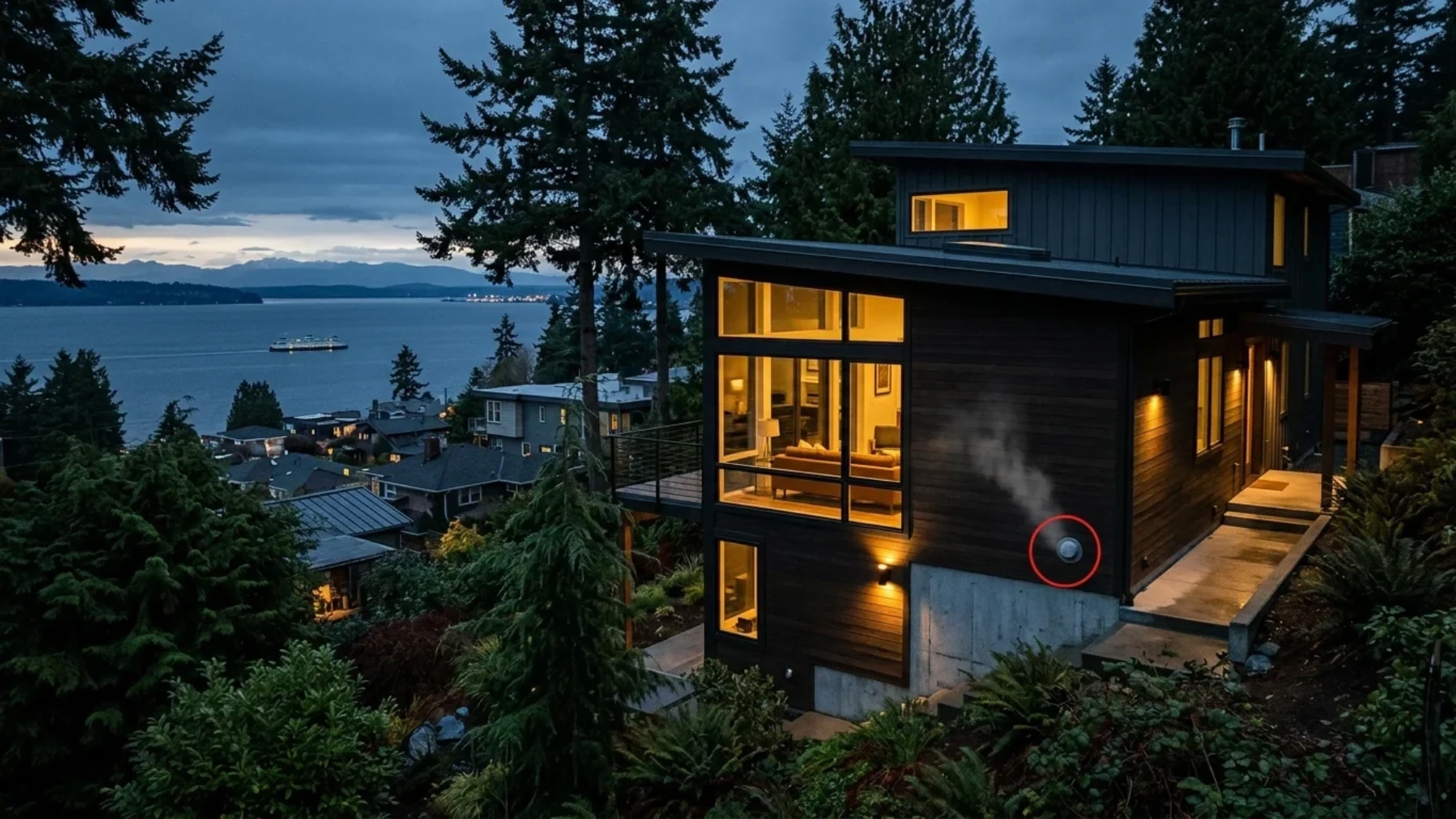
Most straightforward swaps are done in a day. If the gas line needs upsizing or the venting needs a new route, it can take longer, and we’ll tell you that up front instead of discovering it halfway through.
Questions Worth Asking Before You Approve a Quote
Before you say yes to anyone, I’d ask four things.
- Did they check your gas line capacity, or just read the old unit’s label?
- Is the venting being reused or replaced, and why?
- Is the permit included in the price?
- And what flow rate will the new unit deliver at January’s incoming water temperature, not at a mild summer number?
Good contractors answer those easily. If you get vague answers, that tells you something too.
You can read more about how we approach tankless water heater replacement and what’s included, or see our tankless water heater installation page if you’re moving to a new location in the house. And if the timing isn’t great for a big expense, financing options can help.
Replace Your West Seattle Tankless for the House You Live in Today
A tankless unit that’s lasted 15 years has done its job. The real question isn’t whether to replace it. It’s whether to replace it with the same thing. Your family, your bathrooms and maybe your gas appliances have changed since that first install, and January water in West Seattle is cold enough to expose a unit that’s too small. Taking an hour to check flow needs, gas supply and venting before you buy means the next unit fits the house you live in today. That’s the difference between solving the problem and buying the same frustration again.
Is your tankless acting up? Book a free assessment or call 206-750-5042. We’ll tell you honestly whether it needs a repair or a replacement, and which unit actually fits your home.