

You know the feeling. It’s January, the gauge on the oil tank is lower than you’d like, and the next delivery is going to cost more than the last one.
Seattle started with roughly 18,000 oil-heated homes back in 2017. The City estimates around 6,000 are left, and it wants every one of them off oil by 2030. If yours is one of them, the switch to a heat pump is more doable than most people think. You just need to plan it as one project, not three separate errands.
What an Oil-to-Heat-Pump Conversion Actually Involves in a Seattle Home
Most people picture this as “take out the furnace, put in a heat pump”. It’s a bit more than that. There are really three pieces: the new heating system, the electrical work to support it, and the old oil tank. Getting them in the right order is what keeps the project smooth.
Ducted, Ductless or Both: Matching the System to Your House
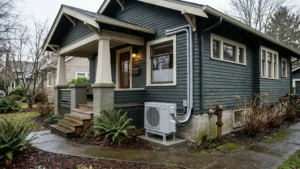
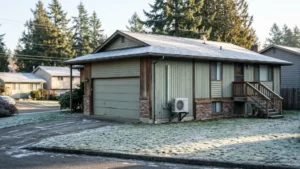
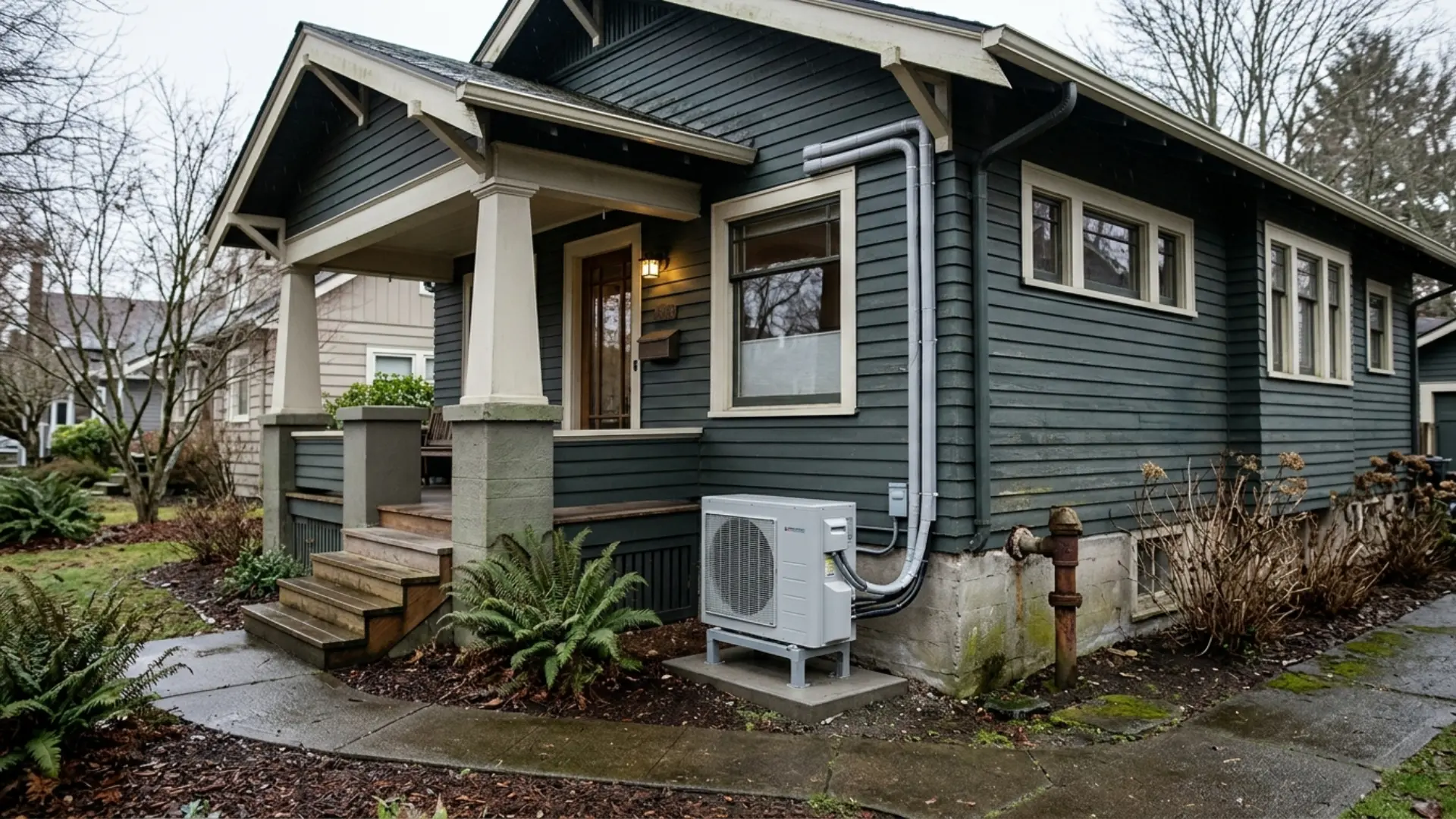
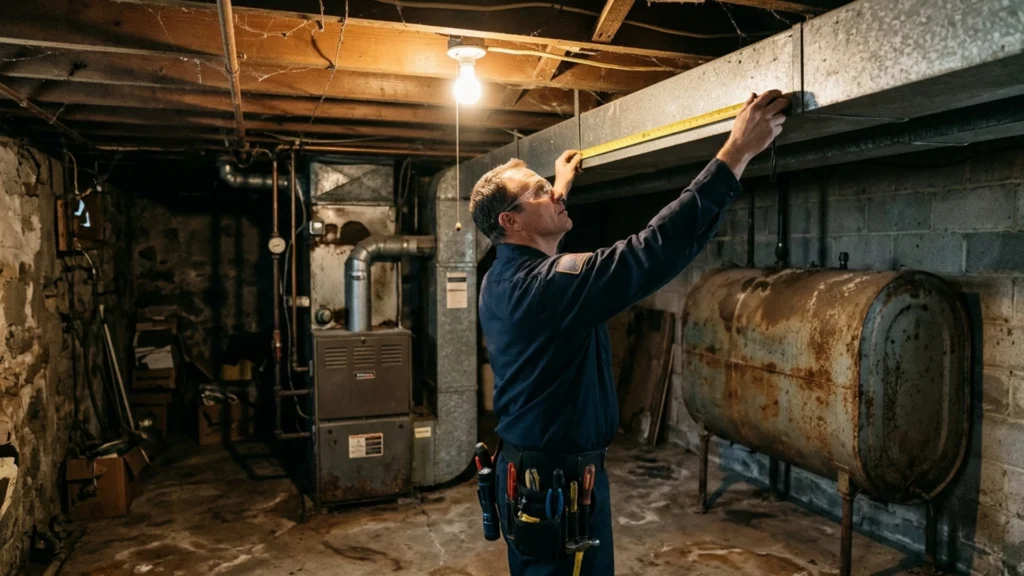
Oil homes in Seattle tend to be older. Think 1920s Craftsmans in Ballard, 1940s bungalows in West Seattle, brick Tudors on Capitol Hill. Some have forced-air ducts from the oil furnace. Some have hot water radiators fed by an oil boiler. And the ductwork, when it exists, is often undersized or leaky after 70 years.
If your ducts are in decent shape, a ducted heat pump can often reuse them. If they’re tired, or you have radiators, ductless indoor units usually make more sense. Plenty of homes end up with a mix: a ducted system for the main floor and a ductless head or two for an upstairs that never heated evenly. The point isn’t to pick a type before we’ve seen your house. It’s to match the system to the home you actually live in.
One bonus people forget about: a heat pump cools too. If you’ve been sweating through August with box fans, the same conversion fixes that.
The Oil Tank Is Part of the Project, Not an Afterthought
The Clean Heat Program requires your oil tank to be decommissioned to Seattle Fire Department standards. That’s not optional, and it’s not something to “get to later.”
Decommissioning is handled by a licensed tank company. In general, the remaining oil is pumped out, the tank is cleaned, and then it’s either removed or properly closed in place. Underground tanks are the ones that worry me most. They can rust and leak into your soil without you knowing, which is exactly why the City wants them dealt with.
If you’ve already registered your tank with Washington’s Pollution Liability Insurance Agency, there’s a free leak grant and loan program that can cover cleanup costs if a leak turns up. Worth checking before the tank work starts, because you want to know your coverage before anyone digs.
The Electrical Panel: The Step People Forget
An oil furnace barely uses electricity. A heat pump runs on it. So the house that’s been fine on its original panel for decades might need some attention before the new system goes in.
A lot of older Seattle homes still have 60 or 100 amp service. Some have plenty of room left. Others are already carrying an electric range, a dryer, maybe an EV charger added a few years ago. The heat pump needs its own dedicated circuit, and the panel has to be able to handle it alongside everything else.
We check this during the first visit, because it changes the timeline more than anything else. If a service upgrade is needed, Seattle City Light has to be involved, and that can add weeks. Finding that out on installation day is the worst version of this project. Finding it out at the assessment just means you plan around it.
How the Clean Heat Rebate Works (and Where People Trip Up)
The City offers a $2,000 instant rebate when you switch from oil heat to a qualifying Mitsubishi Electric heat pump. It’s applied at the point of installation, so it comes straight off your price. There’s no income limit on this base rebate.
Income-eligible households can get a no-cost conversion through the Seattle Office of Housing. The City has also offered extra bonus rebates for moderate-income households at different times. Those depend on available funding, so ask what’s active when you get your quote rather than assuming a number you read online.
Brand, Contractor and Paperwork Requirements
3 things have to line up for the rebate to work.
First, the equipment. The rebate applies to qualifying Mitsubishi Electric heat pumps. As a Mitsubishi Diamond Contractor, that’s the equipment we install every week, and we know which models fit the program.
Second, the installer. It has to be a participating contractor, because the rebate is applied at the point of installation. If your contractor isn’t set up for it, there’s no form you can mail in later to recover it.
Third, the tank. The oil tank decommissioning has to happen to Seattle Fire Department standards, and that needs to be documented.
The Sequencing That Protects Your Rebate
I’d plan the project roughly like this. Start with a home assessment so the heat pump is sized for your house, not your old furnace. Then confirm your electrical panel can handle the new load, because older Seattle homes sometimes need a service upgrade first. Book the heat pump installation with the rebate applied on the quote. Schedule the tank decommissioning so it lines up with the switchover, and keep the documentation.

Doing it in that order means you’re never without heat and never stuck chasing a rebate after the fact. Our ductless heat pump installation page walks through how we place indoor units in homes that don’t have usable ducts. And if you’re replacing a ducted system, our new HVAC installation and replacement page covers that path.
Should You Convert Now or Wait Until Spring?
Nobody wants to be without heat in February.
Converting in Winter vs. Waiting for Warmer Weather
A well-planned conversion doesn’t leave you cold for long. Installation itself usually takes a few days depending on the system, and we schedule the switchover so the heat pump is running before the old oil system is shut off for good.
Waiting has a cost too. Every month you wait is another oil delivery. And if your furnace is older, you’re betting it makes it through another cold snap. Older Seattle homes also tend to hide problems that show up under strain, like failing burners or cracked heat exchangers. We wrote about those in our post on common HVAC problems in older Seattle homes.
My honest take: if your oil furnace is healthy, plan the conversion without rushing it. Get the assessment done now, sort out the panel question, and book a date that works for you. If the furnace is already acting up, don’t wait for it to make the decision for you in the middle of a freeze.
What Your First Winter on a Heat Pump Feels Like
People who come from oil heat usually notice the same things. The heat is quieter and steadier. Instead of the furnace roaring on, blasting hot air and shutting off, a heat pump runs longer at lower speeds and holds the temperature where you set it. Some folks think it isn’t working at first, because the air coming out feels warm rather than hot. That’s normal. The room stays comfortable without the swings.
You’ll also notice the smell is gone. No more faint oil odor in the basement after a delivery. And no more calling around for a fill-up during a cold snap.
You can see the incentive programs we work with on our rebates page.
Your Seattle Oil-to-Heat-Pump Switch Is Easier When It’s Done in the Right Order
Switching off oil is one of those projects that feels huge until you see it laid out. Once the heat pump is sized, the panel is checked, the rebate is on the quote and the tank date is booked, it’s just a few days of work. Then no more delivery schedules, no more watching the gauge, no more wondering what’s happening to that tank under the yard. And you get cooling in summer as a bonus. The families who struggle are usually the ones who did it out of order. A little planning up front saves a lot of headaches later.
Ready to get off oil? Request a free in-home assessment or call 206-750-5042. We’ll size your heat pump, confirm your Clean Heat rebate and map out the full project before you commit.