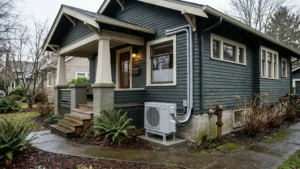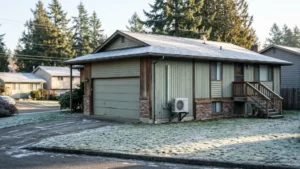


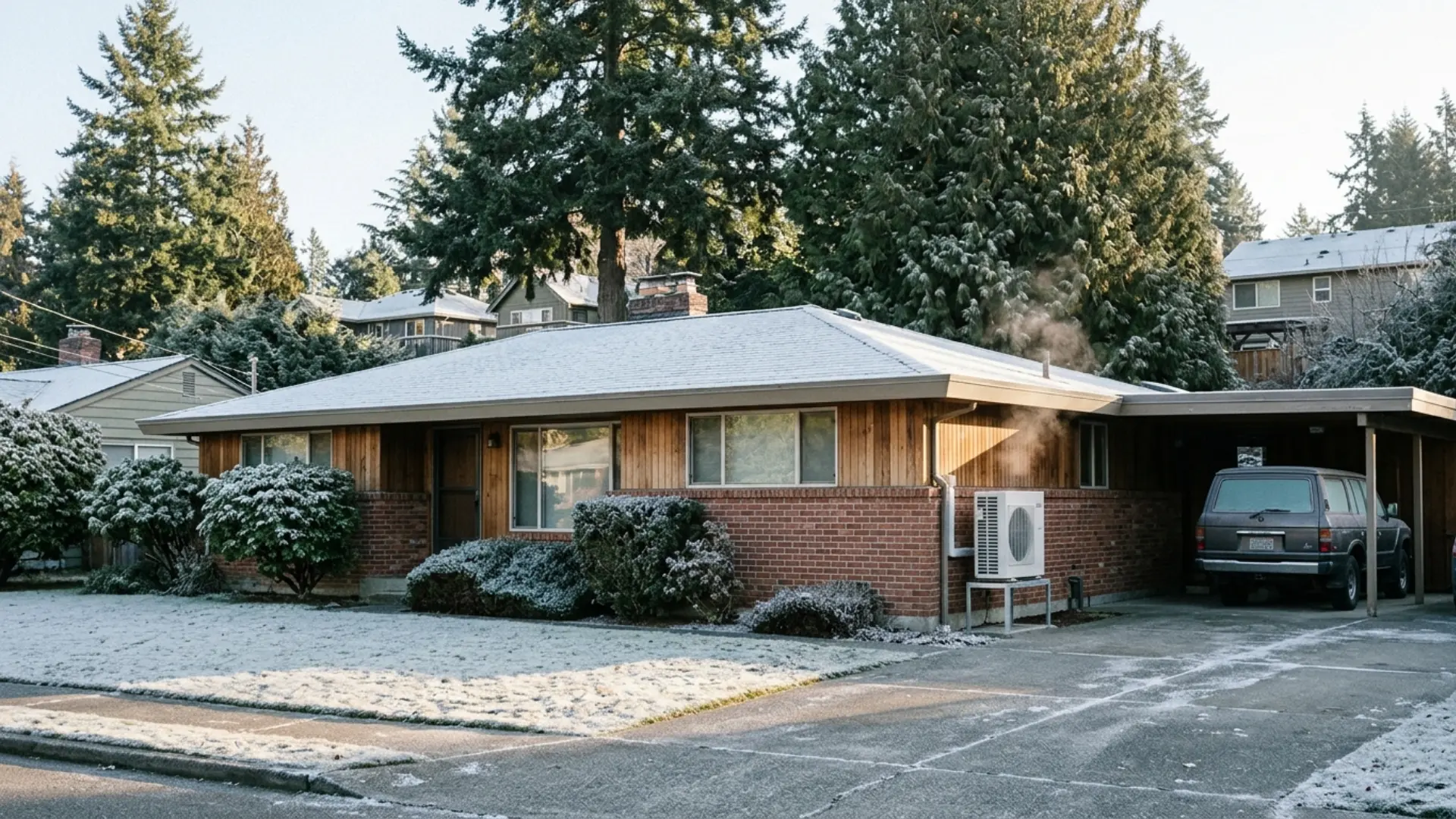
On January 14, 2024, Sea-Tac Airport bottomed out at 19°F and never made it above freezing that day. If you’re thinking about a heat pump, that’s the night you’re picturing. And honestly, it’s the right question to ask. A heat pump that’s comfortable at 40°F tells you nothing about how it’ll do in the teens. The good news: modern cold-climate heat pumps handle Puget Sound winters well. But only when they’re sized for your coldest nights, not your average ones.
What Actually Happens to a Heat Pump When Burien Drops Below 20°F
Let me take the mystery out of this, because a lot of the worry comes from not knowing what’s normal.
Capacity Falls as the Temperature Falls, and That’s Expected
A heat pump doesn’t create heat. It moves heat from outside air into your house. Even at 20°F, there’s still plenty of heat in that air to move. It just takes more work, so the system’s output drops as the temperature drops.
Older and cheaper heat pumps lose a lot of capacity in the cold. That’s where the reputation came from. Cold-climate models, like Mitsubishi’s Hyper-Heat line, are built to hold onto far more of their heating output in the teens. So the question was never “will a heat pump work in the cold?” It’s “is this specific heat pump, at this size, enough for this specific house on the coldest night?”
Defrost Cycles: The Pause and the Steam That Worry People
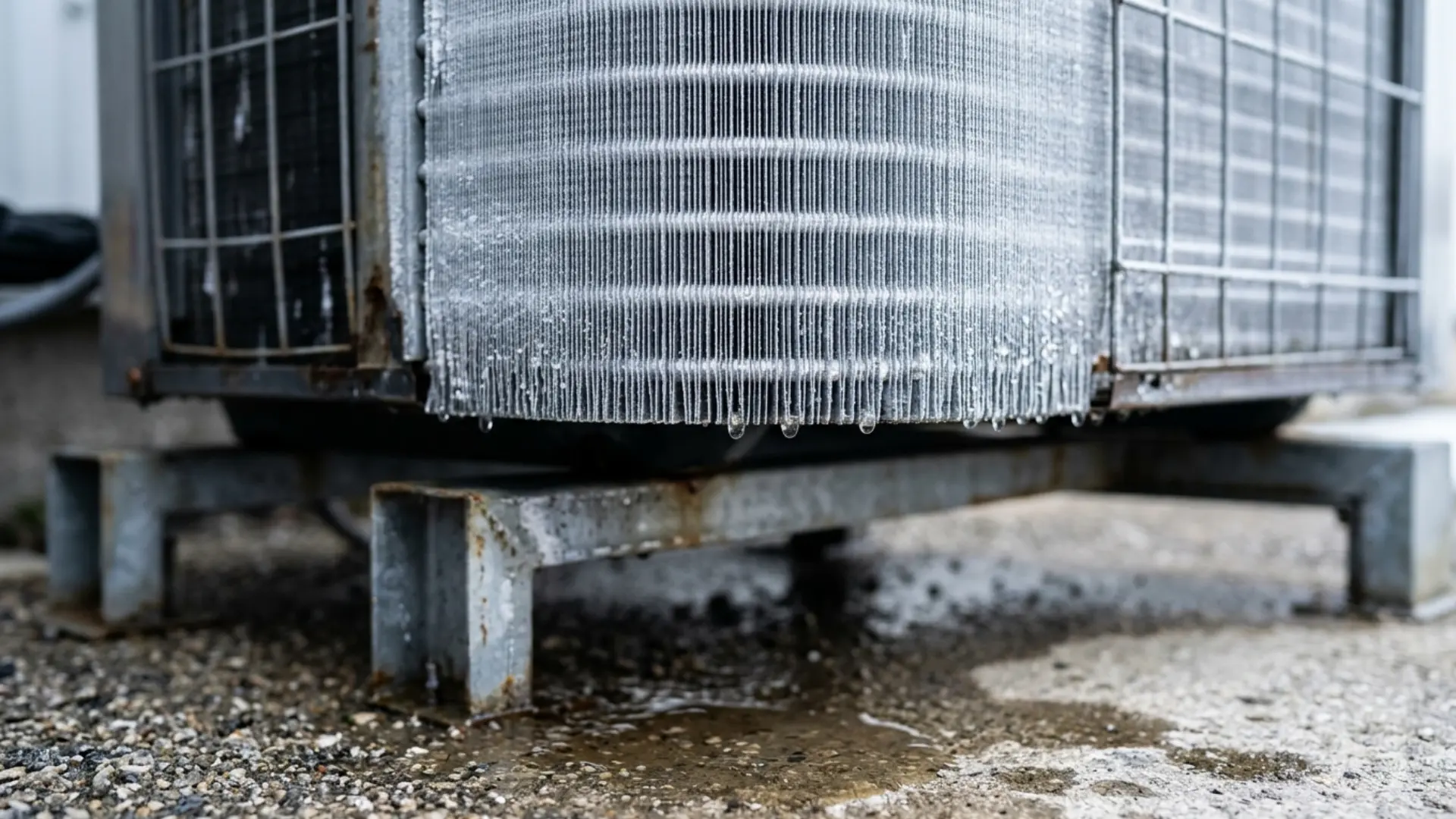
During cold, damp weather, frost builds up on the outdoor unit. Every so often the system runs a defrost cycle to clear it. You might see steam rising off the unit or notice the indoor head pause for a few minutes.
That’s not a failure. It’s the system doing exactly what it’s designed to do. In our climate, with temperatures hovering near freezing and humidity high, defrost happens more often than in drier cold places. A properly installed outdoor unit sits up off the ground on a stand or bracket so meltwater drains away instead of refreezing around the base. If you see a unit sitting flat in the dirt with ice packed around it, that’s an install problem, not a heat pump problem.
Sizing for the Coldest Nights, Not the Average One
Here’s where most heat pump complaints actually come from. Not the equipment. The sizing.
Why a Load Calculation Beats “Same Size as the Old Furnace”
A gas furnace and a heat pump behave differently. A furnace puts out the same heat at 45°F as it does at 15°F. A heat pump doesn’t. So copying the furnace’s size onto a heat pump often leaves you short when it’s coldest.
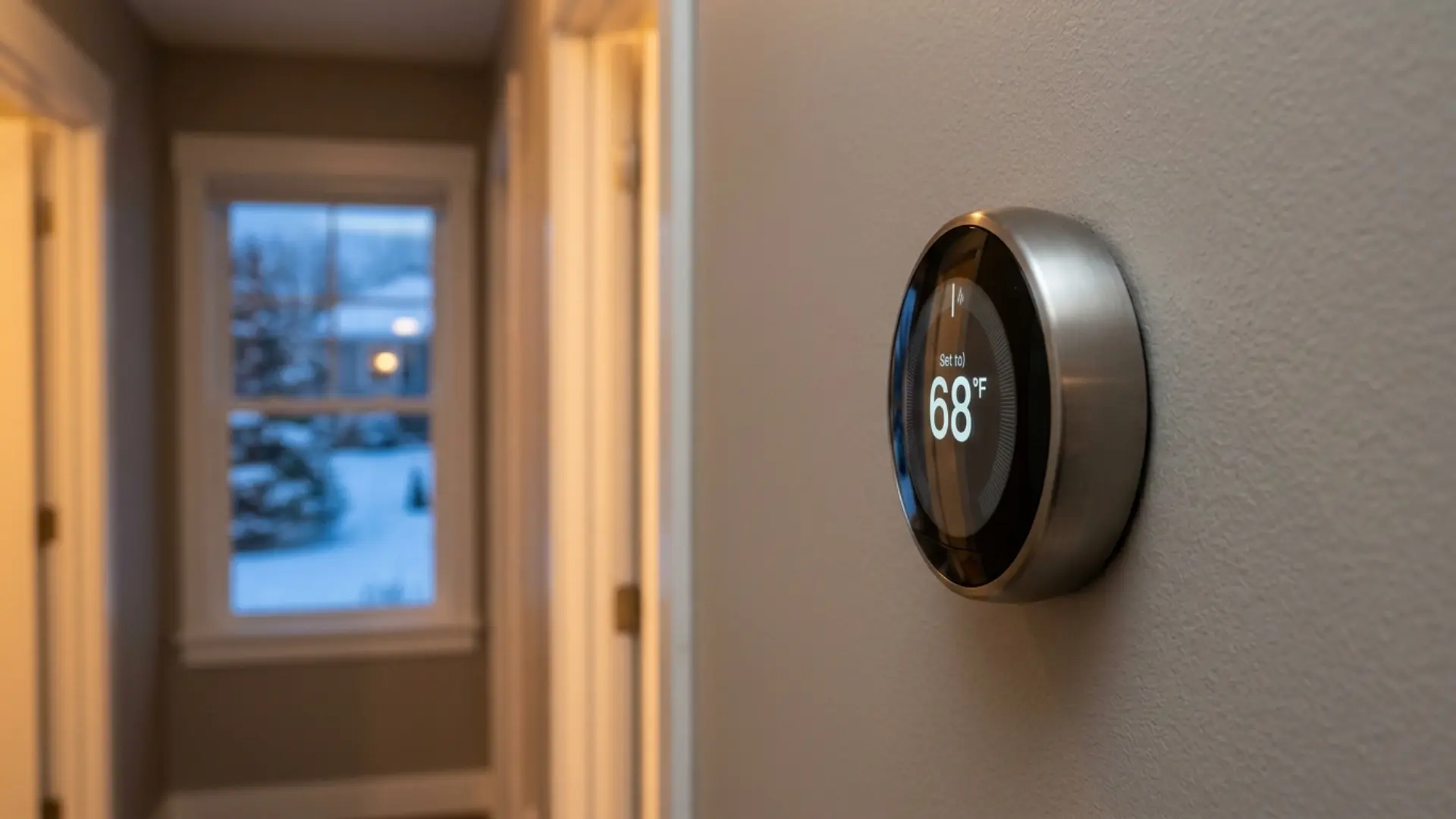
The right way to size is a load calculation (Manual J). We look at your square footage, insulation, window area, air leakage, which way the house faces and the local design temperature, then match equipment whose cold-weather output covers that load. It takes longer than eyeballing the old furnace label. It’s also the difference between a house that stays at 68 during a cold snap and one that drifts down to 63 while the system runs nonstop.
Oversizing isn’t the fix either. A unit that’s too big short-cycles in our mild shoulder seasons, which wears it out faster and leaves rooms feeling clammy. You want the right size, not the biggest one.
Variable-speed equipment helps a lot here. Instead of being either fully on or off, it ramps down on a 45°F afternoon and ramps up on a 20°F night. That lets a properly sized system cover the cold nights without overpowering the house the rest of the year.
What’s Different About a 1950s Burien Rambler
A lot of Burien’s housing stock is single-story ramblers from the 1950s and 1960s. They’re great homes, but they have quirks that affect sizing.
Many have ducts running through a vented crawlspace. In a cold snap, those ducts sit in air that’s barely warmer than outside. If they’re leaky or poorly insulated, a chunk of your heat never reaches the rooms. Sometimes the smartest move is sealing and insulating the ducts before sizing the heat pump. Other times, ductless heads for the main living areas make more sense than relying on the old duct system at all.
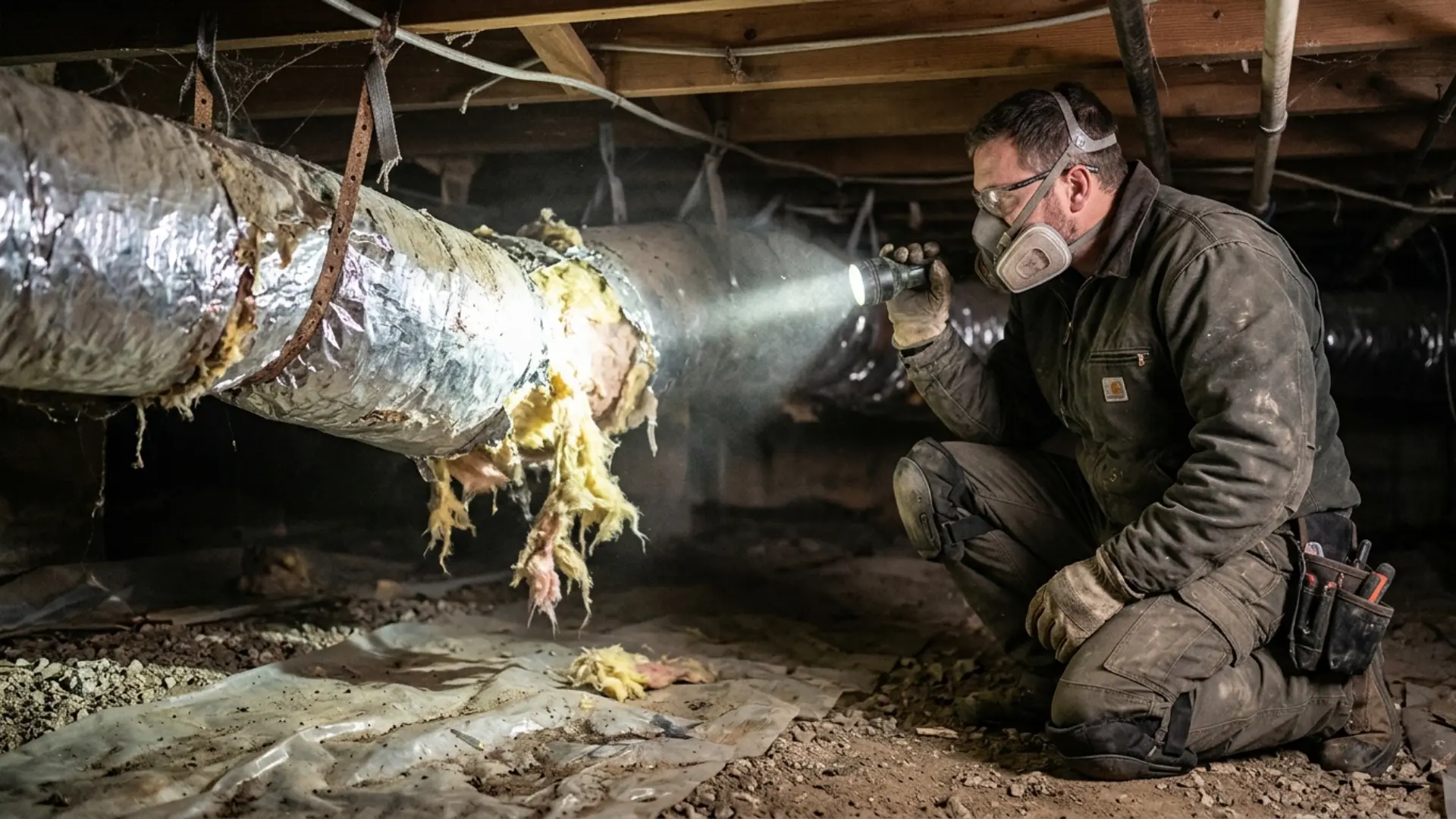
Single-pane or early double-pane windows, minimal wall insulation and a big picture window facing Puget Sound all add to the load too. None of this means a heat pump won’t work. It means the house needs to be measured honestly. If you’re weighing ducted against ductless for your Burien home, our comparison of central air vs ductless mini-splits for Burien homes covers the trade-offs from the cooling side.
Insulation and Air Sealing: Often Cheaper Than a Bigger Heat Pump
Here’s something I wish more people heard before buying. Sometimes the cheapest way to make a heat pump handle a cold snap is to make the house lose less heat.
Sealing obvious air leaks around the attic hatch, plumbing penetrations and old recessed lights, adding attic insulation and fixing disconnected crawlspace ducts can lower your home’s heat loss enough to drop a full size of equipment. A smaller system costs less up front, runs more efficiently in mild weather and still keeps up when it’s 20°F outside.
We don’t do insulation ourselves, but our load calculation will show you where the heat is going. If the numbers say a weekend of air sealing would save you from buying a bigger system, we’ll tell you that.
Choosing Backup Heat You’ll Actually Use Twice a Year
Even a well-sized heat pump benefits from a backup plan for the handful of nights a year when temperatures go well below normal.
Electric Strips, Keeping the Furnace or a Hybrid Setup
There are 3 common approaches.
Electric heat strips inside the air handler kick in only when the heat pump needs help. They’re simple and reliable, but expensive to run if they come on too often. A good installer sets them up so they stay off unless they’re truly needed.
Keeping your existing gas furnace as backup creates a dual-fuel system. The heat pump handles most of the winter, and the furnace takes over below a set outdoor temperature. This works well if your furnace still has years left.
For ductless homes, many people keep a few existing baseboards or a wall heater in place for the rare deep freeze. They might run them once or twice a winter.
Setting the Switchover Point So Backup Stays Backup
Whichever backup you choose, how it’s set up matters as much as what it is. With a dual-fuel system, the thermostat or control board has a switchover temperature. Above it, the heat pump runs. Below it, the furnace takes over. Set it too high and your furnace ends up doing half the winter, which defeats the purpose. Set it too low and the heat pump runs flat out on the coldest nights while the house slowly loses ground.
For electric strips, the controls should keep them locked out unless the heat pump truly can’t keep up, or during a defrost cycle. A system where the strips come on every time someone bumps the thermostat up two degrees will run up your power bill fast.
We set these points based on your home’s measured load, not a default from the factory.
The right choice depends on your house, your current system and whether there are rebate rules to follow. We walk through options like these on our new HVAC installation and replacement page, and you can see how a ductless system fits a home like yours on our ductless heat pump installation page. If you’re curious what install day itself looks like, here’s what to expect during an HVAC installation in Seattle.
A Burien Heat Pump Sized for the Coldest Night Won’t Leave You Guessing
A heat pump that struggles in a cold snap almost always comes down to one of three things: the wrong equipment for our climate, a size copied from the old furnace, or no plan for the coldest few nights. Fix those and a heat pump in Burien isn’t a gamble. It keeps the house warm through January, cools it in August and does both more efficiently than the system it replaced. So before you trust a quote, ask one question: what’s this system’s heating output at our coldest design temperature, and how does it compare to my home’s measured heat loss? If the answer is vague, keep asking.
Want a heat pump sized for Burien’s coldest nights? Book a free in-home assessment or call 206-750-5042. We’ll measure your home’s heat loss and show you exactly how the system performs when it counts.