

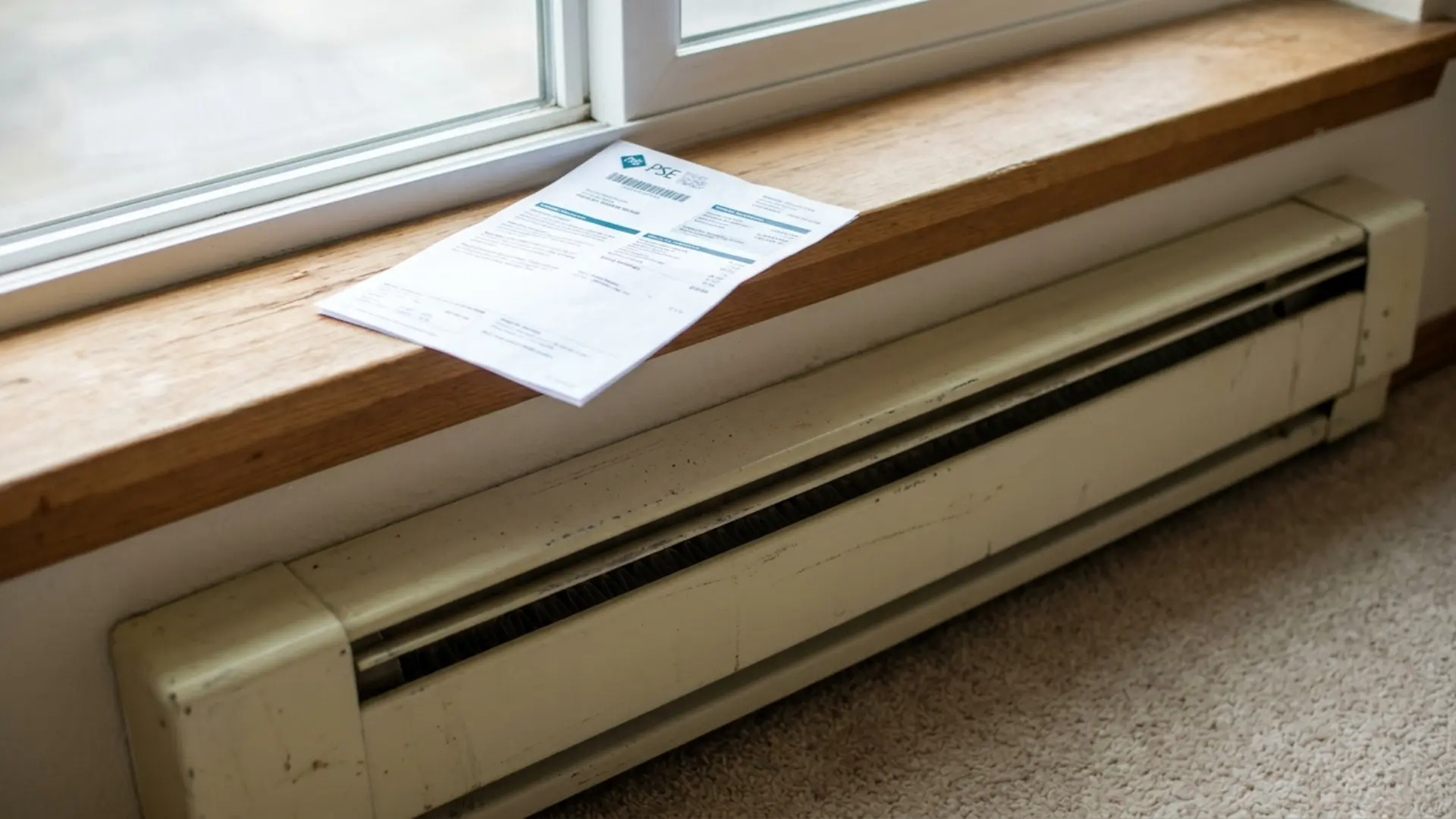
January bills hit different in a baseboard house. You keep the thermostat at 66, close doors to rooms you’re not using, and still open a PSE bill that makes you wince.
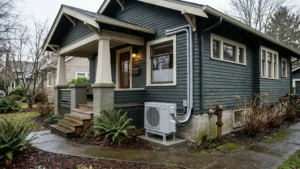
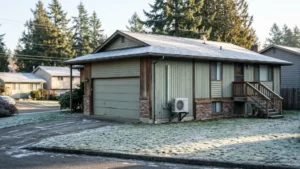
A lot of homes in the Renton Highlands and up on Kent’s East Hill were built in the 1960s through the 1980s with electric baseboards in every room. Switching to a ductless heat pump is one of the clearest upgrades those homes can make. But the PSE rebate has rules, and missing one can cost you the whole thing.
Does Your Renton Home Qualify for PSE’s Baseboard Conversion Rebate?
PSE pays a $1,500 rebate when you replace electric resistance heat with a qualifying air-source heat pump. If your household qualifies by income, PSE’s Efficiency Boost program raises that to $2,400. Good money. But it isn’t automatic, so let’s walk through who qualifies.
The Customer Rules
You need to be a current PSE single-family residential electric customer. Renton and Kent are PSE electric territory, so most homes here start on the right foot.
Your current primary heating system has to be electric resistance. PSE counts baseboards, wall heaters, ceiling cable heat, electric forced-air furnaces and electric hydronic systems. If your house runs mostly on a gas furnace with a couple of baseboards in the bonus room, that’s a different situation.
Two things knock people out. If you already have a heat pump, you’re not eligible for this rebate. And if you installed a heat pump only for air conditioning, that doesn’t count either.
The Equipment and Installer Rules
The new heat pump has to be AHRI Certified. For ductless systems, PSE sets a minimum heating efficiency (HSPF 9, or HSPF2 8.1). Most quality ductless equipment clears that easily, but cheap off-brand units sometimes don’t.
A ductless system also can’t use any ductwork to deliver air if you’re claiming the ductless rebate path. That matters if someone suggests a ducted air handler for part of the house.
And here’s the rule that changed this year. Since April 2, 2026, your heat pump has to be installed by a PSE Trade Ally or Recommended Energy Professional for the rebate to count. Ask any contractor you’re considering about that status before you sign. It takes one question and protects $1,500 or more.
What to Have Ready Before the Assessment
You’ll save yourself time if you gather a few things before anyone comes out. A recent PSE bill, so we can confirm you’re a residential electric customer and see your winter usage. A rough sense of which rooms you actually heat and which ones you keep closed off. And if you think you might qualify for Efficiency Boost, have a general idea of your household income, because that changes which rebate path applies.
Photos help too. A quick shot of your electrical panel with the door open tells us a lot about whether there’s room for a new circuit.
How Many Ductless Heads Does a Baseboard House Really Need?
This is where quotes start to look wildly different from each other, and I think it’s where homeowners get the most confused. One contractor quotes two indoor units. Another quotes five. Both can’t be right for your house.
Open Layouts vs. Closed-Room Ramblers and Split-Levels
A ductless indoor unit heats the space it can “see.” Air moves out from the head and through open doorways, but it doesn’t turn corners well or push into closed bedrooms down a hallway.
So a Renton home with an open kitchen, dining and living area can often be covered by one well-placed head on the main floor. Bedrooms are the real question. If your family sleeps with doors closed, each bedroom usually needs its own small head or it’ll run a few degrees cooler than you want.
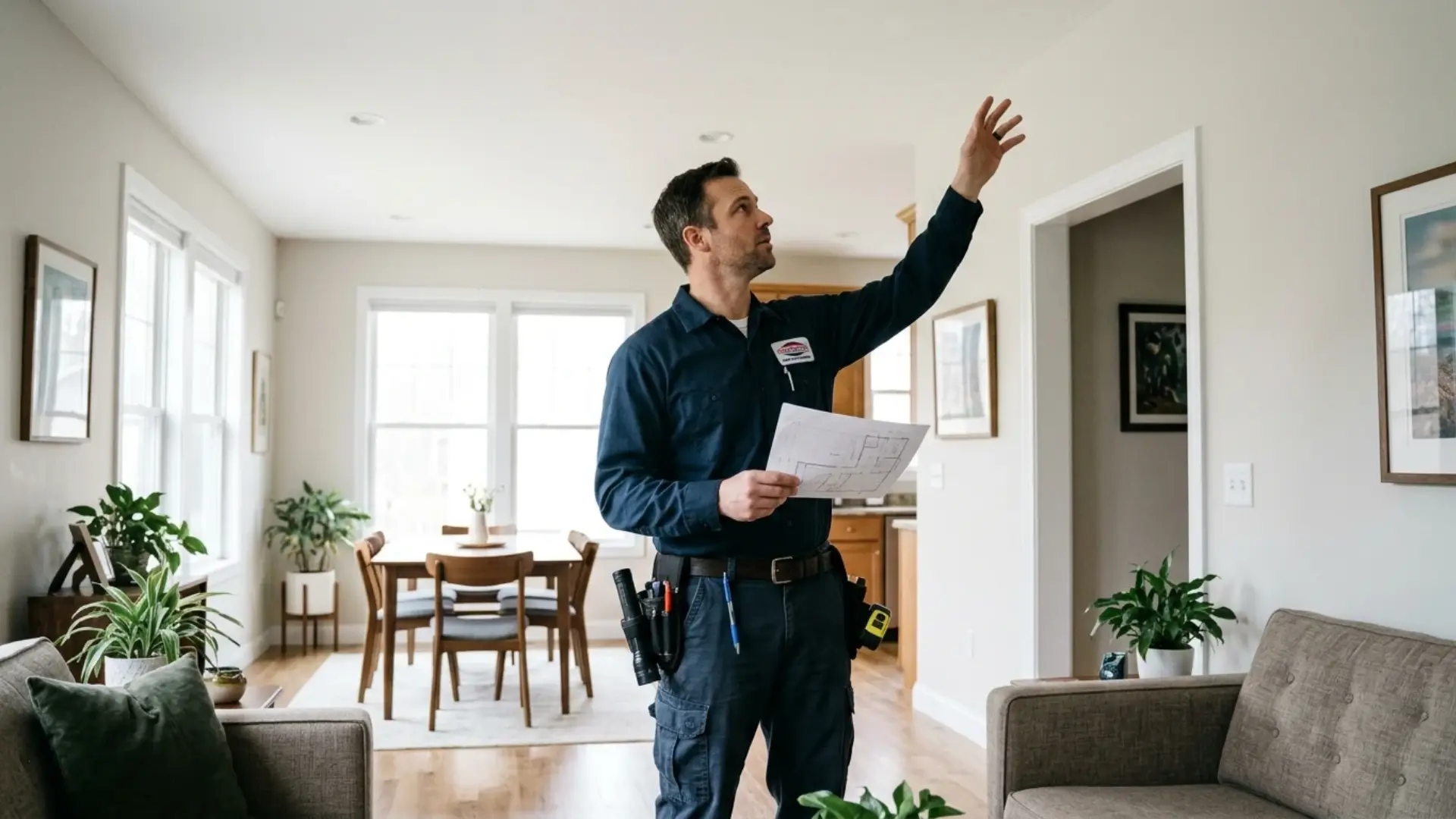
Split-levels are their own puzzle. Warm air rises to the upper bedrooms, while the lower family room off the garage stays chilly. Placement matters as much as head count here. A head on the upper level does very little for that lower room, while one on the lower level can often carry some heat upward too.
We size each zone with a load calculation, not a guess based on square footage. Our ductless heat pump installation page explains how we decide where heads go and why.
Bathrooms, Hallways and the Rooms People Forget
Bathrooms are small, but they’re where people feel cold most. Stepping out of a shower into a 62°F bathroom is miserable. Most homes don’t need a ductless head in each bathroom, though. If the bathroom sits near a heated bedroom or hallway, an open door and a little warm air usually does the job. For a bathroom at the far end of the house with an outside wall, keeping its small baseboard or adding a wall heater can be the simpler answer.
Hallways are a different story. A long, narrow hallway in a rambler can act like a cold tunnel between bedrooms. Sometimes one head placed at the end of that hallway, facing the bedroom doors, does more than a head inside one bedroom. This is where an experienced installer earns their fee. It isn’t about adding units. It’s about putting them where the air actually goes.
Do the Baseboards Have to Come Out?
The heat pump needs to become your primary heat. Whether a few baseboards can stay in place as backup, say in a bathroom or a rarely used guest room, is something we check against PSE’s current rebate terms for your exact setup.
In practice, most people stop using their baseboards within the first week. They just don’t need them. But I’d rather we confirm the rules than have you find out at rebate time.
What Changes After the Switch
A ductless heat pump doesn’t just change the bill. It changes how the house feels.
Lower Winter Bills and Steadier Heat
Baseboards heat in bursts. They click on, the room gets warm near the wall and cold near the window, then they shut off. A ductless system runs at variable speed, so it holds a steady temperature instead of swinging. People notice that first, even before the bill arrives.
On cost, a heat pump moves heat instead of making it from scratch the way resistance heat does. That’s why baseboard conversions are one of the projects utilities like PSE are most willing to pay for.
What Happens Outside: Panel and Outdoor Unit Placement
Every ductless system needs an outdoor unit and a dedicated electrical circuit. In baseboard homes, the panel is often in better shape than people expect, since the baseboards were already drawing heavy electric loads. But it still needs checking.
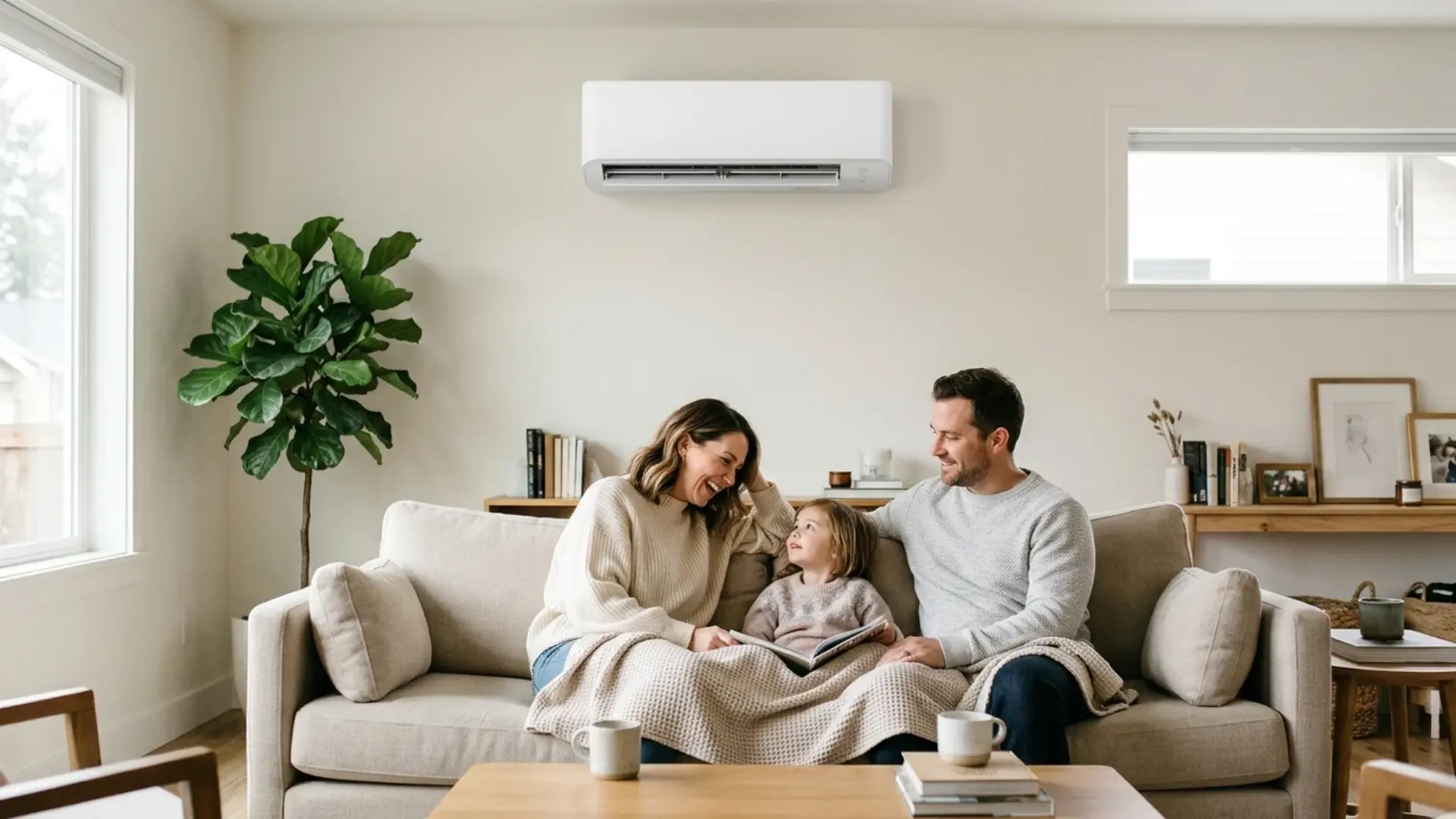
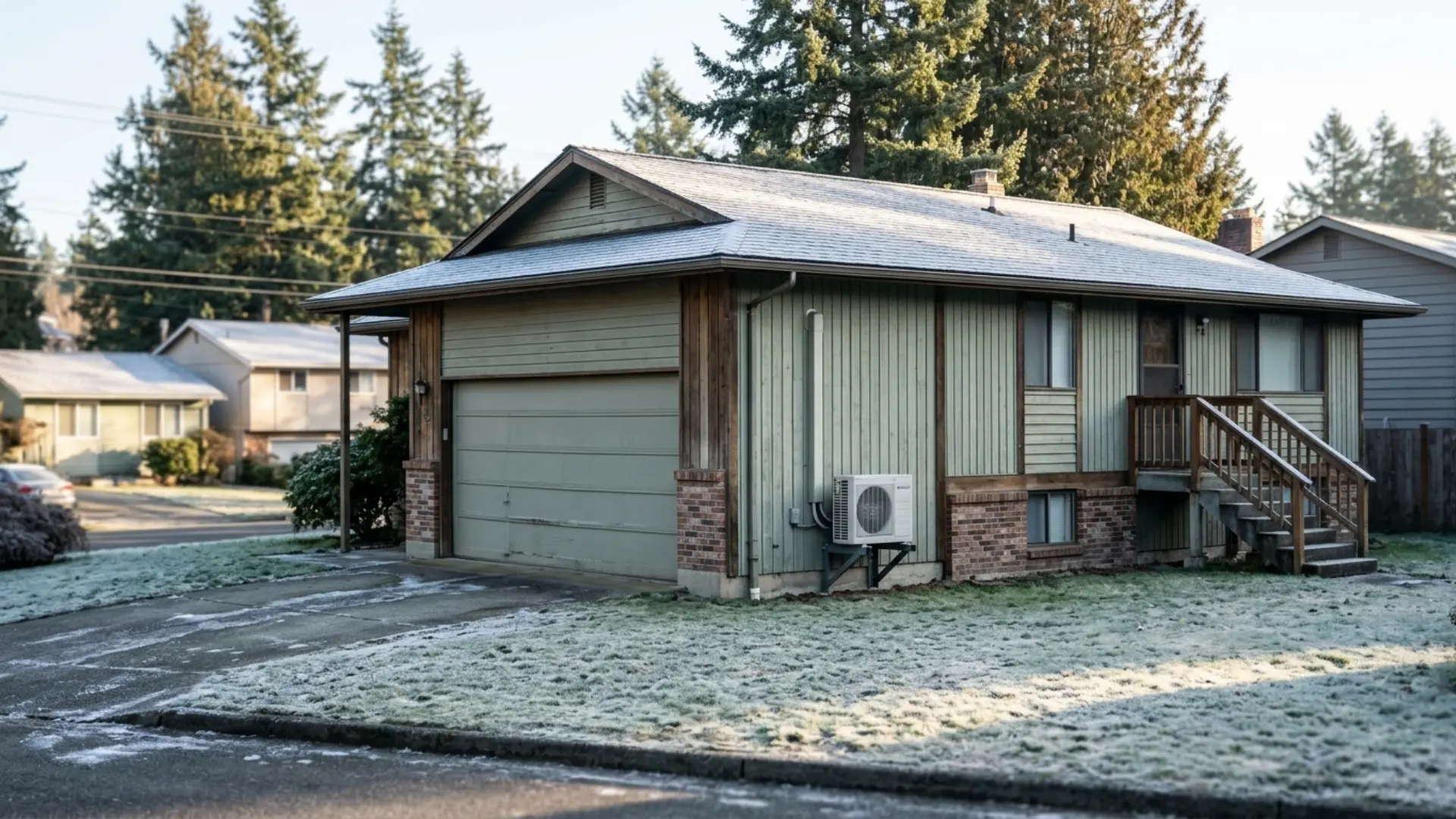
The outdoor unit usually sits on a wall bracket or a small stand, up off the ground so rain and frost melt can drain. We think about where it goes: away from bedroom windows so you don’t hear it at night, out of the path of roof runoff, and close enough to the indoor heads to keep line set runs reasonable. A neat install means the lines run in a painted cover along the siding, not loose copper zip-tied to the gutter.
Cooling You Didn’t Have Before
Here’s the part most people don’t think about in January. The same system cools your house in summer. If you’ve been running a window unit in the bedroom or toughing out the hot weeks, that’s over. If you’d like to understand how the cooling side compares, our page on mini-split AC installation and replacement covers what to expect. We also wrote a deeper look at Mitsubishi ductless mini-splits for Seattle-area homes, the equipment we install most often as a Mitsubishi Diamond Contractor.
If the upfront cost still feels like a lot even after the rebate, financing options can spread it out so the payment sits next to a lower power bill.
Get the PSE Rebate Details Right and Your Renton Baseboard Conversion Pays Off
Baseboard houses are honestly some of the most satisfying conversions we do. The difference is obvious from the first cold night, and the PSE rebate makes the numbers friendlier than most people expect. The catch is that the rebate depends on details: you have to be a PSE electric customer, electric resistance has to be your primary heat, the equipment has to qualify and the installer has to be approved under the current rules. Get those right and the rest is just choosing where the heads go. Get one wrong and you could pay full price for no reason.
Want to know if your Renton home qualifies? Book a free in-home assessment or call 206-750-5042. We’ll check your rebate eligibility, plan your zones and give you one clear price.