

You’ve probably already looked this up a few times. You know what a mini-split is, you’ve seen the price ranges online, and you’re somewhere between “pretty sure this is what I want” and “just tell me straight”. That’s exactly where this guide starts.
What actually matters is how to know the system fits your home, what installation realistically costs in Sand Point, which rebates you can actually stack, and how to tell a good contractor from one who’ll leave you with a voided warranty. That’s all here.
Is a Ductless Mini-Split Actually the Right Fit for Your Home?
Before cost and contractors, this question first. Because a mini-split is a great system in the right situation and a frustrating one in the wrong one.
4 Signs It’s the Obvious Move
You don’t need a long checklist. If one of these is true for your Sand Point home, a mini-split is probably the right call:
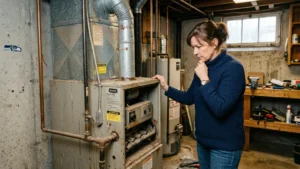
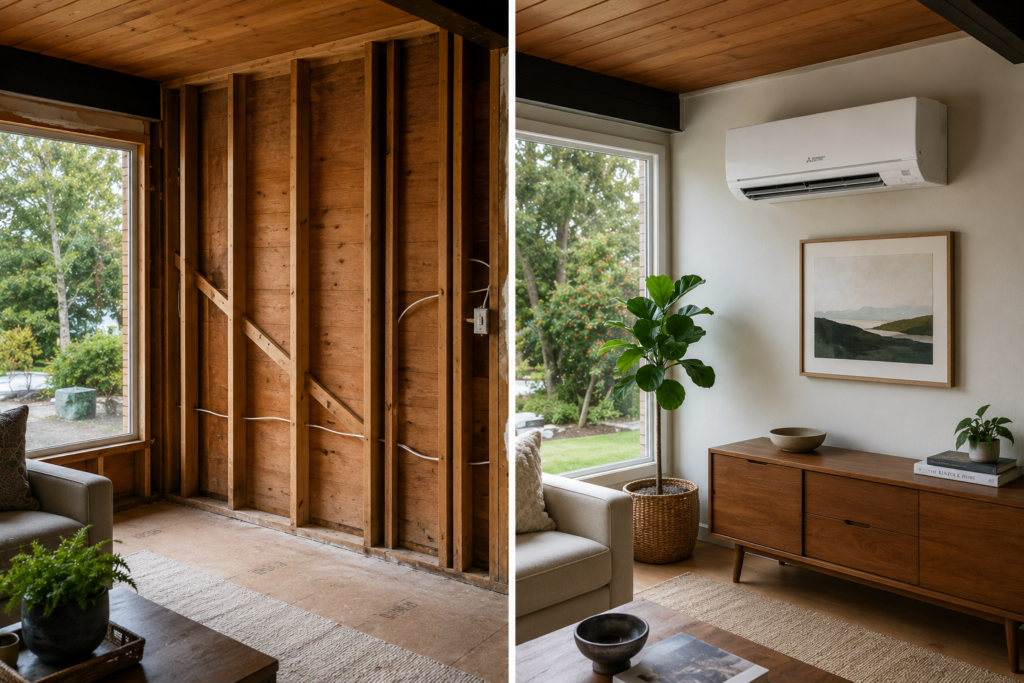
- Your home has no existing ductwork — or the ductwork is in poor shape. A lot of Sand Point homes were built before central air was standard. Retrofitting ductwork into a midcentury rancher or a craftsman with finished walls is expensive, disruptive, and often not worth it. A ductless system sidesteps all of that.
- You’re adding a room, finishing a basement, or building an ADU. Mini-splits are almost always the recommended path here. Extending existing ductwork to a new space is rarely efficient; a dedicated zone is cleaner and more controllable.
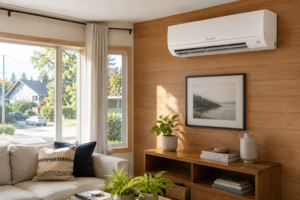
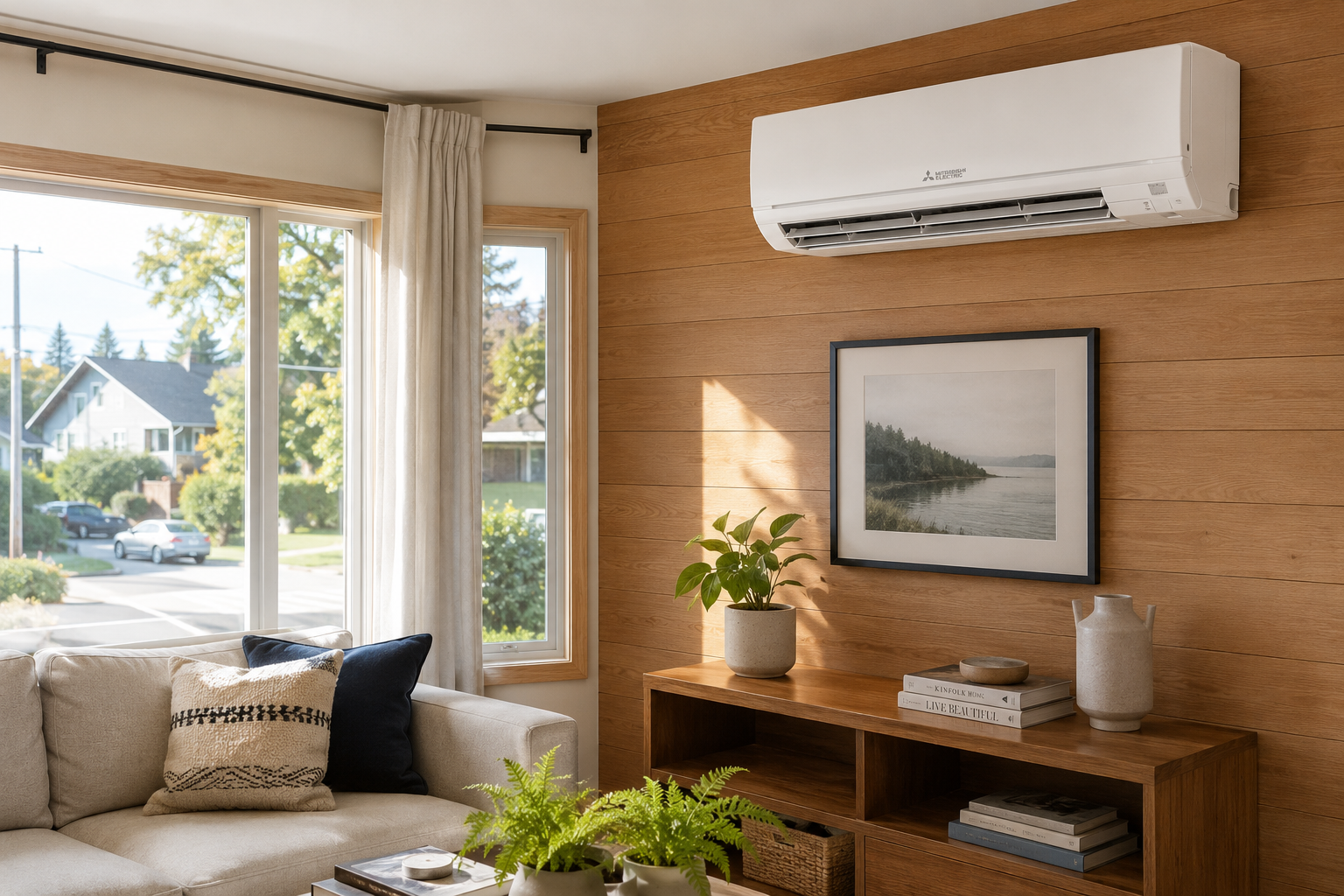
- One or two rooms never reach the right temperature. If you’ve got a bonus room above the garage that cooks in July or a bedroom that’s always five degrees colder than the rest of the house, a single-zone mini-split fixes that problem directly.
- You want zoned control without a full HVAC overhaul. A multi-zone system lets you heat and cool individual rooms independently. If you’re tired of cooling the whole house just to keep the home office comfortable, this is how you fix it without replacing everything.
When a Different System Makes More Sense
Here’s where it gets honest: if you already have a functioning central system with decent ductwork, a mini-split addition might not be the most cost-effective answer. And if you’re thinking about whole-home replacement — heating and cooling — a ductless heat pump might actually serve you better than a straight mini-split, especially with where Washington State rebates are right now.
If you’re not sure which way to go, a free assessment from an installer you trust will tell you more than any article can. But if you checked one of those four boxes above, keep reading, you’re probably in the right place.
What Ductless Mini-Split Installation Costs in Sand Point in 2026
Let’s get to the number.
In the Seattle market, including Sand Point, a single-zone ductless mini-split installation typically runs $4,000–$7,500 installed in 2026.
Multi-zone systems — two to four indoor heads connected to one outdoor unit — generally start around $8,000 and can run to $14,000 or more depending on how many zones you’re adding and what the electrical panel situation looks like.
That’s a wide range. Here’s what actually moves the number.
What Drives the Cost Up or Down
Equipment brand and tier. Mitsubishi and Daikin sit at the higher end of the equipment cost spectrum. They’re also the most reliable and the most rebate-eligible. Budget brands cost less upfront and often cost more later.
Placement complexity. A straightforward exterior wall installation is faster and cheaper than routing a line set through finished ceilings, around corners, or up two floors. If your home’s layout makes routing difficult, that’s where labor hours add up.
Electrical panel capacity. Mini-splits need a dedicated circuit. If your panel is already near capacity or needs an upgrade, that’s an additional cost — usually $500–$1,500 depending on what’s needed.
Number of zones. Each additional indoor head adds equipment cost and labor. The first zone is the most expensive per-unit; additional zones typically cost less to add if they’re going in during the same installation.
Rebates That Meaningfully Change the Math
This is the part people find out about after signing a contract, which is frustrating because the savings are real.
Federal 25C Tax Credit: You can claim up to 30% of the equipment cost for qualifying high-efficiency mini-split systems — capped at $600 for most equipment categories, though this is worth confirming for the current tax year. This comes off your federal tax bill, not just as a deduction.
Puget Sound Energy and Seattle City Light rebates: Depending on which utility serves your Sand Point home, rebates for qualifying ductless systems can run $200–$800 or more. These change periodically, so current amounts are worth confirming before purchase.
Mitsubishi Diamond Contractor rebate eligibility: Some manufacturer programs include additional rebate opportunities that only apply when a certified contractor does the install. More on that in a minute.
Cloud9 is a Snohomish PUD Registered Trade Ally and handles rebate paperwork as part of the installation process — you don’t have to chase it yourself. The full picture of what’s available is on their rebates page, and if upfront cost is a factor, they also offer financing through Synchrony.
Why the Contractor You Choose Matters More Than the Brand
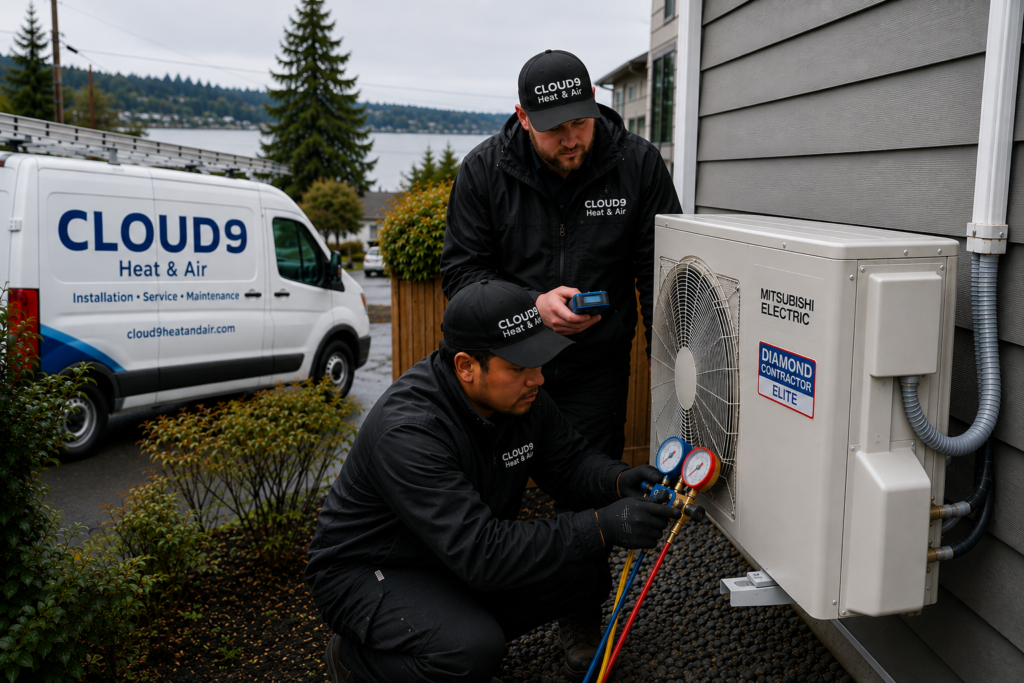
The equipment is the equipment — you can buy a Mitsubishi unit from multiple installers. What varies dramatically is the installation quality, and installation quality affects everything: how efficiently the system runs, how long it lasts, and whether your warranty is actually valid.
What “Mitsubishi Diamond Contractor” Status Actually Means
Mitsubishi’s Diamond Contractor program isn’t a marketing badge. It requires factory training, ongoing education requirements, and a certain installation volume to maintain. More importantly for you: a Diamond Contractor can register your equipment for the extended warranty — which for Mitsubishi systems can be up to 12 years on parts and compressor, versus the standard 5 years you’d get with an uncertified install.
An installer who says “we install Mitsubishi units” and a Diamond Contractor are not the same thing. One of those options protects your investment. The other doesn’t.
Cloud9 holds 2025 Mitsubishi Diamond Contractor of the Year status, which is the top certification tier. That’s worth mentioning not as a sales point but because it’s specifically what determines warranty eligibility. You can verify Diamond Contractor status directly on Mitsubishi’s website before hiring anyone.
The Five Questions to Ask Before Any Installer Comes Out
These aren’t trick questions — they’re the ones that separate contractors who’ve done this a hundred times from ones who figure it out as they go.
1. Are you a manufacturer-certified installer for this brand?
Not “do you install this brand” — are you certified by the manufacturer. If they hesitate or redirect, that’s your answer.
2. Will you pull the necessary permits in Seattle?
Mini-split installation requires permits in Seattle. Anyone who offers to skip permits is offering to save themselves time at your expense. No permit means no inspection, and no inspection means no protection if something goes wrong.
3. What does commissioning include?
Commissioning is the startup process where refrigerant charge is verified, system settings are confirmed, and the unit is tested to run correctly. Installers who rush or skip this step leave systems that run at reduced efficiency from day one.
4. Do you handle the rebate paperwork?
A good contractor handles this for you. If you’re on your own to figure it out, factor that into your comparison.
5. What’s the workmanship warranty, separate from equipment warranty?
Equipment warranty covers parts. Workmanship warranty covers the install itself. Know what you’re getting on both.
What the Installation Process Should Actually Look Like
From start to finish, here’s what a proper mini-split installation includes, and knowing this helps you spot shortcuts.
A site assessment comes first. That’s where the contractor evaluates placement for the indoor head, routing for the line set (the refrigerant lines connecting indoor and outdoor units), and whether any electrical work is needed. Good contractors also review rebate eligibility at this stage.
Installation day, for a single-zone system, typically takes four to six hours. That includes mounting the indoor unit, installing the outdoor condenser, running and insulating the line set, making the electrical connections, and connecting the drain line.
Commissioning follows. This is where refrigerant charge gets verified with gauges, system operation is tested across heating and cooling modes, and any adjustments are made. Don’t let anyone tell you this step isn’t necessary.
Finally: a walkthrough covering how to use the system, filter maintenance schedule, and documentation of the warranty registration. If you’re not getting a warranty registration document, ask why.
For a fuller look at what mini-split installation and replacement looks like through Cloud9, their service page has the details. And if you’re comparing this against a central system option, their new HVAC installation page covers both paths.
Mini-Splits Make a Lot of Sense for Sand Point Homes
But the installation piece is where things go right or wrong, and where most homeowners don’t ask enough questions before signing anything.
Know what you’re getting: a manufacturer-certified installer, permits pulled, commissioning done properly, and rebate paperwork handled. Those aren’t extras — they’re the baseline for an installation that actually protects the investment you’re making.
Cloud9 does free, no-pressure consultations for Sand Point homeowners and will give you straight numbers for your specific home, including what rebates you qualify for and what the net cost looks like after stacking them. Book your free mini-split consultation with Cloud9 Heat & Air.