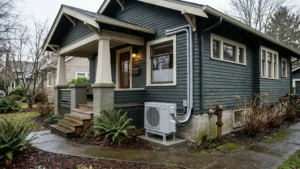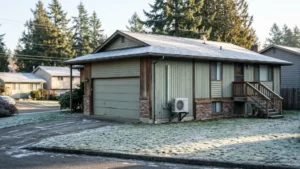



A lot of Bellevue homes got multi-zone Mitsubishi systems somewhere between 2010 and 2014. They’ve been quietly heating and cooling ever since. Now one bedroom head blows cold air when it should be heating, or one zone just stopped responding while the rest of the house works fine. So the natural question is: can I just replace that one indoor unit? Sometimes, yes.
Sometimes it’s money spent on a system that’s about to fail anyway. Here’s how we tell the difference.
When Replacing Just One Indoor Head Makes Sense
On a multi-zone system, one outdoor unit feeds several indoor heads. If only one head has a problem, replacing that head can be a sensible fix. But two conditions have to be true.
The Outdoor Unit Is Healthy and Has Life Left
The outdoor unit is the heart of the system. It holds the compressor, and it’s the most expensive part to replace. If it’s running well, holding its refrigerant charge and not throwing error codes, then a single bad indoor head is just a single bad part.
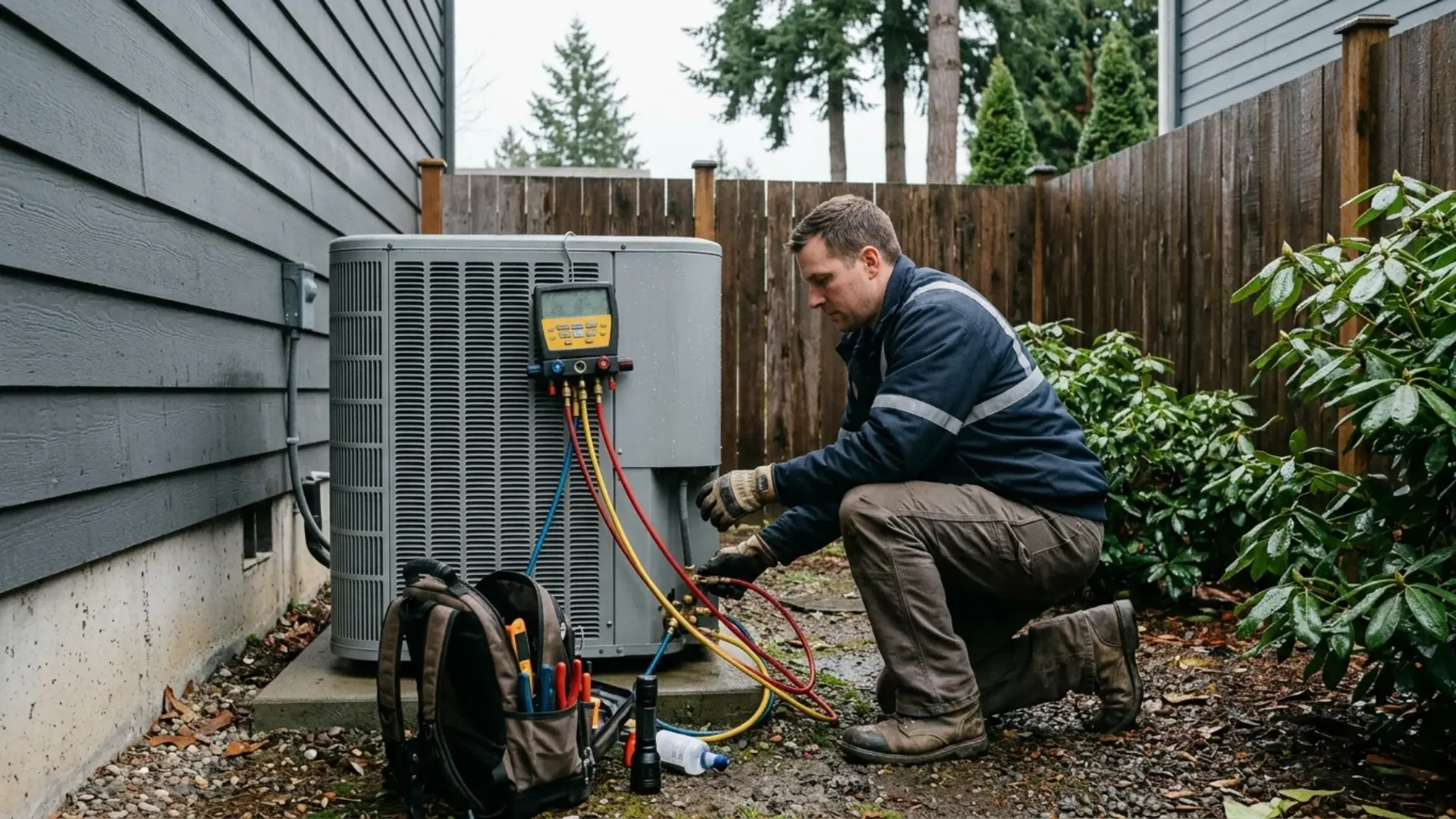
We check the outdoor unit first, every time. That means looking at its age, its operating pressures, its error history and whether it’s been leaking refrigerant. If it checks out, we move to the next question.
A Compatible Indoor Unit Is Still Available
This is the catch most people don’t expect. A new indoor head has to be compatible with your specific outdoor unit, the same product series and the same refrigerant.
And refrigerant is changing. New residential split systems have moved away from R-410A to newer lower-impact refrigerants, and you can’t mix them. If your outdoor unit uses R-410A, any replacement head has to be one designed for that refrigerant and that outdoor unit. As the industry moves on, compatible R-410A indoor units become harder to find. Sometimes a matching head is easy to get. Sometimes it’s discontinued and there’s no clean match.
As a Mitsubishi Diamond Contractor, we can check your exact model numbers against what Mitsubishi still supports, which saves a lot of guessing.
Repair the Head Before You Replace It
Before replacing anything, it’s worth knowing why the head stopped working. Plenty of single-zone problems aren’t the head itself. A failed sensor, a loose communication wire between indoor and outdoor units, a clogged condensate drain or a dirty blower wheel can all make one zone act dead while the hardware is still fine.
On a multi-zone system, one stubborn error code on one head is often a wiring or sensor issue. Those repairs cost a fraction of a new head. So the first step isn’t shopping for parts. It’s a proper diagnosis that tells you whether the head is actually done.
If it is, then the two questions above decide whether a single head replacement makes sense.
When the Whole System Should Go
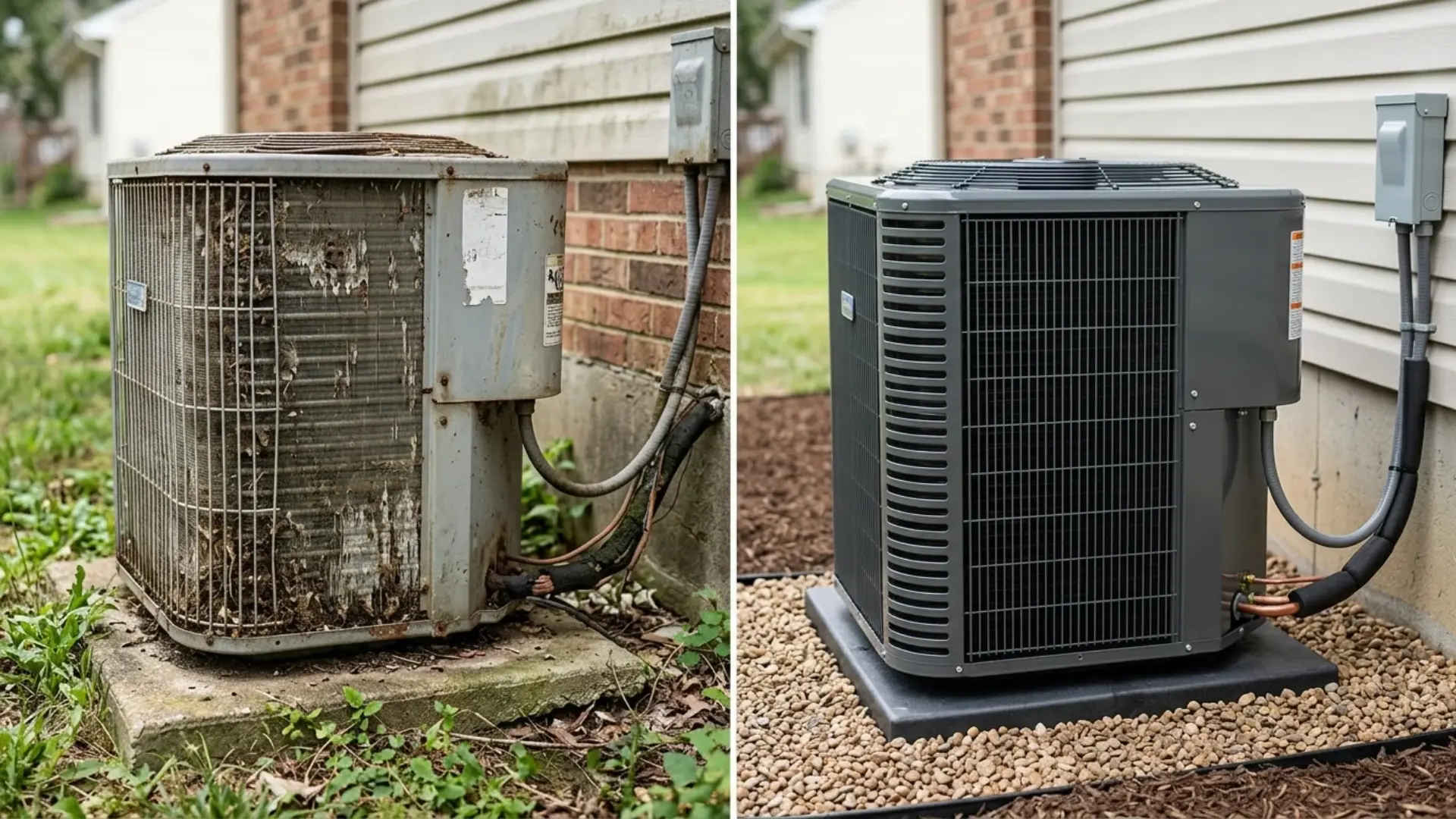
Sometimes replacing one head is like putting new tires on a car with a failing transmission.
The Outdoor Unit Is the Real Problem
If the outdoor unit is failing, every zone goes down with it. A compressor that’s struggling, a failed fan motor in an older unit or repeated refrigerant leaks usually point to replacing the system rather than repairing it.
Refrigerant leaks deserve a special mention. Recharging an R-410A system costs more as supplies tighten, and if the leak comes back, you’ll pay for it again. A leaky 13-year-old system is rarely worth chasing.
Leaks on ductless systems often hide at the flare connections where the copper lines meet each indoor head, or in a coil that’s started to corrode. Finding the exact spot takes time, and fixing one leak doesn’t guarantee there isn’t another. On a younger system, chasing a leak is usually worth it. On an older one, the odds start working against you.
More Than One Zone Is Struggling, or the System Is Past 12 to 15 Years
If one head fails at year 13, the others aren’t far behind. Their fan motors, boards and sensors are the same age and have been through the same number of winters. Replacing one head now and another next year and the outdoor unit the year after usually costs more than a planned full replacement.
A newer system also brings real gains: better cold-weather heating, quieter operation and smarter controls. If you want a sense of how long these systems typically run in our climate, we covered that in our post on how long Mitsubishi and American Standard systems last in Seattle.
What a Full Replacement Can Fix That a Head Swap Can’t
A full replacement is also a chance to fix things that have bugged you for years. Maybe the original installer put a big head in a small bedroom, and it’s always blasting too hard. Maybe the bonus room over the garage was never on the system at all. Maybe the outdoor unit sits right under a bedroom window and you hear it every winter night.
When the whole system is new, all of that is on the table. Zones can be resized, heads can move to better walls and the outdoor unit can go somewhere quieter. A head swap locks you into the original layout, good or bad.
Bellevue Specifics: Rebates, Warranties and Planning the Swap
Why Most Mini-Split Replacements Don’t Qualify for Rebates
I’d rather tell you this now than have you find out later. Most heat pump incentives in our area are built to move homes off oil, gas or electric resistance heat. Replacing an existing ductless heat pump with another one usually falls outside them.
Bellevue homes get electricity from PSE. PSE’s main heat pump rebate is for replacing electric resistance heat, and homes that already have a heat pump aren’t eligible for it. PSE does have a separate upgrade rebate for replacing an existing heat pump, but it applies to centrally ducted all-electric systems, not ductless mini-splits. Energy Smart Eastside, the incentive program for Bellevue and its neighboring cities, has focused on homes switching away from fossil fuel heating.
There’s one exception worth checking. If your home also has an old gas furnace or electric baseboards heating other areas, and the new system takes over that load, some programs may apply to that part of the project. We’ll look at it with you.
Warranty and Timing
When you replace a full system, you start fresh on warranty. Ask any contractor what manufacturer warranty comes with their installation and what they cover on labor, because that varies.

Timing matters too. If a single head fails in winter and the rest of the system is healthy, a repair or single-head swap may be the right short-term fix. But if the system is near the end of its life, planning a full replacement for spring gives you more flexibility than waiting for the outdoor unit to quit during a cold snap.
Questions to Ask Before You Approve Either Option
Whether you’re leaning toward one head or the whole system, ask the contractor a few direct questions.
- Did you test the outdoor unit, and what did you find?
- Is the replacement head confirmed compatible with my outdoor unit’s model and refrigerant?
- If I replace just one head, what’s your honest read on how long the rest of the system has?
- And for a full replacement, are you keeping the old layout or redesigning the zones?
You deserve clear answers to all four before spending money either way.
Our ductless heat pump replacement page explains how we handle full system swaps. If you need help with a system that isn’t ready for replacement yet, our ductless HVAC repair and maintenance service is the place to start. And our mini-split AC installation and replacement page covers equipment options if you’re reworking which rooms get their own head.
Before You Replace a Bellevue Mini-Split Head, Get These Three Answers
A failed indoor head doesn’t automatically mean a whole new system. But it doesn’t mean a quick part swap either. The answer depends on the health of your outdoor unit, whether a compatible head still exists for its refrigerant and how close the rest of the system is to retirement. Get those three answers before you spend anything, and the decision usually becomes obvious. Replacing one head on a healthy six-year-old system is smart. Replacing one head on a tired 14-year-old system is just the first of several bills.
Is one zone of your Mitsubishi system acting up? Book a free assessment or call 206-750-5042. We’ll check your outdoor unit and model compatibility and tell you which option actually makes sense.