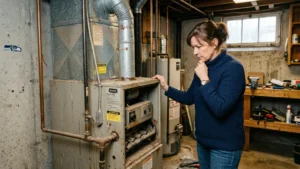


Most furnace replacements in Sand Point don’t go the way homeowners planned. They happen in late October, when the heat stops working and every HVAC contractor in Seattle has a three-week backlog. The decision that should take a few weeks of comparison and thought gets made in 48 hours, under pressure, with whatever contractor can show up fastest.
That’s the mistake. And it’s entirely avoidable.
This guide covers the full picture: when replacement actually makes more sense than another repair, whether a heat pump is worth considering before you commit to a furnace, what replacement costs in the Seattle area in 2026, and when to move so you’re not making a major financial decision in a crisis.
Repair or Replace, & Is a Furnace Even the Right Call?
Before you schedule a replacement, two questions worth slowing down on:
When Replacement Makes More Sense Than Repair
The threshold most contractors use, and it’s a reasonable one is the 50% rule: if the repair estimate exceeds 50% of what replacement would cost, you’re better off replacing. Spending $1,500 to fix a 17-year-old furnace that’s already running at reduced efficiency doesn’t make financial sense when a new unit costs $5,000–$6,000 and runs significantly more efficiently.
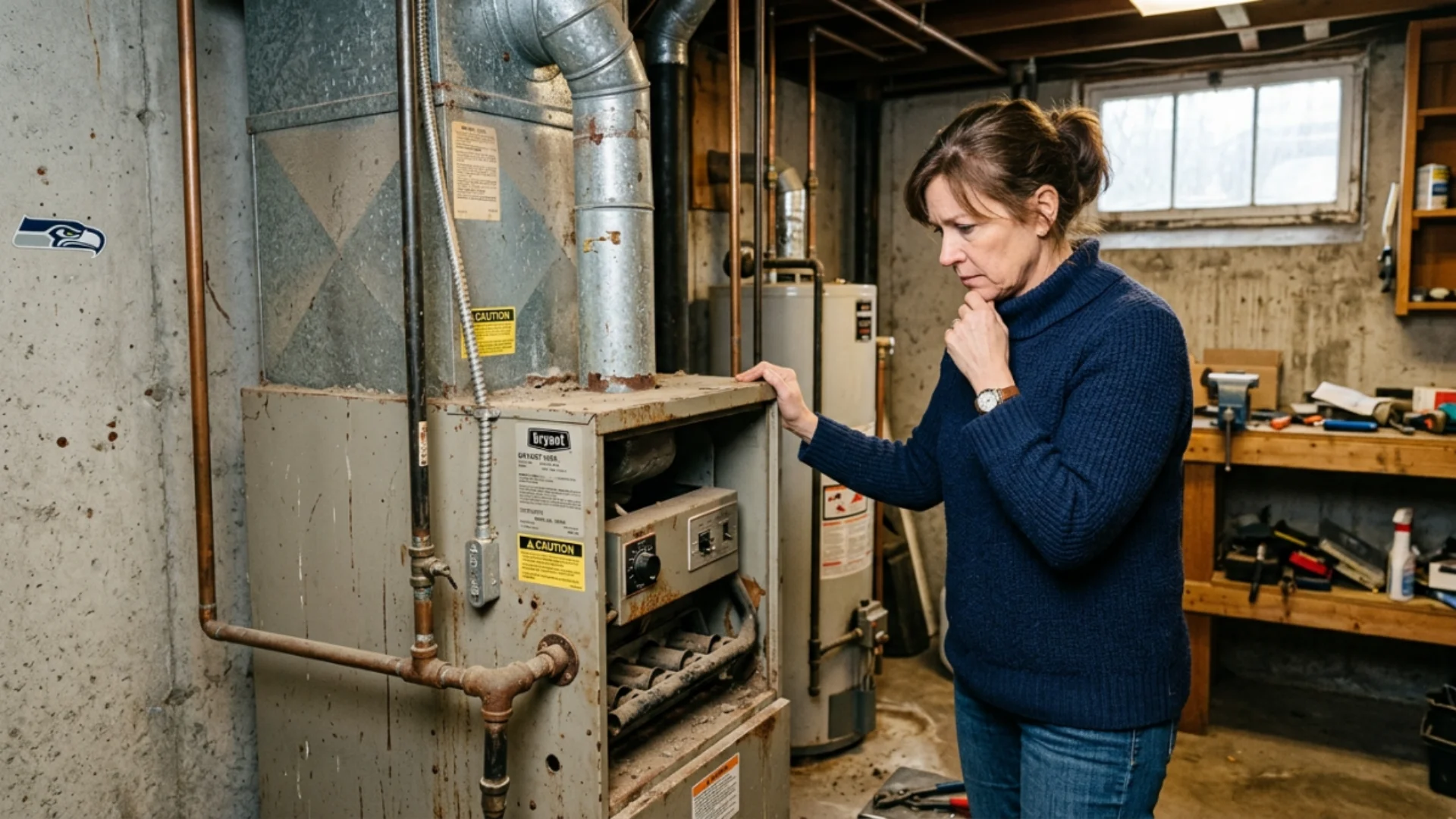
Age matters separately from repair cost. Furnaces have a realistic lifespan of 15–20 years. Past that window, efficiency drops, parts get harder to source, and you’re essentially buying time on a system that’s going to need replacement anyway. If your furnace is over 15 years old and you’re looking at its first significant repair, replacement is almost always the better long-term call.
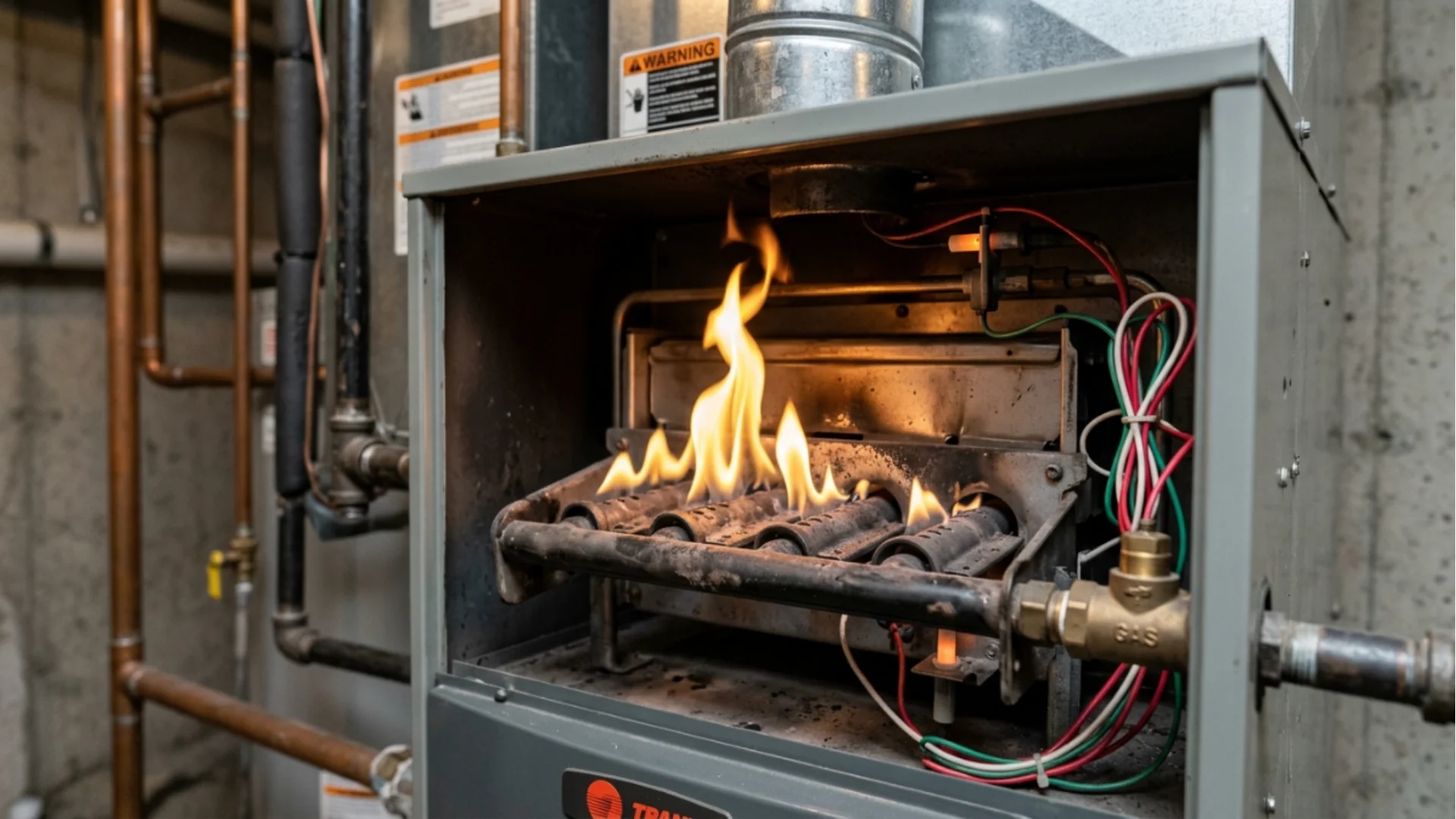
And it’s worth being honest about one safety issue: a yellow or flickering burner flame instead of a consistent blue one is a carbon monoxide risk. That’s not a repair to schedule next week. If you’re seeing that, call someone today.
Other signs that tend to get ignored until they can’t be anymore: rising gas bills without a change in usage, rooms that don’t reach temperature, a furnace that cycles on and off frequently without completing a full heat run, and unusual noises — grinding, banging, or a persistent hum during operation. Any one of those on a system over 12–15 years old is worth a professional evaluation, not just another season of waiting.
The Fork Most Sand Point Homeowners Don’t Know They’re At
When a furnace is failing, a straight replacement isn’t the only option. And in Washington’s current incentive environment, the question of whether to replace with another furnace or switch to a heat pump system is worth asking before you commit.
A few situations where a heat pump is genuinely worth considering:
Your home is all-electric or you’re planning to move away from gas. Washington State has been moving toward clean energy requirements, and the incentives for heat pump systems — particularly ductless heat pump installations — are stacking up well right now. Federal credits plus PSE rebates can materially reduce the effective cost.
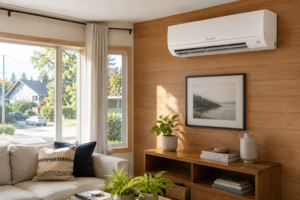
You want heating and cooling from one system. A furnace replaces your furnace. A ductless heat pump gives you both heating and cooling, which matters in a region where summers are getting warmer.
You’re planning to stay in the home for 10+ years. The efficiency gains and incentives make the payback period real, not theoretical.
That said, a heat pump isn’t the obvious answer for everyone. If you have a newer forced-air system, functioning ductwork, and a preference for gas heat, a high-efficiency furnace replacement is a straightforward, cost-effective decision. The point isn’t to talk anyone out of a furnace — it’s to make sure the decision is actually deliberate rather than default.
If you want to think through both options with real numbers for your home, that’s exactly the kind of thing a free consultation covers.
What Furnace Replacement Costs in Sand Point in 2026

In the greater Seattle market, furnace replacement runs roughly:
Standard efficiency (80% AFUE): $4,500–$6,500 installed. This is the baseline option — a solid, reliable system. Most appropriate when your existing venting is set up for a standard unit and the efficiency upgrade doesn’t pencil out on your timeline.
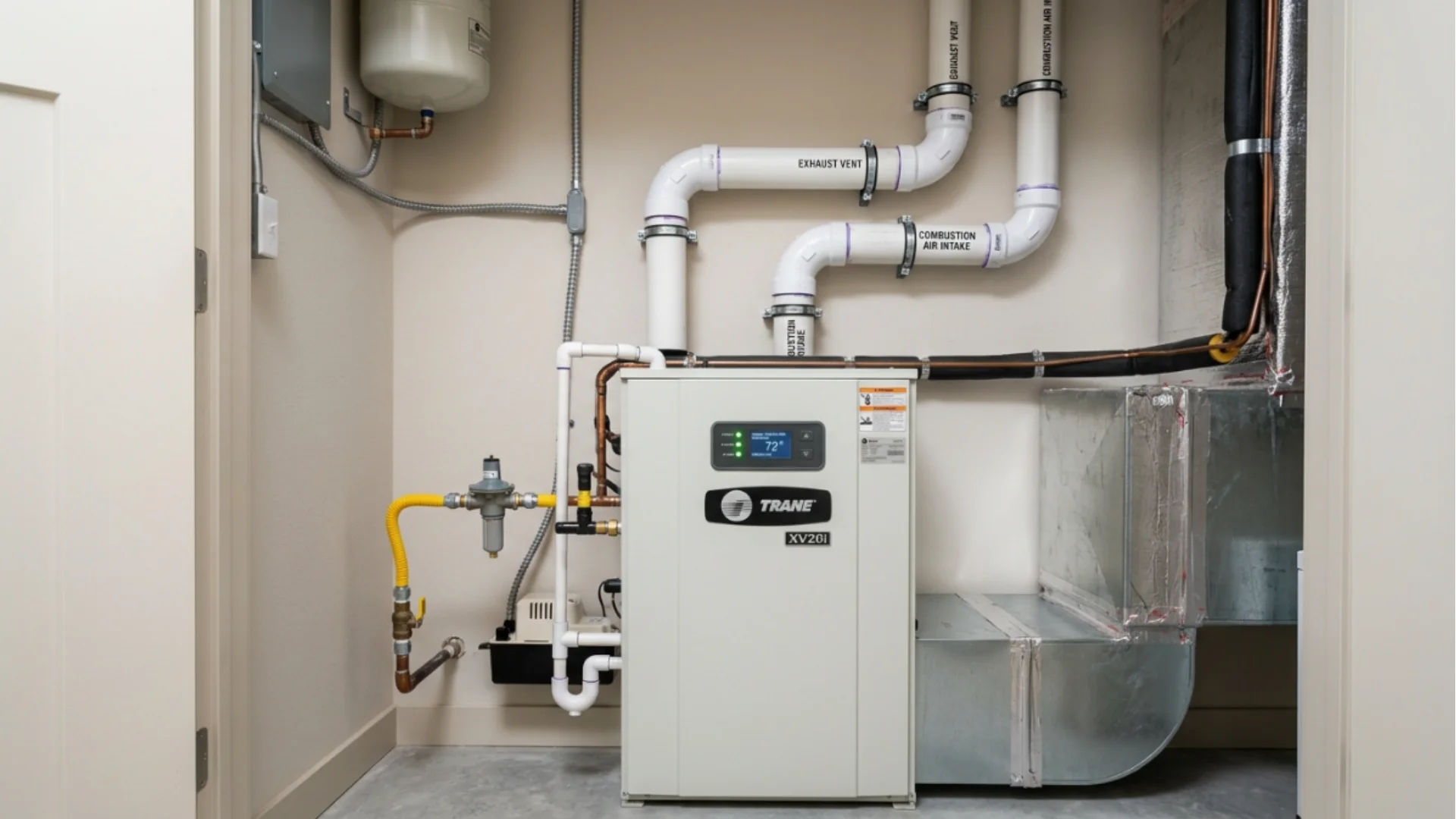
High efficiency (96%+ AFUE): $6,500–$9,500 installed. Higher upfront, meaningfully lower monthly bills. These units use sealed combustion and require two-pipe PVC venting rather than a standard flue — which means venting changes add to the install complexity if you’re switching tiers.
What Moves the Estimate
A few things consistently push quotes to the higher end:
Home size and heating load. A larger home needs a larger unit. Proper sizing requires a Manual J load calculation — not just matching whatever was installed before. An undersized furnace runs constantly and never fully heats the space; an oversized one short-cycles and wears out faster.
Ductwork condition. If the existing ductwork has leaks, damage, or inadequate insulation, replacement involves more than just the furnace. That’s worth knowing before you get quotes so the comparison is apples-to-apples.
Venting changes. Switching from a standard to high-efficiency unit typically means replacing the exhaust flue with PVC pipe — additional labor that’s usually worth it but needs to be factored in.
Permits. Required in Seattle. Factor them into any estimate. A contractor who offers to skip permits is not saving you money — they’re removing your protection.
Rebates Worth Knowing About Before You Commit
High-efficiency furnace replacement qualifies for the federal 25C tax credit — up to $600 or 30% of equipment cost for qualifying systems. That’s a real number, not a small discount.
PSE offers rebates for high-efficiency gas furnaces as well. Eligibility and amounts update periodically, so it’s worth confirming current figures before purchase rather than after.
Cloud9 handles rebate qualification and paperwork as part of the process. Their rebates page has current details, and Synchrony financing is available if spreading the cost matters.
One Mistake That Makes Replacement More Expensive
It’s not picking the wrong unit or skipping a rebate. It’s waiting.
Why October Replacements Cost More
Every HVAC contractor in Seattle sees the same thing every year: homeowners who’ve been watching a struggling furnace all summer call in October when the first cold snap hits and it finally gives out. The calendar fills fast. Emergency appointments carry premium pricing. And the homeowner — who wanted to compare three quotes and think it through — ends up making a decision in two days because they have no heat and a family at home.
Homeowners who replace their furnace in the July–September window typically get better scheduling, no emergency pricing, more time to compare options and contractors, and a cleaner decision about whether to go high-efficiency or stay standard. None of those advantages exist in October.
If your furnace is 15 years old, running less efficiently, or showing any of the signs above — now is the time to get an assessment, even if it’s still running. An honest contractor will tell you whether you’re looking at one more season or whether replacement before winter makes more financial sense.
What a Good Replacement Process Looks Like
This matters because not all installations are equivalent.
A proper assessment starts with a Manual J load calculation — not “what size was in there before”. Your home’s heating load is determined by square footage, insulation, window area, ceiling height, and infiltration. A furnace sized to your actual load runs more efficiently and lasts longer than one that’s just the closest approximate match to the previous unit.
After the assessment: equipment recommendation, rebate pre-qualification, and a clear quote that includes permits, labor, equipment, and any venting work. No surprises after the fact.
Installation day for a furnace replacement typically runs four to six hours. That includes removing the old unit, installing the new furnace, making gas and electrical connections, updating venting if needed, and testing the system through a full cycle.
Commissioning and startup follow — verifying the system runs correctly, checking gas pressure, confirming the heat exchanger is sealed, and walking you through operation and filter maintenance. You should leave installation day with warranty documentation in hand, not a promise that it’ll be emailed later.
Replacement Before This Winter is Almost Certainly the More Cost-Effective Path
The cost is real, the rebates help, and timing it right rather than waiting for an emergency makes the whole thing less expensive and less stressful.
Get at least two quotes, confirm permits are included, and ask whether the efficiency upgrade pencils out for your home and timeline. If you want a no-pressure starting point, Cloud9 Heat & Air offers free assessments for Sand Point homeowners and will give you a straight read on what you’re actually looking at. Schedule your free furnace assessment with Cloud9 Heat & Air.