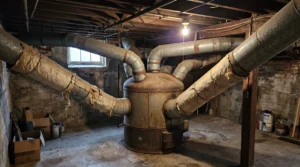


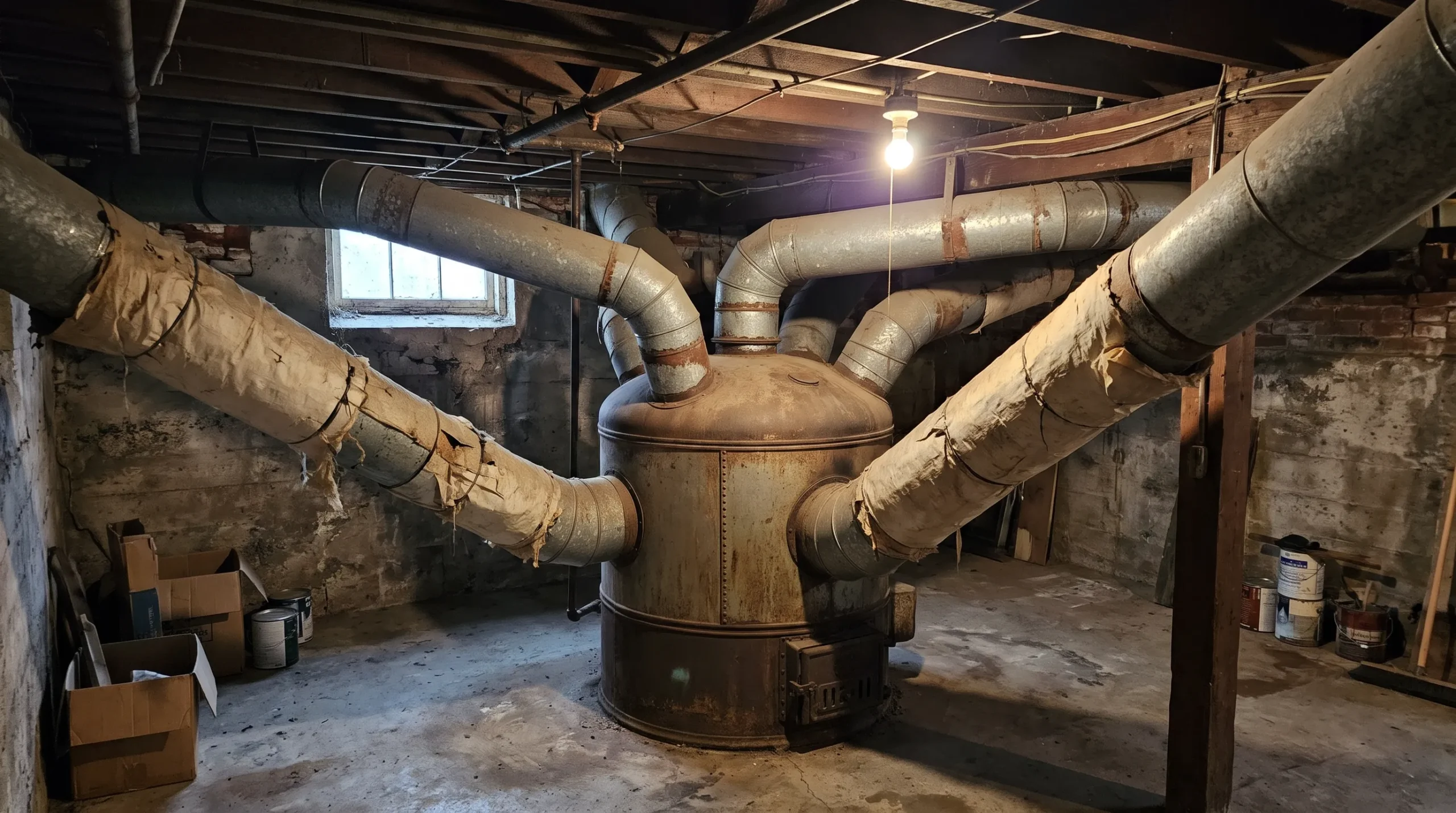
You go down to the basement of your 1920s Seattle house and there it is. A huge, round furnace with fat ducts spreading out like arms, wrapped in white, chalky material.
Or maybe a newer furnace, but the ducts above it are covered in old gray tape that crumbles when you touch it. Before anyone replaces that furnace, there’s a question that has to be answered first: is there asbestos? In older Seattle homes, the answer changes how the whole job is planned.
Why Asbestos Comes Up in So Many Seattle Furnace Replacements
Asbestos was common in heating systems for decades because it held up to heat. In Seattle, where so much of the housing stock was built before 1980, it’s something we run into regularly.
Where It Usually Hides
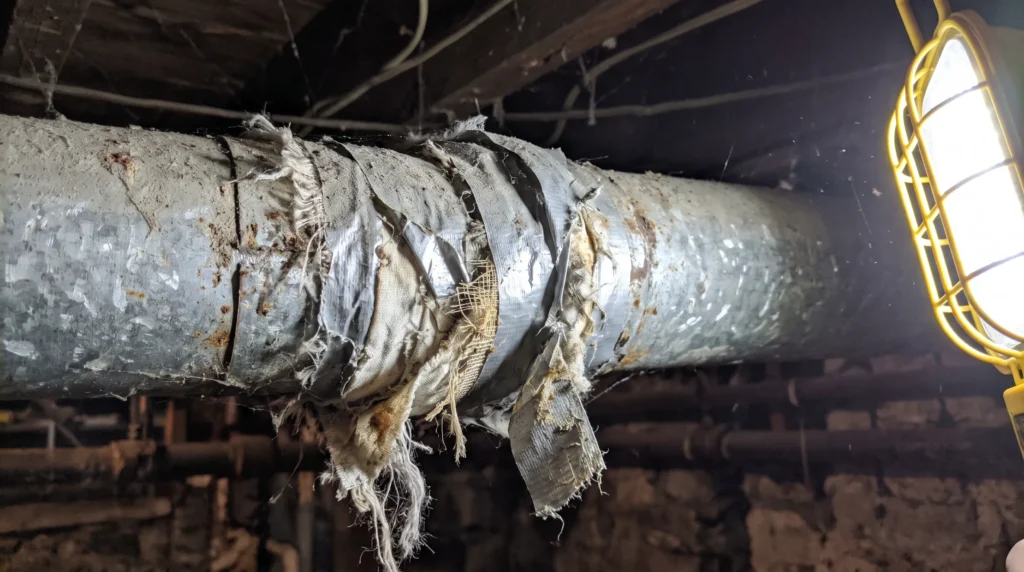
The most common spots are the white or gray wrap on old ducts and furnace bodies, the tape sealing duct joints, the insulation around old boilers and pipes, and sometimes the gasket or rope seals on very old furnace doors. Old vinyl flooring and some ceiling textures near the furnace area can contain it too.
You can’t tell by looking. Lots of old duct wrap is just paper or fiberglass. Lots of it isn’t. The only way to know is to have a sample tested.
Why It Matters When It’s Disturbed
Asbestos sitting quietly in good condition is a lower risk. The problem starts when it’s cut, scraped, broken or torn. That releases fibers into the air, and in a basement that connects to your duct system, those fibers can travel through the house.
Replacing a furnace almost always disturbs what’s around it. The old unit gets disconnected, ducts get cut and new transitions get fitted. That’s why the asbestos question has to come before the work, not halfway through.
What the Rules Actually Require in the Puget Sound Region
Here’s the part most homeowners haven’t heard about. In our area, asbestos in renovation work is regulated by the Puget Sound Clean Air Agency, and the rules are specific.
The Asbestos Survey Comes First
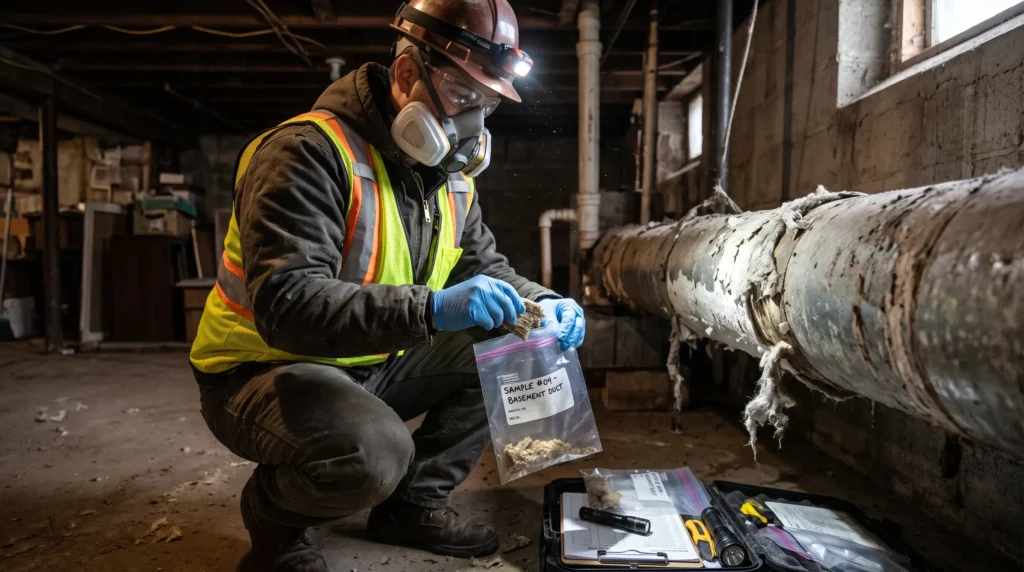
Before renovation work that could disturb building materials, an asbestos survey is required. For contractors, that survey has to be done by an AHERA-certified building inspector. The results have to be shared with the workers and kept at the job site.
There’s a narrow exception. Homeowners who live in and own the single-family house being remodeled may do their own survey. But once a contractor is doing the work, we follow the contractor rules, and we’d recommend a certified survey either way, because the results protect you and everyone working in your home.
If Asbestos Is Found
If the survey finds asbestos in material that will be disturbed, it has to be handled properly before or during the furnace work. In general, friable asbestos removal is done by a certified abatement contractor, and larger projects require a notification to the Clean Air Agency before work starts. The agency also allows some material to be repaired or encapsulated in place if it won’t be disturbed.
So the realistic sequence looks like this. Survey first. Then, if needed, abatement of the material in the work area. Then the furnace replacement. We coordinate the order so you aren’t left without heat longer than necessary.
I’d rather you hear about this now than from a contractor who rips out old ducts in an afternoon without asking. That shortcut can contaminate your home and leave you responsible for the cleanup.
What an Asbestos Survey Looks Like in Practice
People picture something dramatic. It’s usually not. An inspector walks through the area where work will happen, looks at the materials that will be disturbed, and takes small samples of anything suspect, like duct wrap, tape or old insulation. The samples go to a lab. Results usually come back within a few days, sometimes faster if you pay for a rush.
The report tells you which materials contain asbestos and which don’t. That’s it. A lot of the time, the answer is good news, and the furnace work goes ahead on schedule. When it isn’t, you have a clear list of what needs abatement before the furnace comes out.
Keeping Your House Warm During the Gap
If the survey or abatement adds time, the old furnace may still be safe to run until replacement day. If it isn’t, plan for safe electric space heaters in the rooms you use most. We schedule the furnace install for as soon as the work area is cleared, so the gap stays as short as possible.
Questions to Ask Any Contractor Before They Start
Ask whether they’ll require an asbestos survey before cutting into old ducts or removing the furnace. Ask who does the survey and whether the inspector is AHERA certified. Ask what happens if it comes back positive and how that affects the schedule. A contractor who shrugs at these questions is telling you how they’ll treat your house.
Replacing an Old Gravity Furnace or a Tired 1970s Unit
Once the asbestos question is answered, the furnace decision itself depends a lot on what you’re replacing.
Gravity Furnaces: A Different Starting Point
Some older Seattle homes still have gravity furnaces, the big round “octopus” style units. They work without a blower, relying on hot air rising through large ducts. Many were converted from coal or oil to gas decades ago.
You can’t just drop a modern furnace onto a gravity duct system and expect it to work. Those ducts are huge, uninsulated and laid out for natural airflow, not for a blower pushing air. Replacement usually means new ductwork sized for a modern system, or a different approach entirely, like ductless heat in some rooms. It’s a bigger project, but it’s also a big step up in comfort and safety.
Old Forced-Air Furnaces in 1950s to 1970s Homes
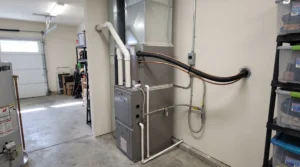
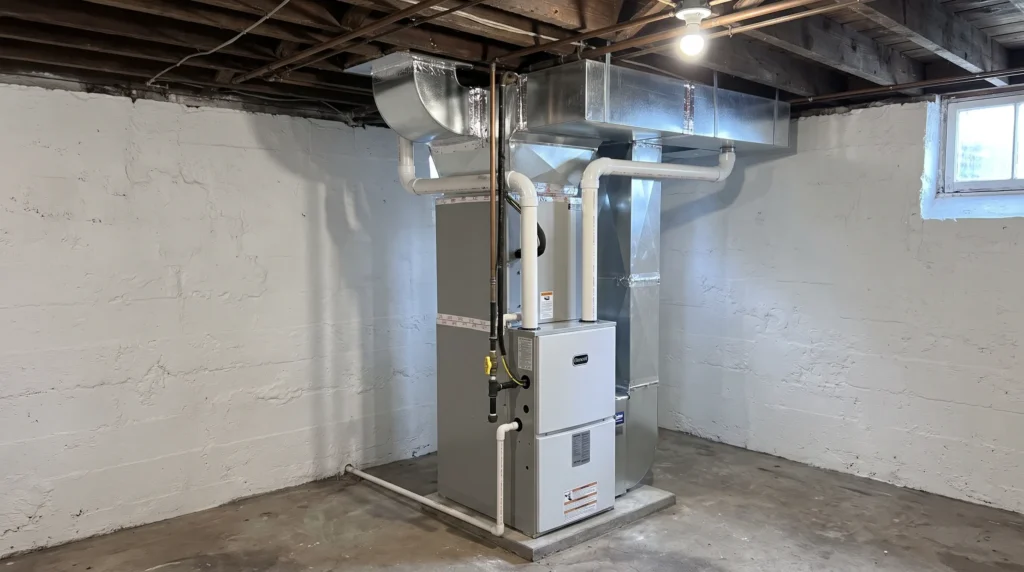
If your home has a forced-air furnace from the mid-century era, the ducts may be reusable once any asbestos issue is handled. The questions become sizing and duct condition. Many of these homes have had insulation, windows and additions changed over the years, so the old furnace size is rarely the right size anymore.
We look at your home’s actual heating needs and your duct system together. Sometimes the ducts are fine with some sealing. Sometimes a return needs to be added. And sometimes a homeowner decides this is the moment to look at a heat pump instead, especially if the ducts need major work anyway. Our ductless heat pump installation page is a good place to compare that path.
If you’d like to understand other issues common in houses like yours, our post on common HVAC problems in older Seattle homes covers them. And our furnace replacement page explains what our standard replacement includes.
If You’re Buying or Selling an Older Seattle Home
Old duct wrap and gravity furnaces come up in home inspections all the time. If you’re buying, the inspection report may flag “suspected asbestos” on the ductwork. That’s a cue to get it tested, not a reason to panic, and the result can be part of your negotiation. If you’re selling, a survey report and documented abatement or a permitted furnace replacement give buyers clear answers instead of open questions.
Either way, paperwork matters. Keep the survey results, any abatement records and the permit for the new furnace together. They answer the questions the next owner, inspector or insurer is going to ask.
Permits and Inspection
A furnace replacement in Seattle needs a permit, and the gas and venting work gets inspected. That inspection is a second check that the venting, gas connection and clearances are right. In an old house where the chimney, flue or gas piping has been modified over the decades, that check matters even more.
In an Older Seattle Home, the Right Furnace Replacement Starts Before Day One
Replacing a furnace in a pre-1980 Seattle home isn’t harder because the furnace is special. It’s harder because of what’s around it. Old duct wrap, crumbling tape and gravity-era ductwork all need to be dealt with in the right order, and the asbestos survey is the first step, not an afterthought. Get that answered, plan abatement if it’s needed, then size the new system for the house as it is today. Do it in that order and the project goes smoothly. Skip it and you risk a contaminated basement, a stalled job and a much bigger bill.
Planning a furnace replacement in an older Seattle home? Request a free in-home assessment or call 206-750-5042. We’ll walk through the survey, the timeline and the system options before any work starts.