

Your Kirkland furnace is on its way out, and the quote comes back with a line you didn’t expect: “replace evaporator coil.” Wait. You wanted a new furnace. Why are we talking about the air conditioner? It’s a good question, and a lot of homeowners feel blindsided by it.
If your home has central air, the furnace and the AC share more than you’d think. Here’s how to know when the coil can stay, when it shouldn’t, and how to avoid paying twice.
How Your Furnace and AC Are Connected
In most Kirkland homes with central air, the furnace isn’t just a heater. It’s also the fan for the air conditioner.
The Coil Sits Right on Top of the Furnace
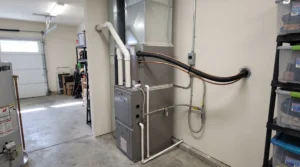
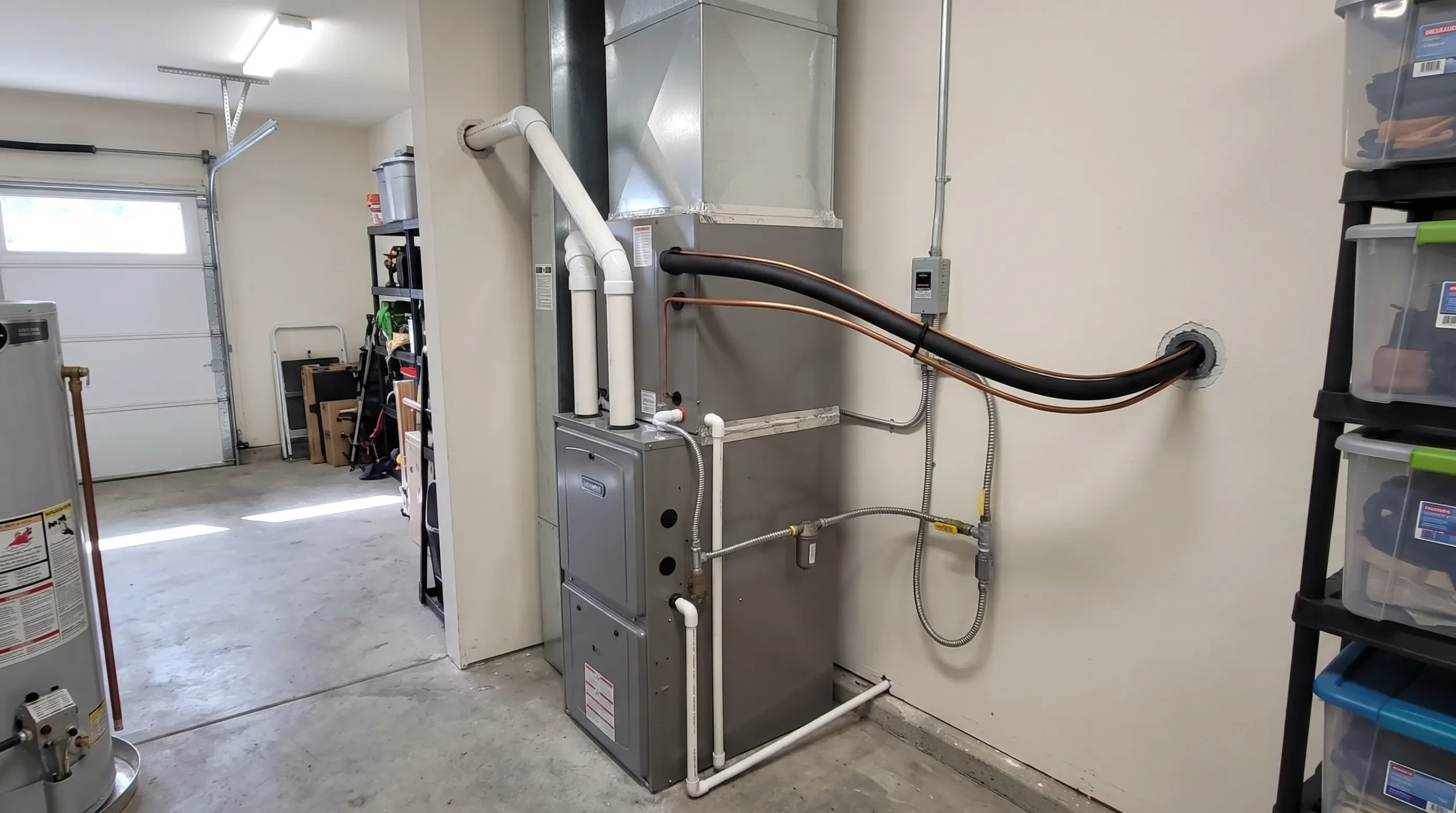
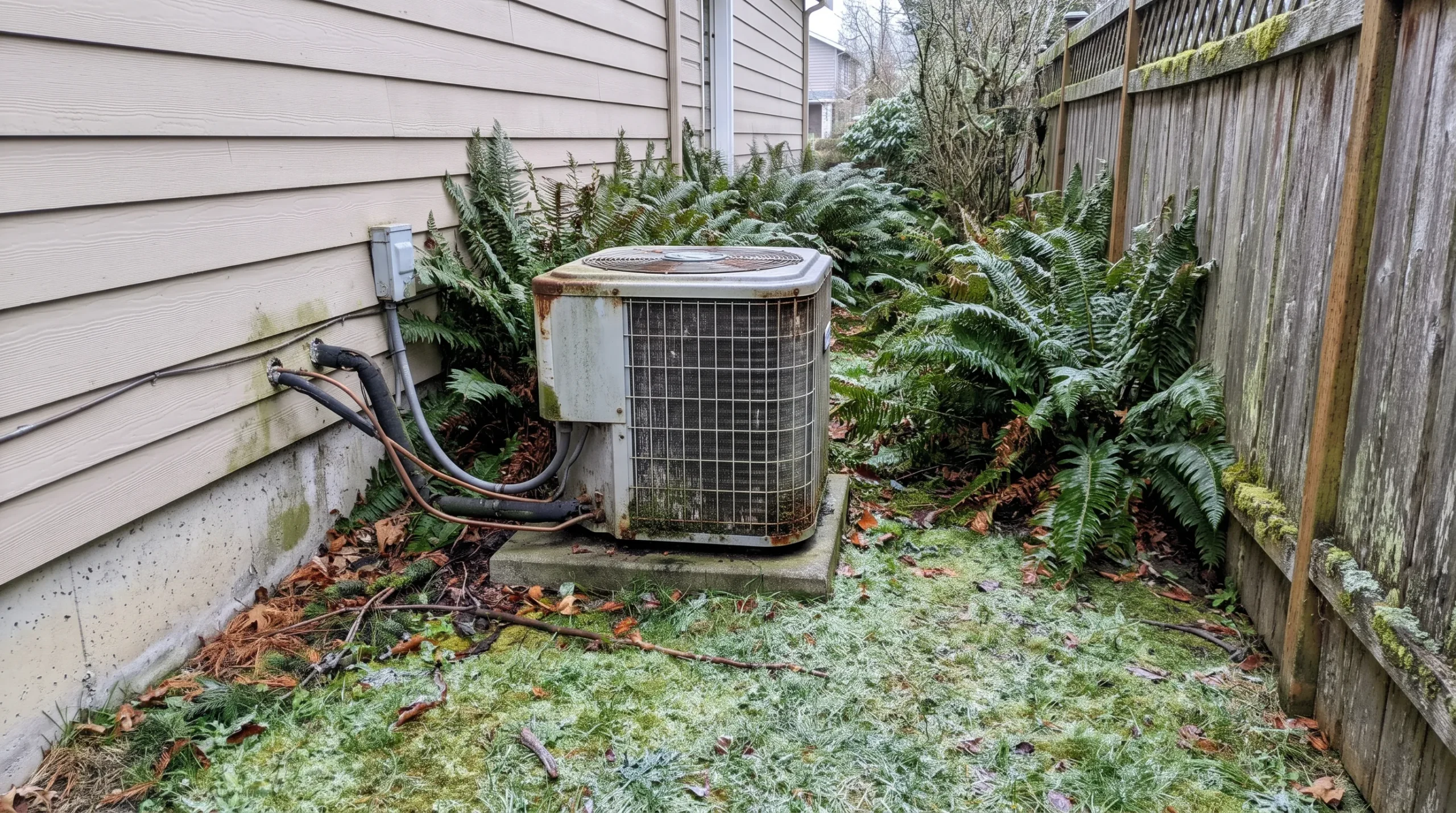
The AC system has two main parts. The outdoor unit, the condenser, sits on the side of the house. The indoor part, the evaporator coil, sits in a metal box directly on top of (or below) your furnace. In summer, the furnace blower pushes air across that cold coil and through your ducts. In winter, the same blower pushes air across the furnace’s heat exchanger.
So when the furnace comes out, the coil is right there. It has to be disconnected, supported and reconnected to the new furnace. That’s why the coil always comes up in the conversation.
Why the Coil Affects the Furnace Quote
Three things decide whether your existing coil can stay:
The size of the new furnace cabinet. Furnaces come in different widths. If the new furnace is a different width than the coil box, it needs a transition, and sometimes the fit is poor.
The coil’s refrigerant and age. Coils are built for a specific refrigerant and matched to a specific outdoor unit. A 15-year-old coil paired with a 15-year-old outdoor unit is near the end of its life too.
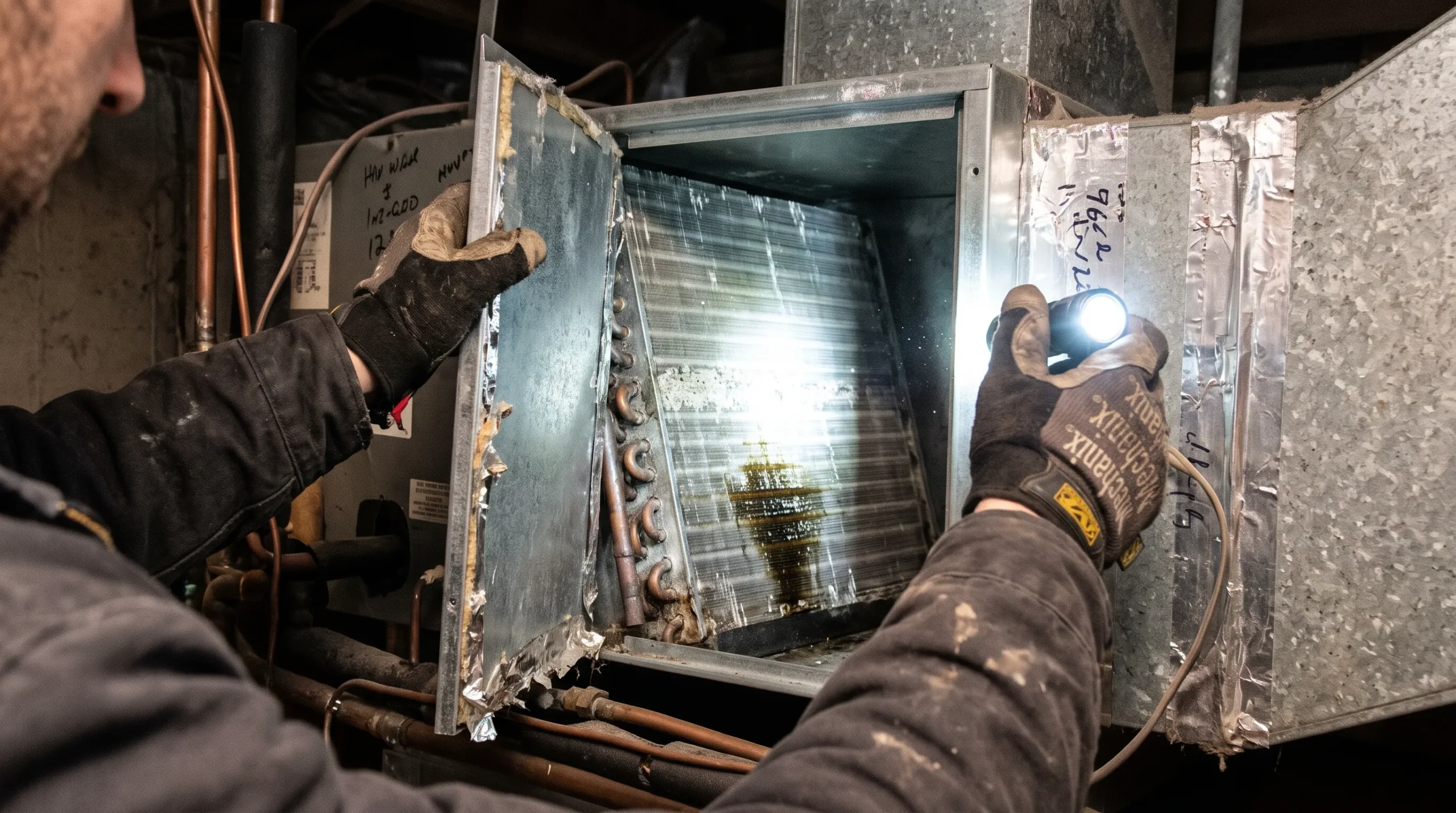
The coil’s condition. Coils can corrode and leak. If there’s oil staining, a history of refrigerant top-ups or visible corrosion, it’s not a good candidate to keep.
Upflow, Downflow or Horizontal Makes a Difference
Where your furnace sits changes how the coil fits. In Kirkland homes with the furnace in the garage or a basement closet, the furnace usually blows air upward, and the coil sits on top. In homes where the furnace lies on its side in a crawlspace or attic, it’s a horizontal setup, and the coil sits at one end.
Each setup needs a coil built for that direction. A coil made for an upflow furnace can’t just be laid on its side. So if your new furnace changes orientation, or the old coil was a poor match to begin with, keeping it may not be an option. We check this on the first visit so it doesn’t turn into a surprise on install day.
When You Can Keep the Coil, and When You Shouldn’t
There’s no single rule here. But there are clear patterns.
When Keeping the Existing Coil Makes Sense
If your AC was replaced in the last several years and the coil was replaced with it, keep it. A newer coil matched to a newer outdoor unit should simply be reconnected to the new furnace. The new furnace just needs to be set up so its blower airflow matches what the AC system needs.
In that case, replacing the furnace alone is usually the smart, budget-friendly move.
When Replacing the Coil Makes Sense
If your furnace and AC were installed at the same time, which is common in Kirkland neighborhoods built in the 1990s and 2000s like Bridle Trails and Totem Lake, they’re aging together. Replacing the furnace now and the AC two summers from now means paying to disconnect and reconnect that coil twice.
Then there’s refrigerant. New central AC systems have moved away from R-410A to newer refrigerants. A new outdoor unit later will need a matching coil anyway. If your AC is already older, keeping its old coil today often just delays a cost you’re going to pay later, and adds labor on top.
And if the coil is leaking or corroded, it shouldn’t be bolted onto a brand-new furnace. A leaky coil can drip condensate where it shouldn’t and keep costing you in refrigerant service.
Replacing Both at Once: The Pros and the Trade-Offs
Replacing the furnace and AC together means one disconnection, one install, one permit process, matched equipment and a single warranty start date. It usually costs less in labor than doing them separately. Equipment that’s designed to work together tends to run more efficiently and more quietly too.
The trade-off is a bigger bill today. If your AC is fairly young and working well, there’s no reason to replace it just because the furnace failed. The goal is to avoid paying twice, not to sell you a second system.
What to Check on a Kirkland Furnace Quote When You Have AC
Here’s how to read the quote so nothing surprises you.
Questions to Ask
Ask whether the quote keeps or replaces the existing coil, and why. Ask how old the coil and the outdoor unit are. Ask whether the new furnace’s width matches the coil box or needs a transition. And ask whether the furnace blower will be set up for your AC’s airflow needs, not just for heating.
If the quote replaces the coil, ask whether the new coil will work with your current outdoor unit, or whether it assumes you’ll replace the outdoor unit soon. Mixing a new coil with an old outdoor unit isn’t always a good match.
Consider Whether a Heat Pump Makes More Sense
Here’s something worth a thought while everything is apart. If both the furnace and the AC are near the end, a heat pump with your new furnace as backup can handle heating for most of the winter and cooling all summer. Some Kirkland homes qualify for Energy Smart Eastside incentives when switching from fossil fuel heat to a heat pump. Program windows open and close, so it’s worth checking what’s active on our rebates page.
Don’t Forget the Drain Lines
A new furnace and an AC coil can both produce water. A condensing furnace makes condensate all winter, and the coil makes it all summer. Both need proper drain lines, and in a garage or crawlspace install, a drain pan under the coil is cheap protection against a slow leak soaking the subfloor.
When the furnace changes, the drain setup often changes too. Old lines that worked for the previous layout may not line up with the new furnace’s drain ports. It’s a small detail, but it’s one of the most common causes of water damage around furnaces. We reroute and test the drains before we leave.
Why Winter Is a Good Time to Make the AC Decision
Here’s something people don’t expect. Deciding about the AC in December or January is actually easier than deciding in July. Nobody is sweating, there’s no heat wave pushing you to rush, and you can compare options calmly.
If you replace the furnace now and keep an older AC, at least know its age and condition going into summer. That way, if it struggles in the first hot week, you already know your plan instead of scrambling for an appointment when everyone else is calling too.
What a Clean Furnace Replacement Includes
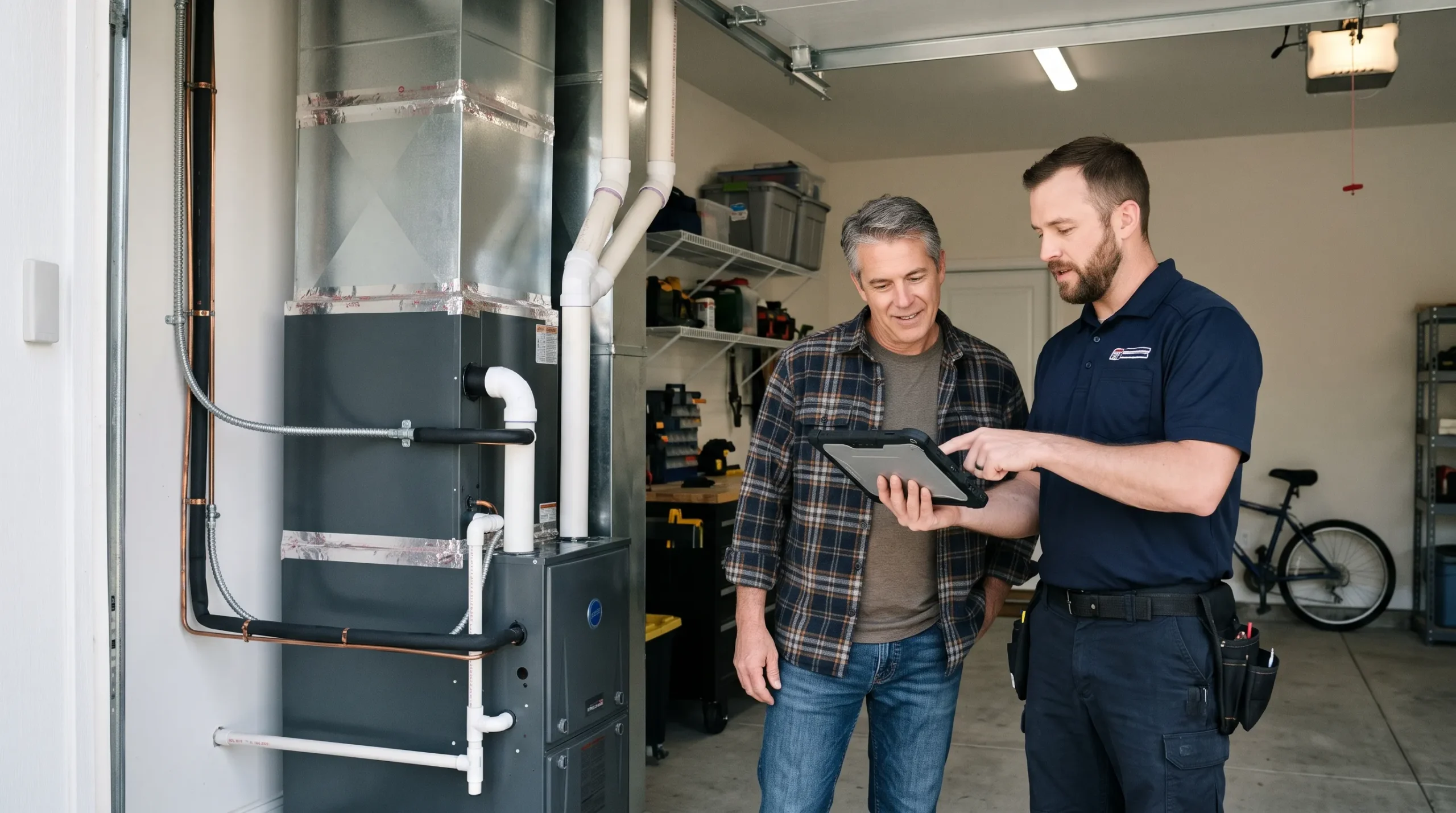
The coil is handled cleanly, the new furnace is sized for your home, the venting is right for the new unit, the condensate drains are routed properly for both furnace and coil, and the permit is pulled. You can see more about our process on our furnace replacement page. If you’re weighing a full system, our new HVAC installation and replacement page covers that path, and financing options can help spread out the cost of doing both at once.
Know What Happens to Your AC Before You Replace Your Kirkland Furnace
If your home has central air, replacing the furnace always touches the AC, because the coil sits right on top. That’s not an upsell. It’s just how the system is built. The real decision is simple. If the coil and AC are fairly new and healthy, keep them and reconnect. If they’re the same age as the old furnace, or leaking, or built for an older refrigerant you’ll have to move away from soon, replacing them together usually saves you a second round of labor. Ask the questions above and you’ll know exactly what you’re paying for and why.
Replacing a furnace in Kirkland with central air? Book a free in-home assessment or call 206-750-5042. We’ll check your coil and outdoor unit and show you both options priced side by side.