

In Seattle, when it’s 90 degrees at 9 p.m., and the upstairs feels like a sauna, “mild summers” don’t mean much. Heat waves are lasting longer. Nights aren’t cooling off the way they used to. And suddenly, AC doesn’t feel like a luxury, but rather a RELIEF.
If your bedrooms feel stuffy. The air feels heavy. And opening a window doesn’t fix it. No worries!
In this guide, we’ll tell you how to know if you need a brand-new system or a replacement, how to choose the right setup for your home, and what professional AC installation in Seattle actually looks like from start to finish.
Does Your Seattle Home Need a New AC Installation or a Replacement?
You know that moment when the house just won’t cool down, no matter what you try?
Maybe you’ve got box fans in every room. Maybe there’s a window unit rattling away in the bedroom. Or maybe your current system is technically “working”… but barely.
Here’s how to tell what you’re really dealing with.
3 Signs You Need Your First AC Installation in Seattle
A lot of Seattle homes were built without central cooling. It just wasn’t necessary back then.
- So if you’re relying on fans, portable units, or a struggling window AC to cool the whole house, that’s your first sign. Those options can help in small spaces, but they don’t handle whole-home heat, especially during extended heat waves.
- And then there’s sleep. If your upstairs bedrooms stay hot well into the night, that’s more than inconvenient. It affects your health, your energy, and your mood. You shouldn’t have to plan your summer around avoiding your own second floor.
- Older homes in neighborhoods like Ballard, Wallingford, or West Seattle often don’t have ductwork for cooling. That doesn’t mean AC isn’t possible. It just means the solution has to fit the house, not the other way around.
Signs It’s Time to Replace Your Existing AC System
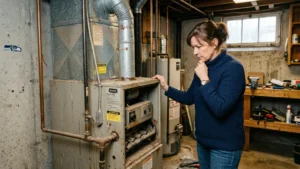
If you already have central air or a heat pump, the question becomes: repair or replace?
Start with age. Most air conditioning systems last about 10–15 years. After that, efficiency drops, parts wear out, and repairs start stacking up.
If you’ve noticed:
- Rising energy bills with no clear reason
- Uneven cooling, one room freezing, another warm
- Frequent breakdowns
- Strange noises or longer run times
…it may be time to consider replacement instead of another patch job. At a certain point, you’re paying to keep an aging system alive rather than investing in something reliable.
New Installation vs. Replacement: What’s the Difference?
Replacement is usually more straightforward. If your home already has ductwork in good condition, the new system can often connect to what’s there. It’s still a significant project, but it’s typically faster and more predictable.
A first-time installation is different.
It may involve installing new ductwork, upgrading electrical components, or choosing a ductless mini-split system instead. The planning stage matters more because you’re building the cooling system from scratch.
Either way, the goal is the same: consistent, whole-home comfort. Not just getting by, but actually feeling good in your space when summer hits.
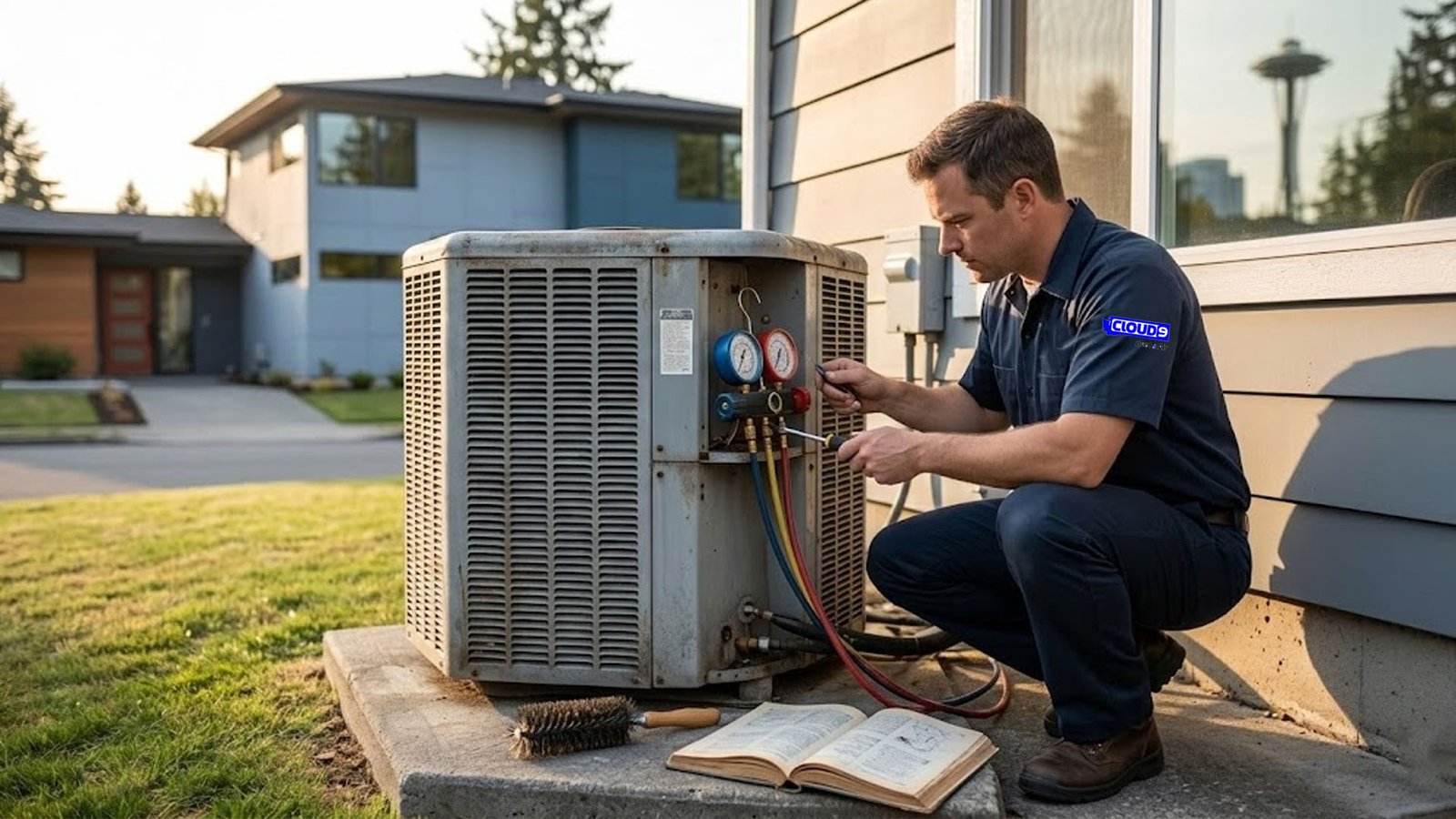
How To Choose the Right AC System for Your Seattle Home And Size It Correctly
This is where a lot of homeowners get tripped up. They think it’s about brands. Or price. Or what their neighbor installed last year. But honestly? The real decision is about fit.
Not every AC system works for every Seattle home. And if it’s sized wrong, even the best unit won’t perform the way it should. So a professional AC conditioner approach is a must. Let’s break it down.
Central Air vs. Ductless Mini-Split: What Makes Sense for Seattle Homes?
If your home already has ductwork, especially if it’s in good shape, central air can be a clean, straightforward solution. One system. One thermostat. Even cooling throughout the house. It’s simple. Familiar. Effective.
But many older Seattle homes don’t have ducts at all. Or they’ve been remodeled so many times that running new ductwork would mean opening walls and ceilings.
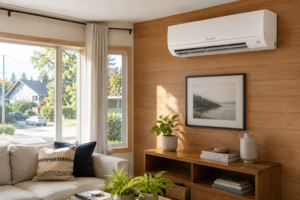
That’s where ductless mini-splits make a lot of sense. They don’t require ducts. They allow room-by-room temperature control. And they’re especially useful for additions, finished basements, or upstairs spaces that always run warmer.
Think of mini-splits as targeted comfort. Central air as a whole-home uniformity. Neither is “better.” It depends on the house and how you live in it.
Why Proper AC Sizing and Load Calculation Matters
Bigger isn’t better. It’s tempting to think a more powerful unit will cool faster and solve everything. But oversized systems actually short cycle. They turn on, blast cold air, shut off quickly, and repeat. That constant stopping and starting increases wear and reduces efficiency.
Undersized systems have the opposite problem. They run nonstop, struggling to keep up, driving up energy bills, and shortening their lifespan.
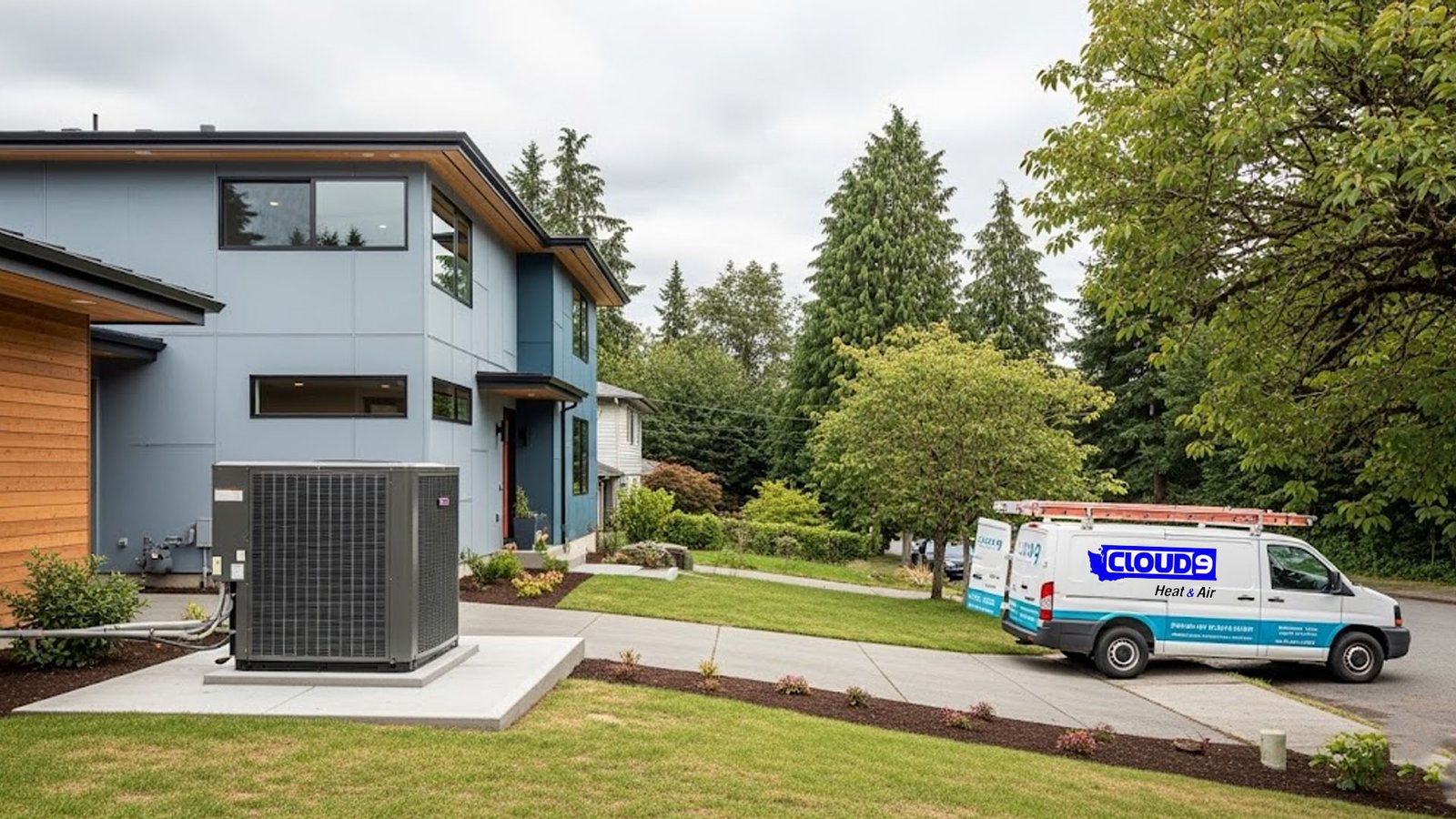
That’s why professional installers(Cloud9 Heat & Air) perform a Manual J load calculation. It sounds technical, but here’s what it really means: They measure your home.
Square footage. Insulation levels. Window size and direction. Ceiling height. Seattle’s climate patterns. All of it factors into determining the right system size. Without that step, you’re guessing. And guessing is expensive.
Seattle Energy Incentives and Rebates You Shouldn’t Miss
Most homeowners don’t realize that there are real incentives available for upgrading to high-efficiency systems.
Depending on the equipment, you may qualify for rebates through Puget Sound Energy or Seattle City Light. There are also federal ENERGY STAR tax credits for certain systems. These programs change over time, and the details matter. A reputable local HVAC contractor should know what’s currently available and help you navigate it.
It won’t eliminate the investment. But it can meaningfully reduce it. And when you’re making a long-term upgrade to your home, every bit helps.
What Professional AC Installation in Seattle Actually Looks Like
Handing over your home to a contractor for a full day (or more) can feel… stressful. You want it done right. You don’t want surprises. And you definitely don’t want shortcuts that come back to haunt you.
Here’s what a professional AC installation in Seattle should actually look like.
What to Expect on Installation Day
It starts before installation day. A reputable contractor will already have assessed your home, confirmed the system size, reviewed equipment placement, and answered your questions. So when the crew shows up, they’re not “figuring it out.” They’re executing a plan. On installation day, you can expect:
- Protection for floors and work areas
- Removal of old equipment (if it’s a replacement)
- Placement of the new indoor and outdoor units
- Refrigerant line installation
- Electrical connections and safety checks
- Thermostat setup
Once the physical installation is complete, the system is tested and commissioned. That means verifying refrigerant levels, airflow, temperature output, and overall performance.
And a proper walkthrough at the end. You should know how to operate the thermostat, change filters, and understand basic maintenance before the crew leaves. No rushing out the door.
Permits, Licensing, and Seattle Code Requirements
In Washington State, HVAC contractors must be properly licensed. And for new AC installations, especially when electrical work is involved, permits are typically required through your local jurisdiction, including King County or the City of Seattle.
Why does this matter?
Because permits trigger inspections. Inspections verify that the work meets safety and building code standards. That protects you as the homeowner. Skipping permits might save a little time upfront. But it can create real problems later, especially during a home sale, insurance claim, or if something fails.
If a contractor suggests “we don’t need a permit for this,” that’s a red flag.
Questions to Ask Before Hiring an HVAC Contractor in Seattle
Before signing anything, ask:
- Are you licensed and insured in Washington State?
- Will you pull the required permits?
- Will you perform a proper load calculation?
- What brands do you install, and why?
- What warranties are included on equipment and labor?
The right contractor won’t hesitate. They’ll answer clearly and confidently.
Because professional AC installation isn’t just about putting equipment in place. It’s about doing the job safely, legally, and correctly, so when the next heat wave hits, you’re not crossing your fingers.
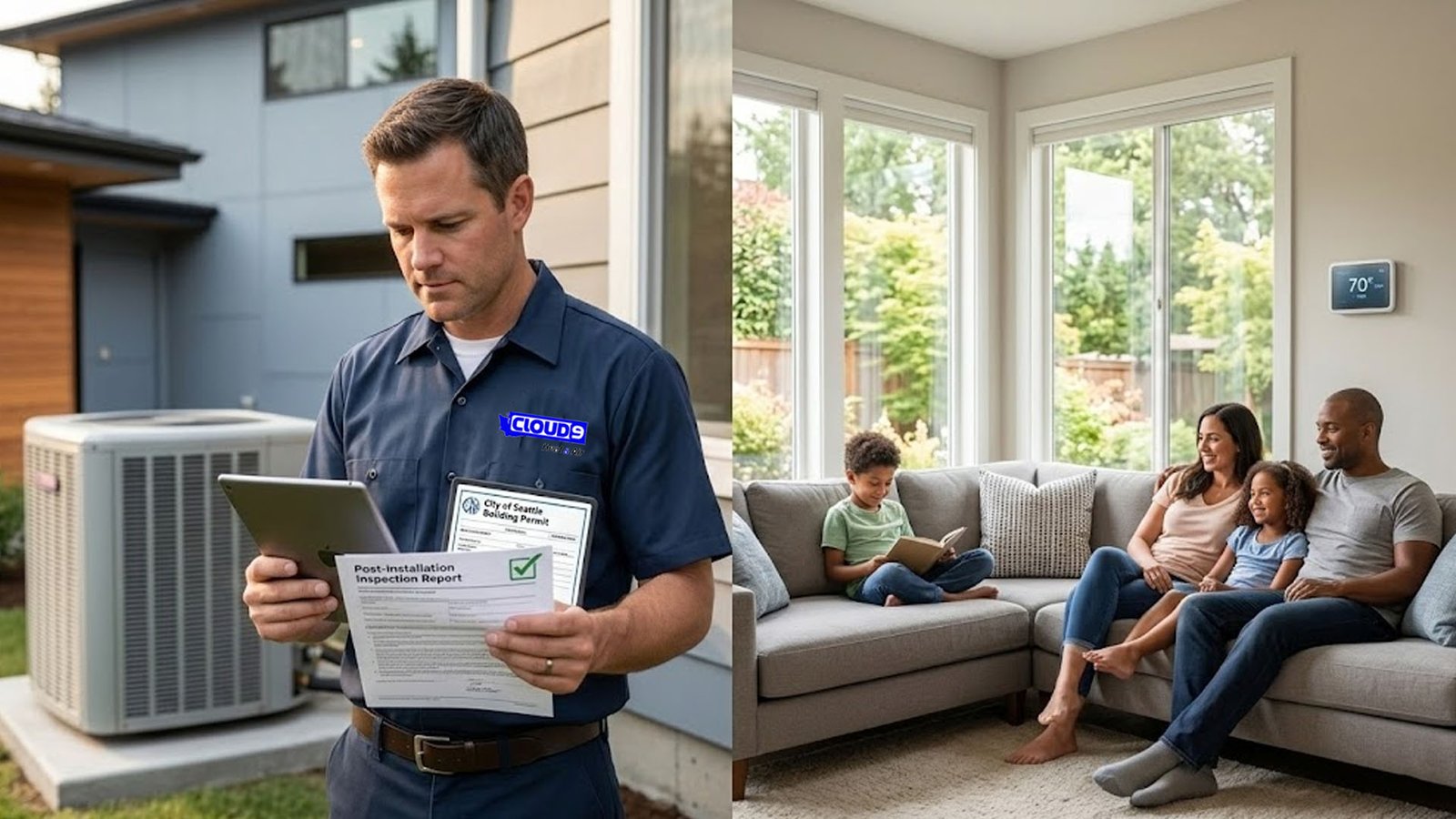
Stay Cool the Right Way…
When your home turns stuffy by afternoon, and upstairs bedrooms feel unbearable at night, it’s exhausting. And quick fixes only go so far.
Figure out whether you need a new system or a replacement, choose the right setup and size it correctly, and hire a licensed professional who does the job perfectly.
Schedule your AC installation consultation with Cloud9 Heat & Air if you’re ready for real, whole-home comfort.