

Most Mercer Island homeowners replacing an old furnace hear the same advice: go high-efficiency. A 96% furnace wastes far less heat up the flue than an 80% unit, and that matters over a long Northwest heating season.
What people don’t hear is that the upgrade changes how the furnace vents, adds a drain line, and can leave your gas water heater in an unsafe spot. None of that is a reason to skip it. It’s a reason to plan it right.
What Actually Changes When You Move to a High-Efficiency Furnace
An 80% furnace and a 96% furnace both burn gas. The difference is what happens to the heat after the flame.
Where the Extra Efficiency Comes From
An 80% furnace sends hot exhaust up a metal flue, often into a masonry chimney or a metal vent through the roof. That hot exhaust is heat you paid for, leaving the house.
A 96% furnace has a second heat exchanger that pulls much more heat out of the exhaust before it leaves. That’s why it’s called a condensing furnace. The exhaust cools so much that water vapor in it turns into liquid.
Use up and down arrow keys to resize the meta box pane.
New Venting: Plastic Pipe Through a Wall or Roof
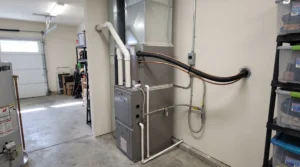
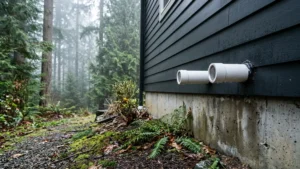
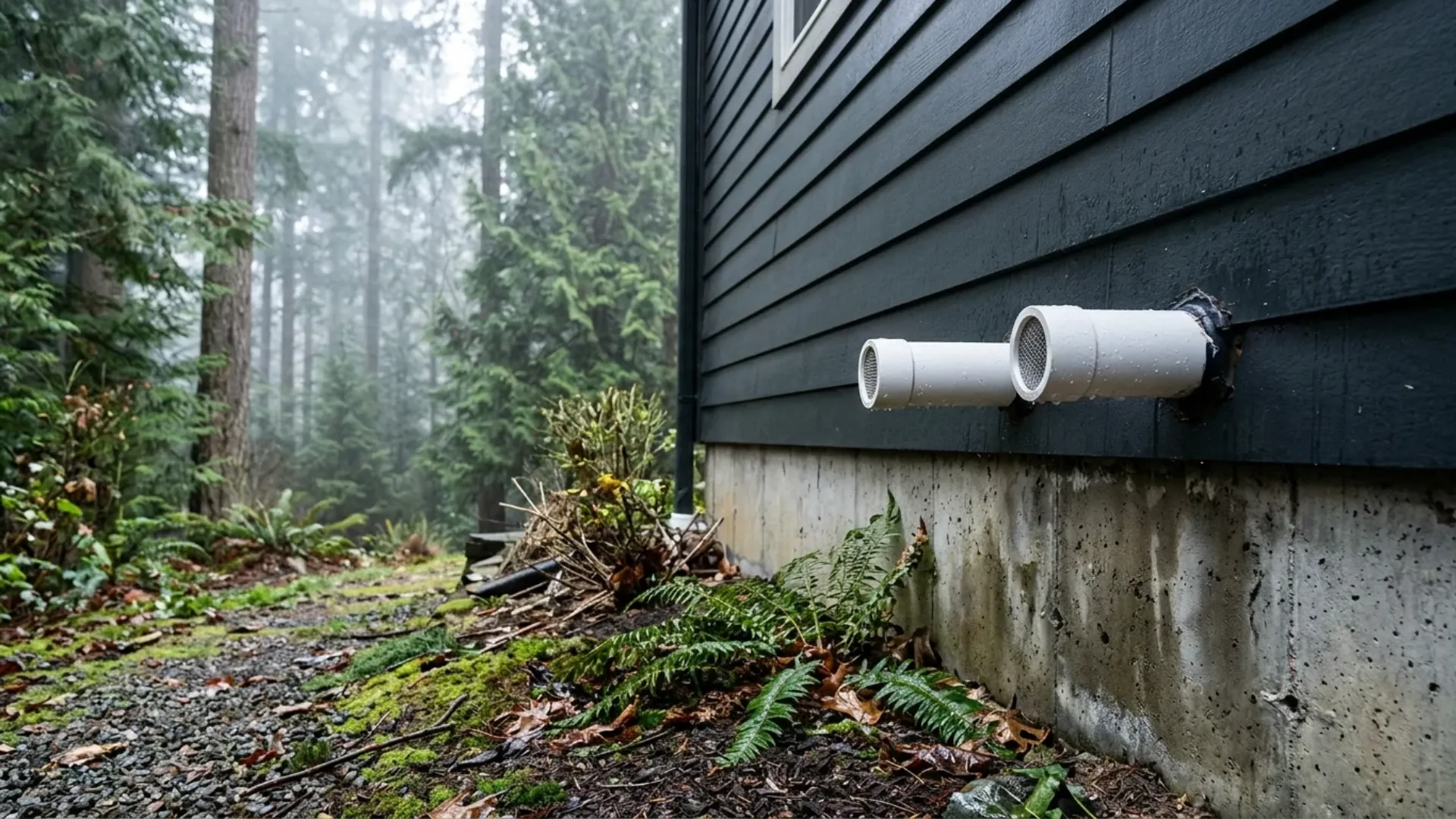
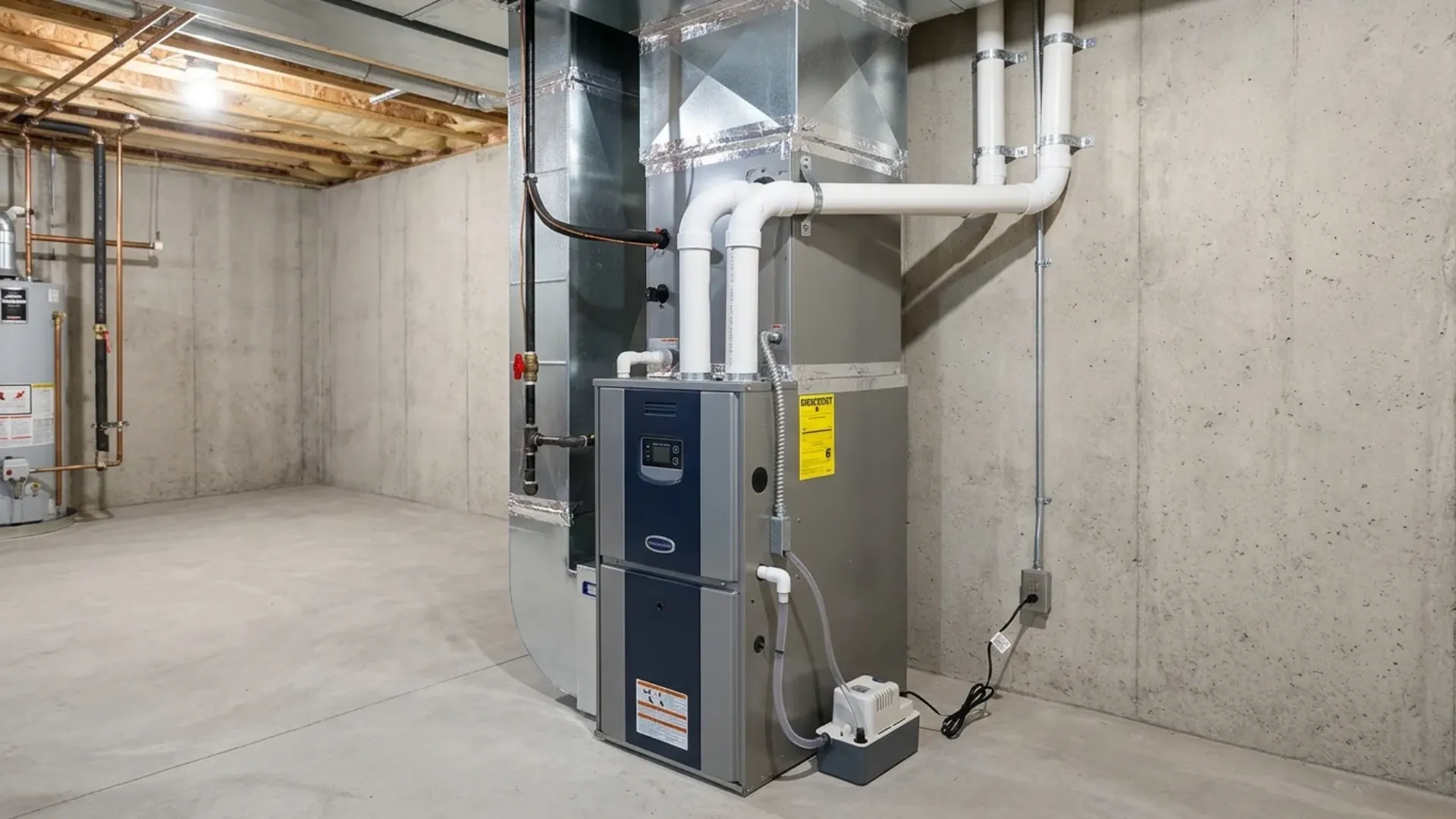
Because the exhaust is cool, a condensing furnace vents through plastic pipe, usually PVC, instead of the old metal flue. Most also pull combustion air from outside through a second pipe. Those two pipes typically run out through a side wall or up through the roof.
On Mercer Island, where many homes are larger and the furnace often sits in a basement or crawlspace far from an exterior wall, the vent route is a real design decision. The pipes need proper slope, clearance from windows, doors and property lines, and a termination spot that won’t blow exhaust onto a patio or a neighbor’s window. We plan that route before quoting, not on install day.
The Condensate Drain
Condensing furnaces produce water, and it’s slightly acidic. That water needs a drain. If there’s a floor drain or laundry drain nearby, it’s simple. If not, a small condensate pump moves it to the nearest drain. In crawlspace installs, the drain plan also has to account for freezing during cold snaps.
None of this is complicated. But it’s work that an 80% to 80% swap doesn’t need, and it should be on your quote.
The Gas Water Heater Problem Nobody Mentions
This is the part I want every Mercer Island homeowner to hear, because it’s a safety issue that’s easy to miss.
What an “Orphaned” Water Heater Is
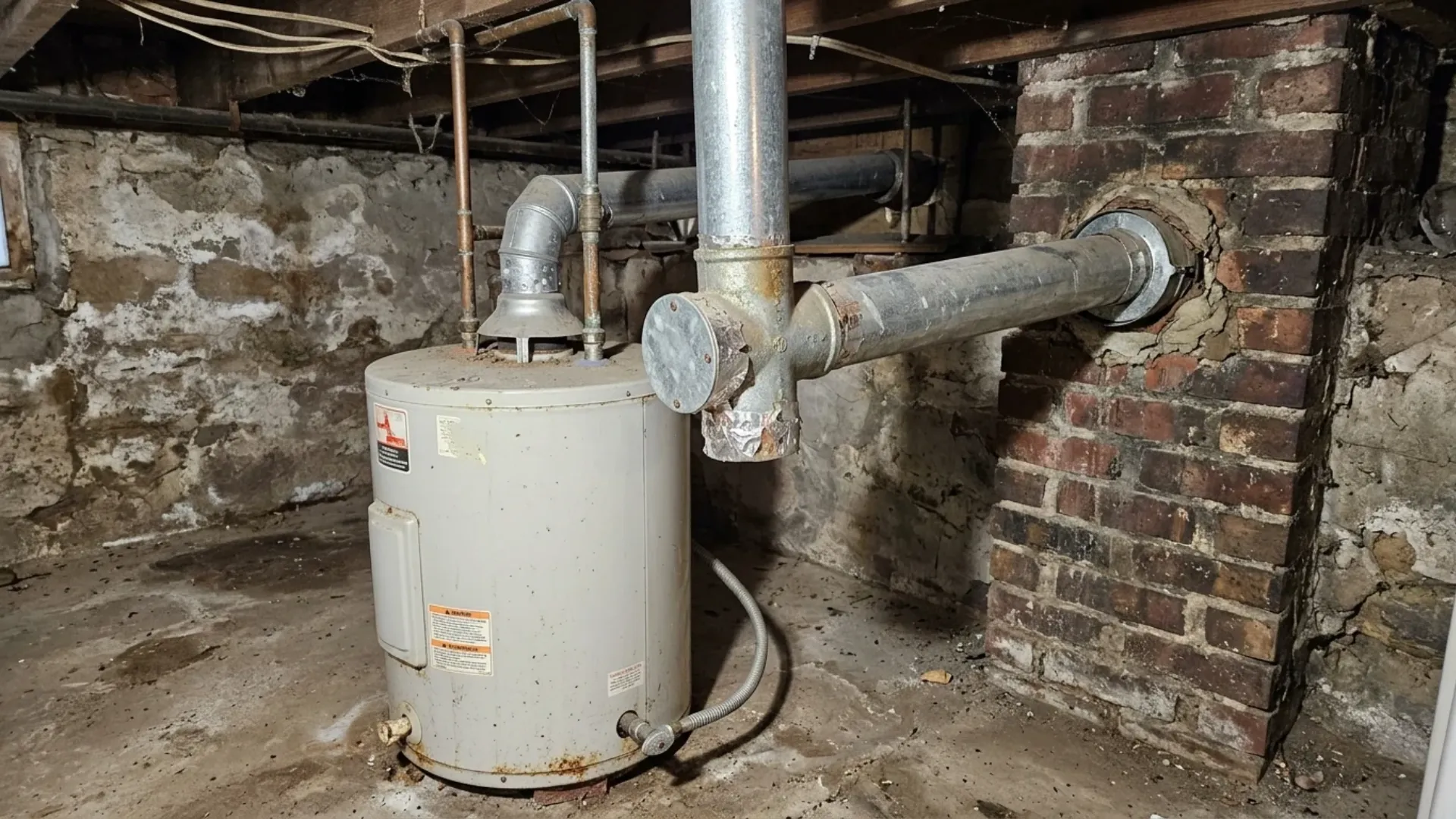
In many older homes, the old 80% furnace and the gas water heater share the same chimney or flue. The chimney was sized for both appliances venting hot exhaust together.
When the furnace moves to plastic venting, it leaves that chimney. Now the water heater is venting alone into a flue that’s far too big for it. That’s what the trade calls an orphaned water heater.
Why It’s a Safety Problem
A small water heater in a big, cold chimney doesn’t draft well. The exhaust cools too fast, can condense inside the chimney and may not rise properly. In the worst case, the water heater spills exhaust, including carbon monoxide, back into the house instead of up and out.
The moisture also does damage over time. Acidic condensate can break down mortar and masonry inside an unlined chimney, especially through our freeze and thaw cycles.
Signs Your Water Heater Is Already Struggling to Draft
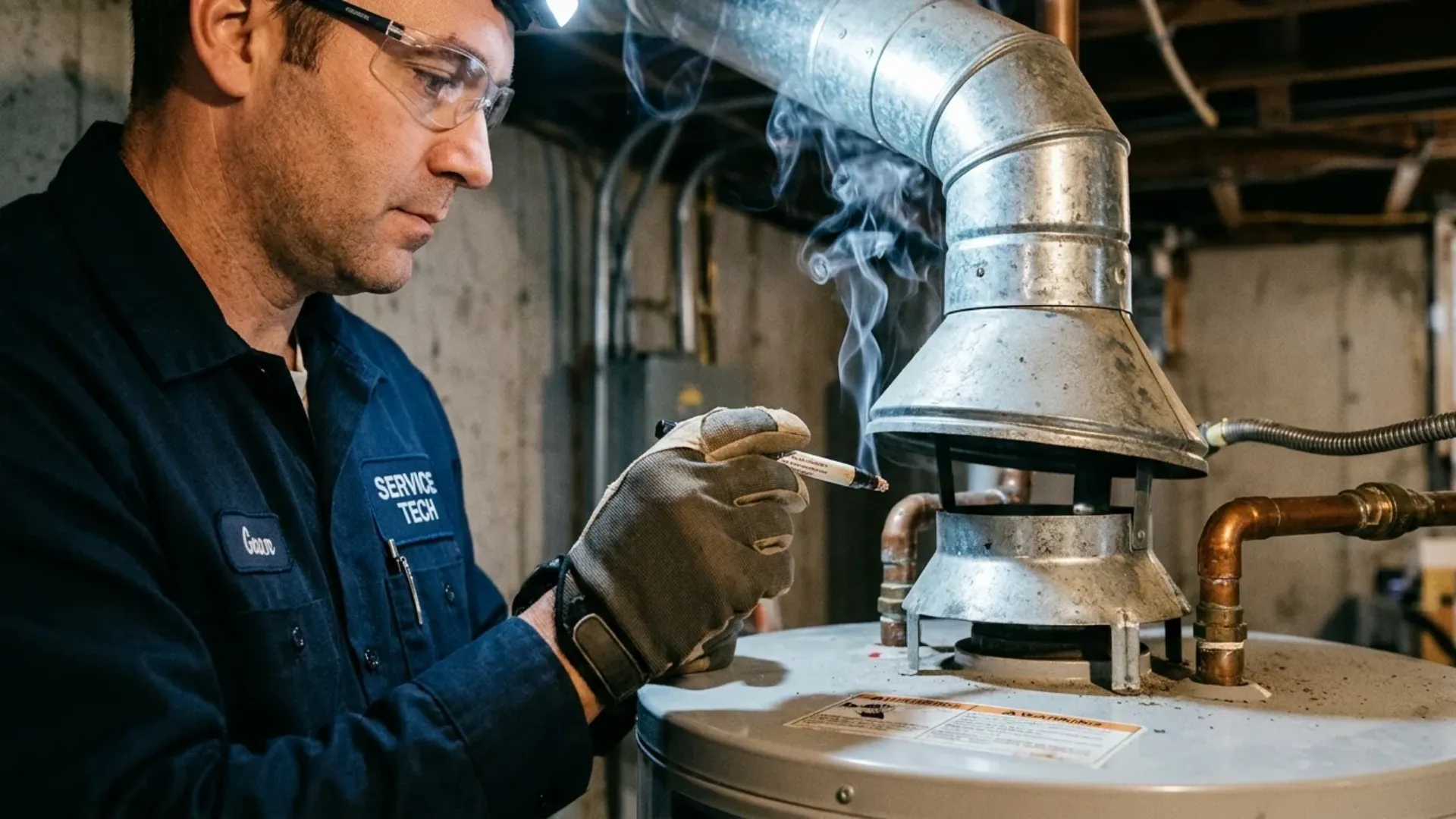
Even before a furnace upgrade, some water heaters show signs of poor venting. Look for rust or white crusty residue around the top of the tank or the draft hood. Soot or scorch marks near the burner. Condensation dripping from the vent pipe. Or a faint, stale exhaust smell in the room when the water heater fires.
If you see any of these, mention them during your furnace assessment. They tell us the venting deserves a close look no matter which furnace you choose.
The Fixes
There are two usual solutions. One is installing a properly sized liner inside the chimney so the water heater has a flue that fits it. The other is replacing the water heater with a direct-vent or power-vent model that doesn’t use the chimney at all, then retiring the chimney flue.
Which one makes sense depends on the age of your water heater. If it’s fairly new, a liner is often the better choice. If it’s near the end of its life anyway, replacing it now with a unit that vents on its own can save you paying for a liner you’ll barely use. Our tankless water heater installation page is worth a look if you’re thinking about moving off a tank at the same time.
What shouldn’t happen is the furnace getting replaced and the water heater being left alone in the old chimney with nobody checking how it drafts. A proper install tests the remaining appliance before the job is called done.
What Happens to the Old Chimney
If both appliances end up venting with their own pipes, the old masonry chimney may not serve any appliance anymore. In that case, the flue opening in the basement should be sealed properly and the chimney capped to keep rain and critters out. If you have a fireplace that uses a separate flue in the same chimney, that flue stays as it is. We’ll tell you exactly which flue does what before anything gets sealed.
Is the High-Efficiency Upgrade Right for Your Mercer Island Home?
For most homes here, yes. But a few details are worth weighing.
Federal Efficiency Rules Are Moving This Direction
Under the current federal standard, most new non-weatherized gas furnaces made for sale from December 2028 must reach 95% AFUE. Gas industry groups have petitioned the Department of Energy to push that date back, so the timeline could change. Either way, the direction is clear. Choosing a condensing furnace now keeps you in line with where equipment is heading.
When an 80% Furnace Still Comes Up
There are cases where a vent route is very difficult or very costly, for example an interior furnace room with no practical path to an exterior wall or roof. In those cases, we’ll talk through the trade-offs plainly, including whether a different system type makes more sense.
Sizing Still Matters Most
Efficiency doesn’t fix a furnace that’s the wrong size. A 96% furnace that’s oversized will still short-cycle and wear out faster. Mercer Island homes have often been remodeled, re-windowed and expanded over the years, so the old furnace size is a starting clue, not the answer. We size from a load calculation on the home as it is now.
Questions to Ask on Your Furnace Quote
Ask where the new vent pipes will exit, and whether that spot meets clearance rules for windows, doors and your property line. Ask how the condensate will drain and whether a pump is included. Ask, directly, what happens to your gas water heater: will it get a liner, a new vent or a draft test after the furnace is installed? And ask whether the permit and inspection cover the venting work.
If a quote doesn’t mention the water heater at all and your two appliances share a chimney, that’s the gap to close before you sign.
You can see more about how we handle the work on our furnace replacement page. Check our rebates page for any current programs before you finalize, and financing options can help with the upfront cost.
A High-Efficiency Furnace on Mercer Island Works Best When the Whole Vent Plan Is Done Right
Use up and down arrow keys to resize the meta box pane.
Moving from an 80% to a 96% furnace is a smart upgrade for most Mercer Island homes. It wastes less heat and lines up with where federal standards are heading. But it’s more than a furnace swap. The venting changes, a condensate drain gets added, and your gas water heater may be left alone in a chimney that no longer fits it. Plan all three up front and the upgrade is straightforward. Skip the water heater check and you could trade a lower gas bill for a real safety problem.
Upgrading to a high-efficiency furnace on Mercer Island? Book a free in-home assessment or call 206-750-5042. We’ll plan the vent route, the drain and your water heater before we quote.