

You’d think replacing a water heater would be the easy part. Same size tank, same spot, done by lunch. Then the installer measures your closet and frowns. The new 50-gallon tank is wider and taller than the old 50-gallon tank, and it doesn’t fit through the door, under the shelf or between the studs. This happens a lot in Renton townhomes, condos and older houses where the water heater lives in a tight hall closet. Here’s why it happens and what your real options are.
Why Today’s Water Heaters Are Bigger Than the One You Have
It’s not your imagination. A new tank with the same gallon rating really can be bigger.
The 2015 Federal Efficiency Change
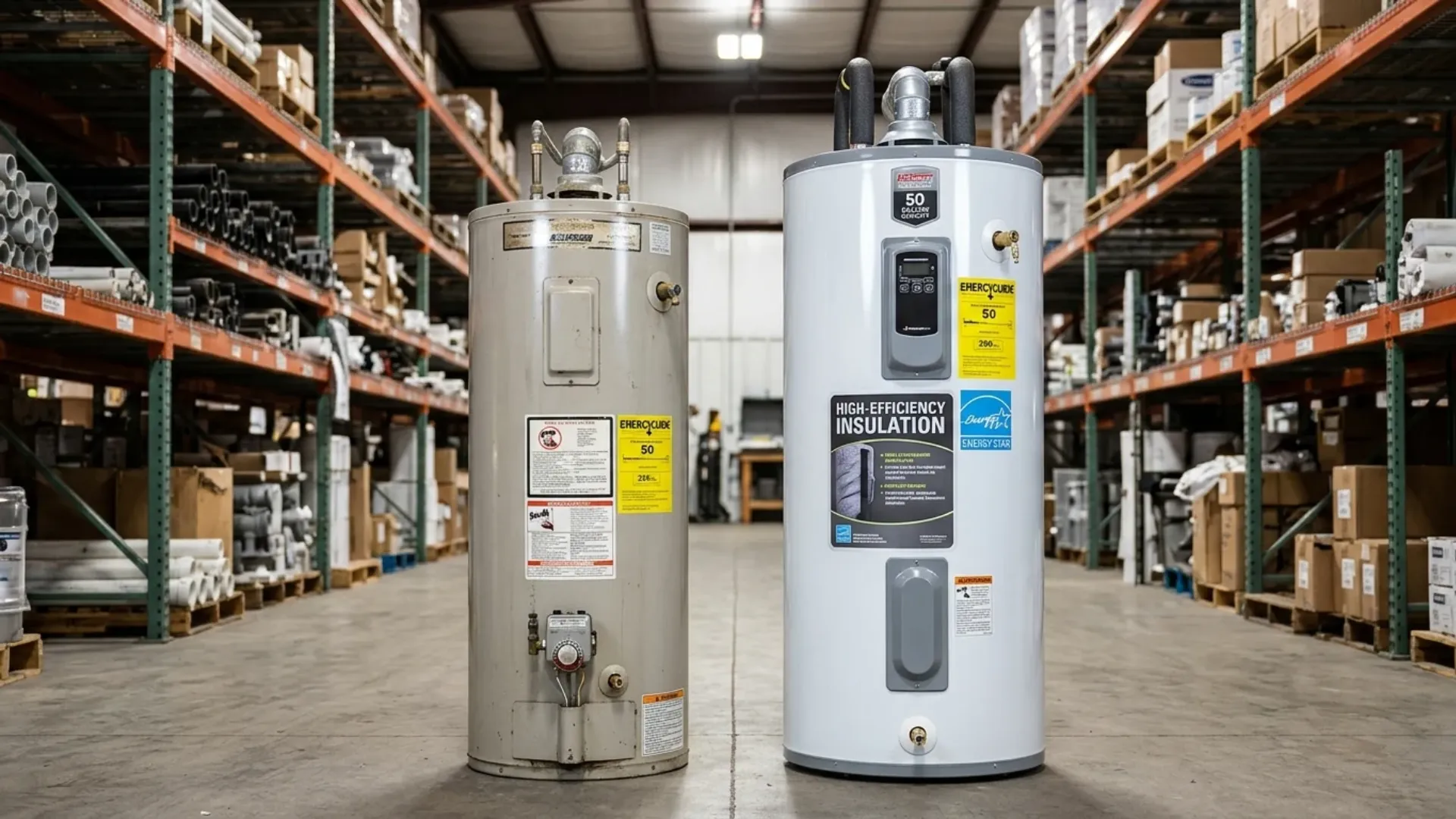
In April 2015, new federal efficiency standards took effect for residential water heaters. To meet them, manufacturers added more insulation around the tank. More insulation means a bigger outer shell.
For tanks under 55 gallons, that often means the new unit is about 2 inches taller and 2 inches wider than the old one of the same capacity. Industry guidance at the time told installers to plan for at least 3 inches of extra space. That doesn’t sound like much until your closet was built around the old tank with half an inch to spare.
For tanks over 55 gallons, the change was bigger. Larger electric tanks effectively moved to heat pump water heaters, which are taller still.
If Your Tank Is Older Than 2015, This Applies to You
Here’s the quick check. Look at the label on your current water heater for the manufacture date. If it was made before 2015, the replacement will very likely be larger. Many Renton homes and condos built in the 1990s and 2000s still have tanks from that era, or a replacement installed before the rule changed. Those are exactly the homes where the fit problem shows up.
Measure Before Your Tank Fails
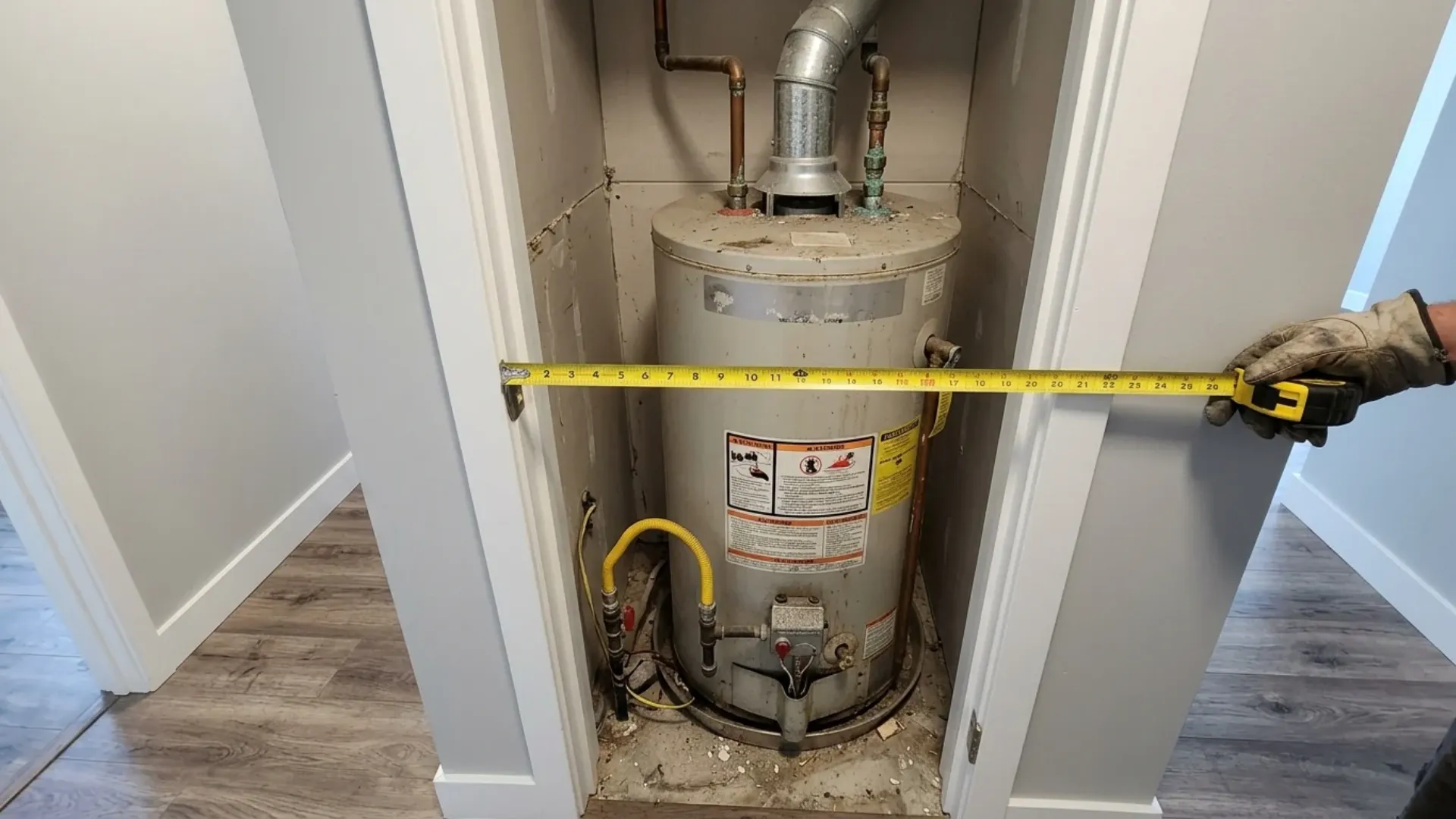
Here’s what I’d do this week if your tank is more than 10 years old. Measure the width of the closet opening and the door frame. Measure the height from the floor to any shelf, ceiling or obstruction above the tank. Note whether it’s gas or electric, and snap a photo of the label and the vent pipe on top if it’s gas.
That takes five minutes, and it changes everything. When the tank does start leaking, you won’t be deciding with water on the floor. You’ll already know which replacement options fit.
The Spaces Where This Problem Shows Up Most in Renton
Some spots are tighter than others.
Hall Closets in Condos and Townhomes
Lots of condos and townhomes around Renton put the water heater in a small closet off a hallway or laundry area. Those closets were framed snugly. Add 2 inches of width and the tank may not pass through the door frame, or it won’t leave the clearances the manufacturer requires.
Gas Water Heaters in Enclosed Spaces
A gas tank in a closet has extra needs. It needs enough combustion air and proper clearance to anything that burns. A bigger tank in the same closet can squeeze those clearances below what’s required. The vent connector on top also has to line up with the existing flue, and a taller tank can throw that off.
Garages With Shelving or Tight Corners
Even in garages, water heaters often get boxed in over the years by shelves, freezers or storage. The tank still has to sit on its stand if it’s gas, be strapped for earthquakes and leave room for service. A bigger tank can mean rearranging more than you planned.
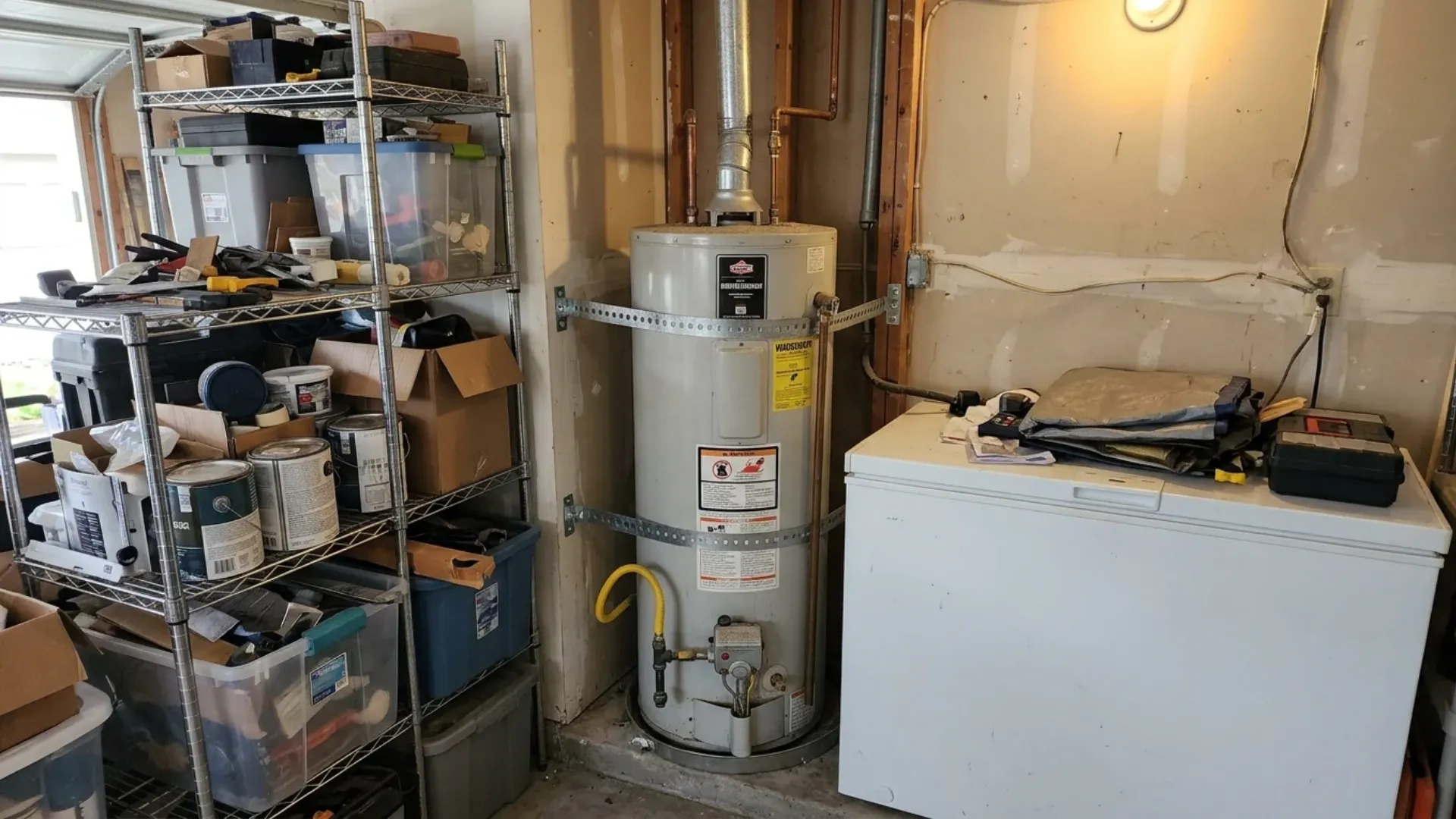
Your Options When the New Tank Won’t Fit
Here’s the good news. There’s almost always a workable answer. It just helps to know them before the installer shows up.
Option 1: A Slightly Smaller Capacity
Sometimes the cleanest fix is stepping down a size, say from 50 to 40 gallons. For a smaller household, that can work fine, especially with a tank that recovers quickly. But I’d only recommend it if your hot water use actually supports it. Going smaller just to fit, and then running out of hot water every morning, isn’t a fix.
Option 2: A Different Tank Shape
Water heaters come in tall and short versions. If the problem is height, under a shelf or below a stair, a shorter, wider “lowboy” model may fit. If the problem is width through a door, a taller, slimmer model might. We measure the space and the path to get it in, not just the spot where it sits.
Option 3: Modify the Space
Sometimes the closet can be widened, a shelf moved or a door frame adjusted. For gas units, adding a louvered door or air openings can solve combustion air needs. This is often simpler than people expect, and it keeps the tank you actually want.
Option 4: Go Tankless
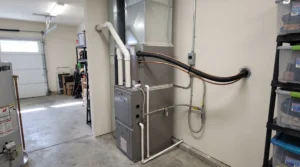
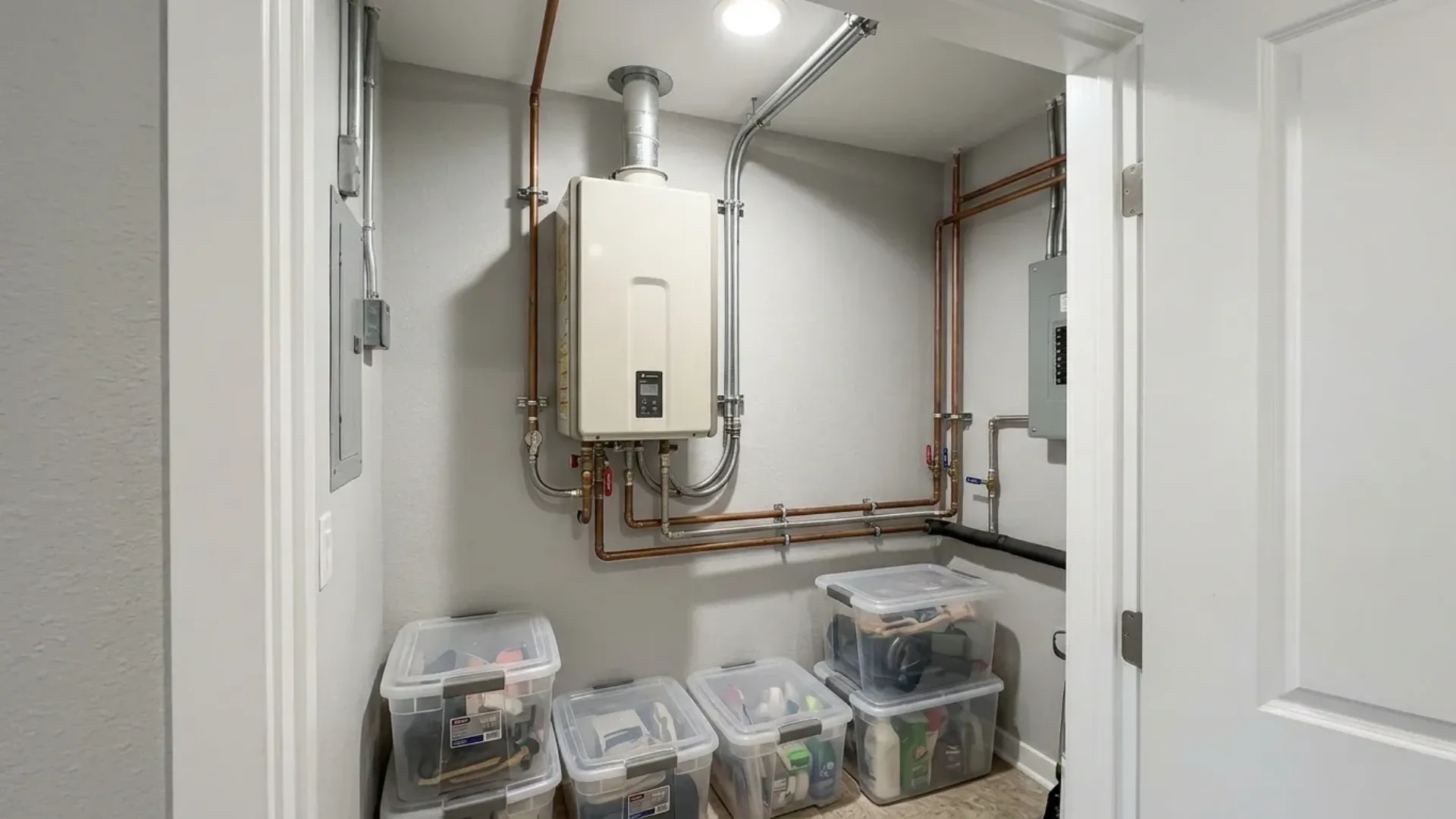
This is where many closet problems simply go away. A wall-mounted tankless water heater frees up the entire closet floor. In a Renton condo, that can turn a cramped utility closet into usable storage.
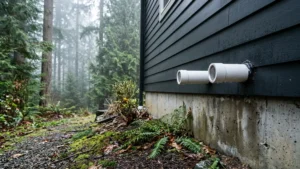
But tankless isn’t a drop-in swap. Gas tankless units need a gas line that can supply them, plus new venting and a condensate drain on condensing models. In a condo, venting may be limited by building rules or exterior walls. Our post on whether tankless water heaters are worth it for Seattle homes covers the bigger decision, and our tankless water heater installation page explains what the switch involves.
Should You Stick With Gas or Electric?
Most of the time, replacing with the same fuel type is simplest. A gas tank already has a gas line and a vent. An electric tank already has a dedicated circuit. Switching between them adds work: a new circuit for electric, or a gas line and vent for gas.
There are reasons to switch anyway. In a tight condo closet, an electric tank avoids the combustion air and venting requirements that make gas tanks hard to fit. On the other hand, electric tanks heat water more slowly, so a family that uses a lot of hot water may feel the difference. We’ll talk through how your household uses hot water before recommending either one.
Option 5: Move the Water Heater
In some homes, the old spot simply isn’t worth fighting for. Moving the water heater to the garage or a utility room can make sense, especially during a remodel. It means new water lines, possibly new gas piping or a new electrical circuit, and new venting for gas. It’s a bigger job, so it’s usually the last option rather than the first. But for a closet that’s been a headache for years, it can be the right long-term fix.
For Condo Owners: Check With Your HOA First
If you own a condo, check your HOA rules before choosing. Some buildings limit exterior vent penetrations, require specific contractors, or have rules about leak pans and shutoff valves. Knowing that early saves you from picking an option the building won’t allow.
What Every Replacement Still Needs
Whatever fits, the basics don’t change. A permit, seismic strapping into framing, a working relief valve with a proper discharge line, an expansion tank where required and a drain pan where it’s needed. A tight closet is never an excuse to skip those. If you’d like to see how we handle the switch to tankless, our tankless water heater replacement page has more.
In Renton, Measure Before You Buy the Next Water Heater
If your current water heater was made before 2015, the new one will probably be bigger, even at the same gallon size. That catches a lot of Renton condo and townhome owners off guard, usually on the day the old tank is already leaking. So measure the space, the door and the path in now, and decide ahead of time whether you’ll go smaller, change shape, adjust the closet or move to tankless. A few minutes of planning turns a stressful, stalled install into a simple swap.
Water heater replacement coming up in Renton? Book a free assessment or call 206-750-5042. We’ll measure your space and show you which options actually fit before anything gets ordered.